| A | B |
|---|
tragedy, 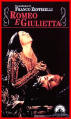 | a work of literature, especially a play, that results in a catastrophe for the main character |
| blank verse | unrhymed verse written in iambic pentameter (10 syllables) in which every second syllable is stressed |
| verse | a single line of poetry |
| ryhme | a piece of verse which there is a regular recurrence of corresponding sounds (esp. at the ends of lines) |
| stanza | a group of lines of verse forming one of the divisions of a poem |
| couplet | two successive lines of poetry, esp. two of the same length that rhyme |
| quatrain | a stanza or poem of four lines, usually rhyming: abab, abba, abcd |
| prologue | an introduction to a poem or play esp. introductory lines spoken by a member of the cast before a dramatic performance |
| monologue | a long speech by one speaker esp. one monopolizing the conversation |
| drama | a literary art form that re-creates human life and emotions, It has both written form and living form |
| aside | a character that speaks directly to the audience |
| dramatic irony | occurs when a character's words or acts carry a larger meaning he does not perceive |
| metaphor | a comparison between two things without using "as" or "like" |
| simile | a comparison is made between two unlike things using "like" or "as" |
| personification | human characteristics given to something non-human |
| oxymoron | a figure of speech in which opposite or contradicting ideas or terms are combined: sweet, sorrow |
comic relief,  | when humor is put into a tense situation to momentarily relieve the tension |
| sonnet | a fourteen-line lyric poem, usually written in rhymed iambic pentameter |
| imagery | representation in language of sense experience: what can be seen, heard, touched, tasted and smelled |
| soliloquy | allows a character to speak his thoughts aloud but not directly to the audience |
| foil | two characters who are completely opposite of each other |


