| A | B |
|---|
| DNA(pg.128) | "deoxyribonucleic acid"- hereditary material that controls all the activities of a cell,contains the information to make new cells, and provides instructions for making proteins. |
| nucleotide(pg.128) | a subunit of DNA consisting of a sugar(called "ribose") a phosphate group, and one of four "nitrogenous bases"(A,T,C,or G). |
| adenine(pg.128) | one of the four bases that combine with sugar and phosphate to form a nucleotide subunit of DNA; adenine ALWAYS pairs with thymine. |
| thymine(pg.128) | one of four bases that combine with sugar and phosphate to form a nucleotide subunit of DNA; thymine ALWAYS pairs with adenine. |
| guanine(pg.128) | one of four bases that combine with sugar and phosphate to form a nucleotide subunit of DNA; ALWAYS pairs with cytosine. |
| cytosine(pg.128) | one of four bases that combine with sugar and phosphate to form a nucleotide subunit of DNA; ALWAYS pairs with guanine. |
| Chargaff's rule(pg.129) | states that the amount of adenine in DNA always equals the amount of thymine, and the amount of guanine always equals the amount of cytosine. |
double helix(pg.129), 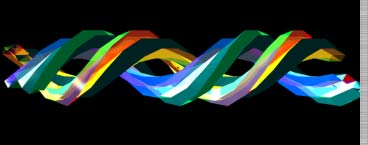 | the "twisted ladder" shape of DNA. |
| replicate(pg.131) | this means "to make a copy of" |
| complementary(pg.131) | a term used to describe the two sides of a section of a DNA molecule...a sequence such as ACCG always binds to the sequence of TGGC. |


