| A | B |
|---|
| Mountain | Rugged peaks of varying heights and steep slopes, 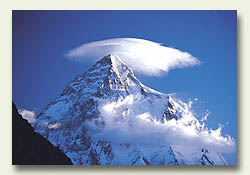 |
| Highlands | Like mountains, but all the peaks at the same height, 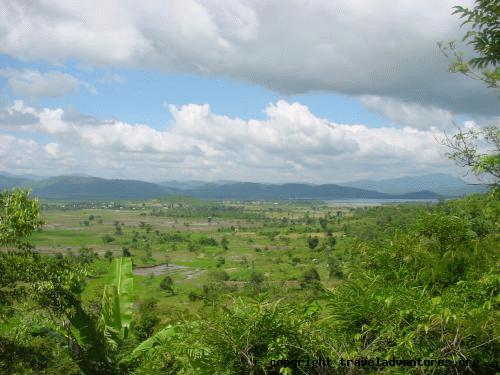 |
| Plateau | High, flat table land, 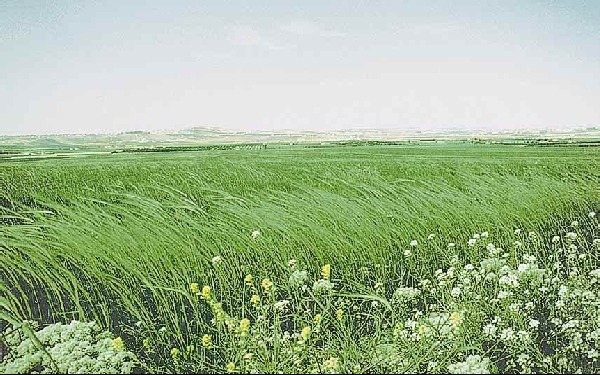 |
| Hills | Rounded mounds of no particular shape, 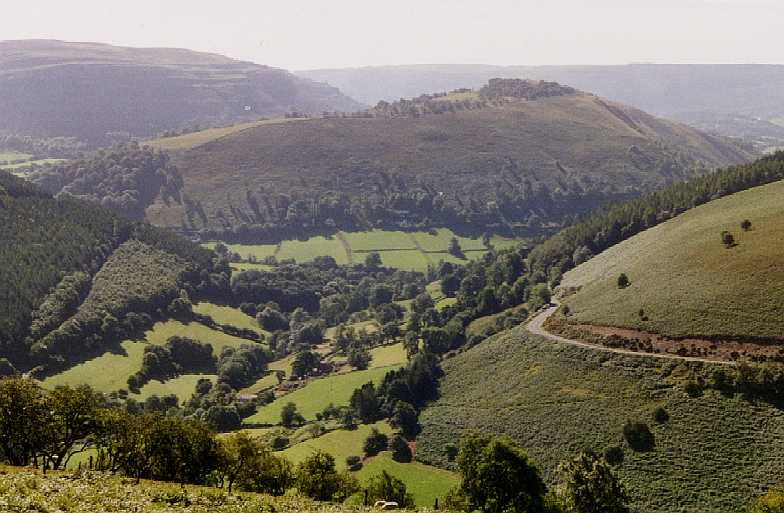 |
| Valley | Low, flat land surrounded by hills or mountains, 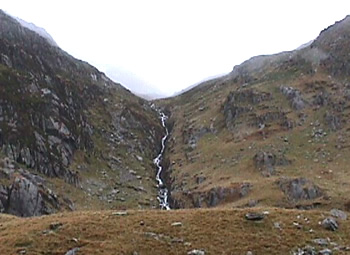 |
| Plains | Low flat land, 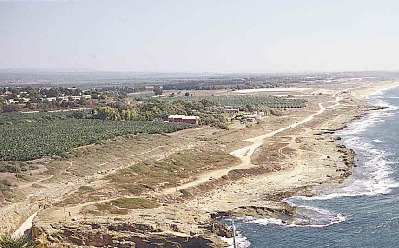 |
| Elevation | Altitude above sea level |
| Volcanism | Geological process in which layers of the earth's surface are changed because of up-wellings of magma and other materials either beneath the earth's surface or on top of the earth's surface. |
| Faulting | The geological process in which one rock mass displaces or deforms another along a fracture in the earth's surface. |
| Folding | The geological process in which layers of the earth's surface are deformed into "folds" due to lateral pressure exerted from opposite sides. |
| Isostasy | The movement of surface features up or down in response to the plasticity of the asthenosphere. |
| Subduction fault | Regions in the earth's crust where one plate slides under another submerged coastline: Shorelines that form either when sea level rises or coastal land subsides. |
| Ring of Fire | The almost continuous line of volcanoes and tectonically active regions that circle the Pacific Ocean. |
| subducting | The process whereby one fault slides under another. |
| Extension Fault | Regions in the earth's crust where plates move apart. |
| Rift Valley | A long depression in the earth's surface formed from the sinking of the surface through two parallel faults. |
| Graben | A long depression in the earth's surface formed from the sinking of the surface through two parallel faults. |
| Horst | A long ridge formed in the earth's surface from the uplift of the surface through two parallel faults. |
| Collision fault | The structure created when one plate of the earth's crust slides up relative to the plate it is jamming into. |
| Fault Plane | The surface of a crustal plate that is exposed when one plate rides over another. |
| Strike slip fault | The lateral movement of one plate past another. |
| Extrusive volcanism | Volcanic structures that occur above the earth's surface. |
| Magma Chamber | A pocket of molten rock within a volcano. |
| Magma conduit | The tube through which magma flows. |
| Magma | Molten rock that flows beneath the earth's surface; it is often confused with lava. |
| Intrusive igneous rocks | Rocks formed when magma solidifies underground; rocks formed from intrusive volcanism. |
| Intrusive structures | Volcanic structures that occur below the earth's surface. |
| Intrusive | Within the rock. |
| Extrusive | Outside the rock. |
| Volcanic Plug | The solidified structure that seals a vesuvian volcano, thus rendering the volcano extremely explosive as gasses build within the magma conduit and magma chamber. |
| Vesuvian volcano | A highly explosive volcano formed when a volcanic plug prevents the release of built up gasses in the magma chamber and magma conduit. |
| Nuee ardente | A glowing cloud of poisonous, volcanic gases that may occur during an eruption and suffocate victims. |
| Shield volcano | These volcanoes are almost exclusively basalt, a type of lava that is very fluid when erupted. For this reason these volcanoes are not steep. |
| Cone volcano | This form of volcano is a pile of loose fragments that have built up around a vent during a fountaining event. They form during eruptions that are not super explosive, meaning mostly Hawaiian-style of Strombolian eruptions |
| Clinker volcano | This volcano is called a “_________” volcano because as it weathers it breaks into small pieces that clang against one another as your foot rolls off each piece. |
| Composite cone | A steep volcanic cone built by both lava flows and pyroclastic eruptions. |
| Sima | This rock is the a petrologic (rock) name for the lower layer of the Earth's crust. This layer is made of rocks rich in silica and magnesium. |
| Sial | This rock is the a petrologic (rock) name for the upper layer of the Earth's crust. This layer is made of rocks rich in silica and aluminiium. |
| Cinder cone volcano | A volcanic cone built entirely of loose fragmented material (pyroclastics.) |
| Lava Dome | Mass of lava, created by many individual flows, that has built a dome-shaped pile of lava. |
| Lava Shields | A volcano made of basaltic lava. |
| Asthenosphere | The shell within the earth, some tens of kilometers below the surface and of undefined thickness, which is a shell of weakness where plastic movements take place to permit pressure adjustments. |
| Basalt | Volcanic rock (or lava) that characteristically is dark in color, contains 45% to 54% silica, and generally is rich in iron and magnesium. |
| Compound Volcano | A volcano that consists of a complex of two or more vents, or a volcano that has an associated volcanic dome, either in its crater or on its flanks. Examples are Vesuvius and Mont Pelee. |
| Stratovolcano | A volcano composed of both lava flows and pyroclastic material. |
| Tephra | Materials of all types and sizes that are erupted from a crater or volcanic vent and deposited from the air. |
| Pyroclastic Flow | Lateral flowage of a turbulent mixture of hot gases and unsorted pyroclastic material (volcanic fragments, crystals, ash, pumice, and glass shards) that can move at high speed (50 to 100 miles an hour.) The term also can refer to the deposit so formed. |
| Lahar | A torrential flow of water-saturated volcanic debris down the slope of a volcano in response to gravity. A type of mudflow. |
| Hawaiian Volcno | A volcano type characterized by extremely fluid basalticlava flows. |
| Dike | A sheetlike body of igneous rock that cuts across layering or contacts in the rock into which it intrudes. |
| Sill | A tabular body of intrusive igneous rock, parallel to the layering of the rocks into which it intrudes. |
| Laccolith | A body of igneous rocks with a flat bottom and domed top. It is parallel to the layers above and below it. |
| Batholith | An intrusive structure created when magma fills a massive hollow or cavern, which could be hundreds of square kilometres in size. |
| Midoceanic volcano | A volcano which is located between two divergent plates. |
| Lahar | Indonesian word for a rapidly flowing mixture of rock debris and water that originates on the slopes of a volcano. Lahars are also referred to as volcanic mudflows or debris flows. They form in a variety of ways, chiefly by the rapid melting of snow and ice by pyroclastic flows, intense rainfall on loose volcanic rock deposits, breakout of a lake dammed by volcanic deposits, and as a consequence of debris avalanches., 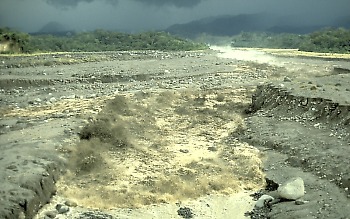 |



