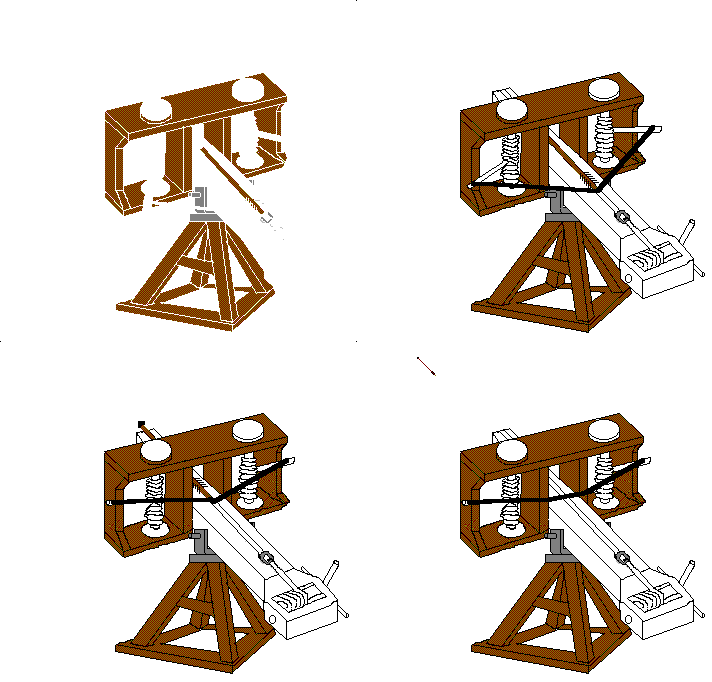
Ballista animation. The Ballista is a giant crossbow which fired spears instead of arrows. It is powered by twisted sinew ropes. The Ballista was accurate and could fire spears a great distance but they were difficult to build and were limited to hitting only what they could see.
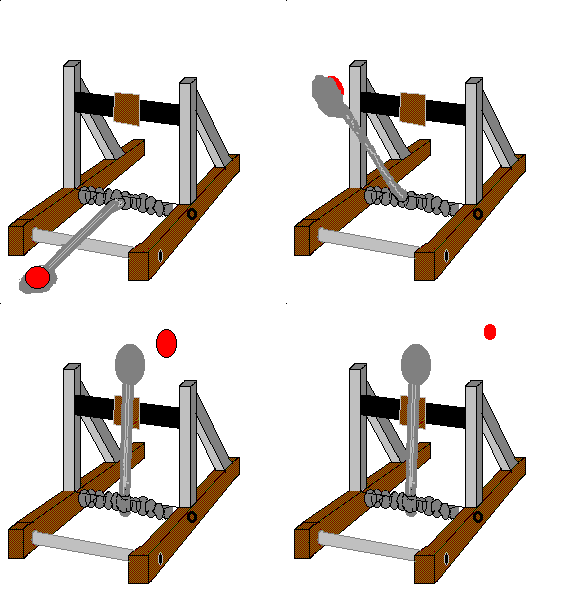
Roman Mangonel animation. The Mangonel was created by the Romans. It had one throwing arm that was connected to a base by twisted sinew ropes. It was light, easy to move and could throw rocks as well as fire, but it was innacurate.

Trebuchet animation. A trebuchet consists of five basic parts: the frame, counterweight, beam, sling and guide chute. The frame supports the other components and provides a raised platform from which to drop the counterweight. The counterweight, pulled by gravity alone, rotates the beam. The beam pulls the sling. The guide chute guides the sling through the frame and supports the enclosed projectile until acceleration is sufficient to hold it in the sling.
The sling accelerates and holds the projectile until release.
How the Beam Accelerates the Projectile
One end of the sling is fixed to the end of the beam, while the other is tied in a loop and slipped over a release pin extending from the end of the beam. As the beam rotates, it pulls the sling, with its enclosed projectile, down the guide chute. As the sling exits the chute, it accelerates in an arc away from the beam, but because the beam is still pulling the sling behind, the loop is held on the pin.
How the Sling Releases the Projectile
The sling continues accelerating through its arc until it eventually swings ahead of the release pin. At this point, known as the release angle, the loop slips off the pin and the sling opens
... releasing the projectile.
