| A | B |
|---|
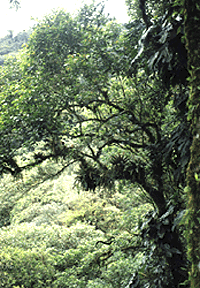 | TROPICAL RAIN FOREST-home to more species than all other biomes combined. The leafy tops of tall trees form a dense covering called a canopy. In the shade below the canopy, a second layer of shorter trees and vines form an understory. |
 | TROPICAL DRY FOREST-rainfall is highly seasonal rather than year-round. During the dry season, all trees drop their leaves to conserve water. |
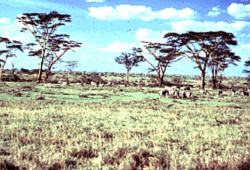 | TROPICAL SAVANNA-grasslands characterized by a cover of grasses, isolated trees, and small groves of trees and shrubs. |
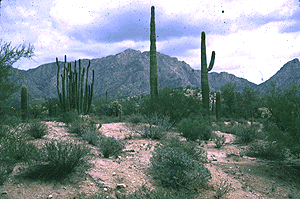 | DESERT-Dry. Annual precipitation is less than 25 centimeters. Organisms can tolerate extreme conditons. |
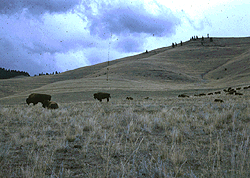 | TEMPERATE GRASSLAND-rich mix of grasses and underlaid by some of the world's most fertile soil. Plains and prairies that covered the vast areas of the "Old West". |
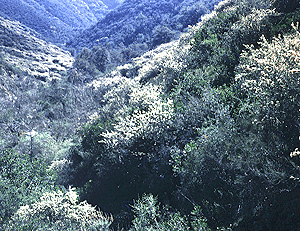 | TEMPERATE WOODLAND/SHRUBLAND-semiarid climate and a mix of shrub communities and open woodlands. Large areas of grasses, wildflowers, poppies, oak trees. |
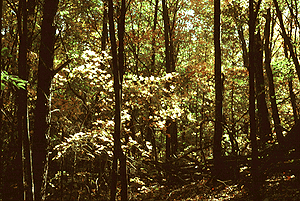 | TEMPERATE FOREST-mixture of deciduous and coniferous trees. Cold winters, shed leaves in autumn, plants bloom in spring. |
 | NORTHWESTERN CONIFEROUS FOREST-mild, moist air from the Pacific Ocean provides abundant rainfall. Variety of conifers ranging from giant redwood of Northern California to spruce, fir,and hemlock further north. |
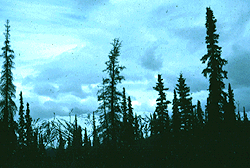 | BOREAL FOREST/TAIGA-dense evergreen forests. Winters are bitterly cold but summers are mild and long enough to allow the ground to thaw. Northern Hemisphere. |
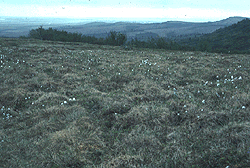 | TUNDRA-permafrost, a layer of permanently frozen subsoil. Tundra plants are short and stunted due to cycle of thawing and freezing. |



