| A | B |
|---|
| A change in the inherited characteristics of a species over generations | Biological evolution (L.EV.05.11, L.EV.05.12) |
| The differences that exist among a species | Variation (L.EV.05.11, L.EV.05.12) |
| The remains of a prehistoric organism | Fossils (L.EV.05.13) |
| Approximate dating can be done because we know that younger fossils will be above older ones in the rock layers | Relative dating (L.EV.05.13) |
| Body parts that don't seem to have a function anymore | Vestigal structures (L.EV.05.12) |
| Since DNA contains hereditary information, this can be determined from DNA | The ancestory of a species (L.EV.05.11, L.EV.05.12) |
| The study of nature using observation and experimentation | Science (L.EV.05.11, L.EV.05.12) |
| Explains how species change over time | Biological evolution (L.EV.05.11, L.EV.05.12) |
| Last member of a species dies | Extinction (L.EV.05.14) |
| Dinosaurs go extinct | 65 million years ago (L.EV.05.14) |
| Impression or remnants of organism in rock | Fossils (L.EV.05.13) |
| Grouping species based on characteristics | Classification (L.EV.05.21) |
| Evidence penguins evolved from flying ancestors | Feathers (L.EV.05.21) |
| Well-tested explanation for natural phenomena | Scientific theory (L.EV.05.11, L.EV.05.14) |
| Change in traits of population over generations | Biological evolution (L.EV.05.11, L.EV.05.12) |
| Beak size gradually increases in bird population over generations | Biological evolution (L.EV.05.12) |
| Many species wiped out globally | Mass extinction (L.EV.05.14) |
| Deepest rock layers | Contain oldest fossils (L.EV.05.13) |
| Highest rock layers | Contain youngest fossils (L.EV.05.13) |
| Cenozoic, Mesozoic, and Paleozoic | Geologic eras (L.EV.05.13) |
| Older fossils than Cenozoic | Paleozoic (L.EV.05.13) |
| Younger fossils than Paleozoic | Mesozoic (L.EV.05.13) |
| Formation of Earth | 4.5 billion years ago (L.EV.05.13) |
| Michigan last glaciated | 10 thousand years ago (L.EV.05.13, L.EV.05.14) |
| Petrified wood | Fossilized tree (L.EV.05.13) |
| Monkey, bat, dolphin, and cat | Share mammalian ancestor (L.EV.05.21) |
| Fish, amphibians, reptiles, birds, and mammals | Share vertebrate ancestor (L.EV.05.21) |
| Evidence whales had terrestrial ancestor | Lungs (L.EV.05.21) |
| Evidence snakes had ancestor with legs | Small limb bones in boa (L.EV.05.21) |
| Evolution of the horse | Fusion of toe bones (L.EV.05.21) |
| Extinct dinosaur with feathers | Archaeopteryx (L.EV.05.13) |
| Evidence for evolution of birds from dinosaurs | Archaeopteryx (L.EV.05.13) |
| Proposed testable explanation for observation | Scientific hypothesis (L.EV.05.11, L.EV.05.12) |
| Explains the relatedness of different species | Biological evolution (L.EV.05.11, L.EV.05.12) |
| Happened to 95% of species on Earth | Extinction (L.EV.05.14) |
| Radiometric dating of rock layers | Established geologic time scale (L.EV.05.13) |
| Cretaceous, Jurassic, and Triassic | Geologic periods (L.EV.05.13) |
| Multicellular animals first appear | Pre-Cambrian (L.EV.05.13) |
| Origin of life on Earth | 3.5 billion years ago (L.EV.05.13) |
| Origin of modern humans | 150 thousand years ago (L.EV.05.13) |
| Tells us many species have gone extinct | Fossil record (L.EV.05.13) |
| Fossil brachiopods on mountains | Used to be under water (L.EV.05.13) |
| Tropical plant fossils in temperate biome | Evidence for global climate change (L.EV.05.13) |
| Reason different species are related | Share common ancestor (L.EV.05.21) |
| Estimates relatedness of species | Similarity of anatomical features (L.EV.05.21) |
| Monkey, bat, dolphin, and cat | Similar forelimb structure (L.EV.05.21) |
| Common ancestor with backbone | Trout, frog, lizard, and tiger (L.EV.05.21) |
| Used to compare evolutionary relatedness | Stages of embryo development (L.EV.05.21) |
| Independent evolution of flight | Birds and insects (L.EV.05.21) |
| More recent common ancestor with frogs than fish | Reptiles (L.EV.05.21) |
| More recent common ancestor with reptiles than mammals | Birds (L.EV.05.21) |
| Extinct marine organism with exoskeleton | Trilobite (L.EV.05.13, L.EV.05.14) |
| Trait that helps with survival and reproduction | Adaptation (L.EV.05.11, L.EV.05.12) |
| Producing many offspring | Reproductive success (L.EV.05.11, L.EV.05.12) |
| Heritable change in DNA information of a gene | Mutation (L.EV.05.11, L.EV.05.12) |
| Passing on many copies of genes | Reproductive success (L.EV.05.11, L.EV.05.12) |
| Natural selection alters traits by affecting | Survival and reproduction (L.EV.05.11, L.EV.05.12) |
| Advantageous traits in current environment | Increase in frequency in population (L.EV.05.11, L.EV.05.12) |
| Traits that negatively affect survival | Decrease in frequency in population (L.EV.05.11, L.EV.05.12) |
| Traits that positively affect reproduction | Increase in frequency in population (L.EV.05.11, L.EV.05.12) |
| Species may go extinct if this occurs | Environmental change (L.EV.05.14) |
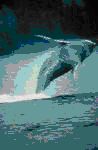 | Mammal with lungs (L.EV.05.21) |
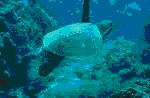 | Evolved from terrestrial reptile with lungs (L.EV.05.21) |
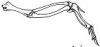 | Bird forelimb (L.EV.05.21) |
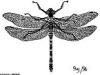 | Wings without feathers (L.EV.05.21) |
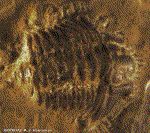 | Trilobite (L.EV.05.21) |
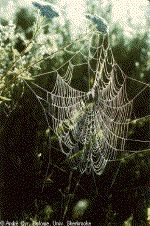 | Adaptation for capturing food (L.EV.05.11) |
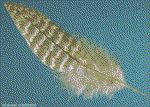 | Adaptation for flight (L.EV.05.12) |
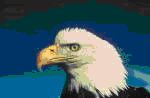 | Adaptation for ripping flesh from prey (L.EV.05.12) |
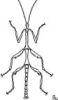 | Adapted to look like stick (L.EV.05.12) |
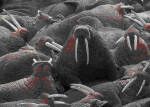 | Variation in traits in population (L.EV.05.12) |
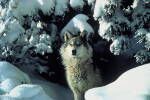 | In group of vertebrates that contains whales, bats, and rats (L.EV.05.21) |
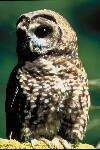 | In group of vertebrates that contains penguins and ostriches (L.EV.05.21) |
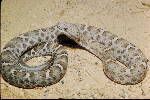 | In group of vertebrates that contains turtles and lizards (L.EV.05.21) |
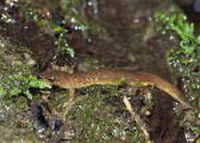 | In group of vertebrates that contains frogs and toads (L.EV.05.21) |
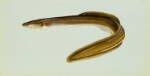 | In group of vertebrates that contains seahorses and salmon (L.EV.05.21) |
| Produces offspring with traits identical to parent | Asexual reprodection (L.EV.05.11, L.EV.05.12) |
| Eye color among fruit fly population | Heritable variation (L.EV.05.12) |
| Fish fin and scale damage from competition | Nonheritable variation (L.EV.05.12) |
| Environment selects beneficial traits | Natural selection (L.EV.05.11, L.EV.05.12) |
| Can alter the advantage or diadvantage of particular traits | Environmental change (L.EV.05.14) |
| Benefits population experiencing environmental change | Sexual reproduction (L.EV.05.14) |
| Allows population to adapt to changing environment | Inherited variation in population (L.EV.05.11, L.EV.05.12) |
| Cannot adapt to changing environment | Population without variation (L.EV.05.14) |


