TEST IS on OCTOBER 26, 2011 and OCTOBER 27, 2011 - BLOCK DAY!!!!
TEST IS on OCTOBER 26, 2011 and OCTOBER 27, 2011 - BLOCK DAY!!!!
EXTRA CREDIT EXTRA CREDIT !!!!!!!!
EXTRA CREDIT OPTION FOR QUARTER 1: DUE MONDAY (10/24) !!!!!!!! I will add 5 points to your test score,
Create a WORD CARD for one of the KEY TERMS/IDEAS FOR THIS TEST. The key term MUST be written on the card (in LARGE LETTERS). The card must have a WRITTEN description of the word and TWO picture/images that connects to the word. The word needs to be on THICK construction paper or card stock and can not be bigger than a piece of regular paper. The WORD CARD should be colorful, creative, neat, and connected to current information in 8th grade science.
Here are some examples: http://community.prometheanplanet.com/en/blog/b/blog/archive/2011/10/12/teaching-science-vocabulary-with-word-walls.aspx
EX: 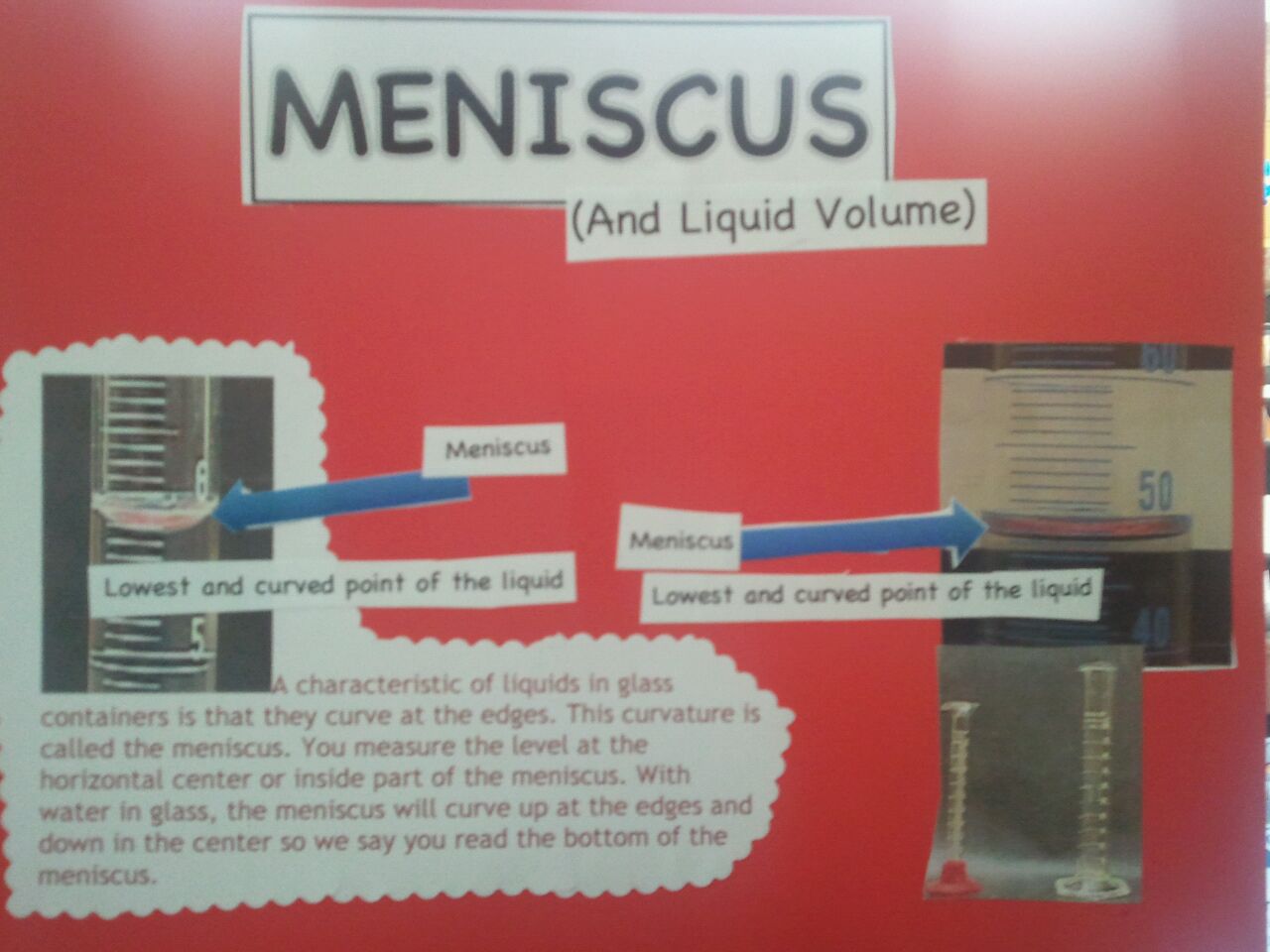
WHAT TO REVIEW (not in any particular order):
1. Think Like A Scientist Powerpoint
2. Organizing Information Powerpoint
3. Scientific Method Powerpoint
4. Scientific Notation Powerpoint Notes - on my website
5. Metrics Powerpoint Notes
6. Density Powerpoint Notes - on my website
7. Notes in your Comp book
8. YOU MUST KNOW ALL THE INFO ON YOUR NOTECARDS!
9. Lab handouts and class assignments
10. REVIEW ALL LABS AND WEBQUESTS
11. Pages in BOOK: 158, 159, 160, 161, 162, 163, 166, 168, 172, 173, 174, 175, 176, 178
For each key word listed below you should know what it means, how scientists use the skill/idea, and give examples.
Keywords: Observe, Quantitative observations, Qualitative observations, Data/Evidence, Infer, Predict, Classify, Make Models, Science Attitudes, Communication, Comparing and Contrasting, Applying Concepts,, Relating cause and effect, Making Generalizations, Venn Diagram, Concept Maps, Linking words, Cross-linkage, Flow charts, Compare and Contrast Tables, Cycle Diagrams, Bar graphs, x-axis, y-axis, how to make a graph, safety symbols, Steps of Scientific Method, valid observation, hypothesis, data, theory, law, control group, variable, independent (manipulated) variable, dependent (responding)variable, controlled experiment, base, exponent, coefficient, scientific notation, standard notation, ratio, proportions, percentage, exponent
Metrics: Length, Temperature, Volume, Mass, Meter, kilometer, centimeter, millimeter, liter, milliliter, degrees celsius, kilogram, gram, balance, meniscus, Density: Mass, Volume, Density, Weight, density of water,
You will need to know the following:
1. Rules for converting Standard notation to Scientific Notation (how to apply)
2. Rules for converting Scientific Notation to Standard Notation (how to apply)
3. How to convert from Standard notation to Scientific Notation (and vice versa) while keeping the correct significant figures.
4. How to change from incorrect format to correct format in Scientific Notation
8. Why we use Scientific Notation
9. Purpose of scientific notation
12. What do the Powers of Ten show you
13. How to apply Scientific Method
14. Metric prefixes and what they mean (see METRIC PREFIX link below)
15. Examples of large and small numbers that would need to be written in Scientific notation (example, mass of dust particle, mass of planets, speed of light, etc)
Created by David Bernstein: http://quizlet.com/6523636/think-like-a-scentist-flash-cards/
Created by David Bernstein: http://quizlet.com/6511278/organizing-info-flash-cards/
Created by Mrs. Allen: http://www.quia.com/rr/252453.html (only covers TLAS, Safety, and Science Skills)
Created by Mrs. Allen: http://www.quia.com/quiz/1486145.html (only covers TLAS, Safety, and Science Skills)
Odds and Ends:
1. Density of "ocean" water
2. Metric Prefixes
3. Difference between weight and mass
4. Metrics notecards
5. Density of pure water
6. Volume = L X W X H
7. Formulas for density (d=m/v) or (m= d x v) or (v = m/d)
8. 3 main principles of density (powerpoint)
9. 1 mL = 1 cm3
10. How to calculate volume of an irregular shaped object
11. What tool is used to measure weight?
If object has a density > than 1.00 g/mL it will sink in water and if it is < than 1.00 g/mL it will float in water.
This test is NOT going to be a measure of how well you can memorize key terms... it is going to test you on how well you can APPLY the information to different scenarios and problems. For example, I might give you an object and have you describe the object using 7-9 key terms. You will also be required to compare and contrast key terms with each other.
There will be density problems... you need to know the formula and how to rearrange it to calculate mass and volume. (See number 7 above).
You will have the following types of questions: T/F, multiple choice, fill in the blank (no word bank), short answer, and essay.
YOU MUST KNOW THE METRIC PREFIXES!!!!!! YOU MUST KNOW THE METRIC PREFIXES!!!!!! YOU MUST KNOW THE METRIC PREFIXES!!!!!!
THESE ARE ON YOUR NOTECARDS and WEBQUEST !!!!!!
Example = hecto = h= 100 Example = kilo = k = 1000
|
|


