ROMAN
-ROME IS CAPITAL CITY
-"CAPUT MUNDI" MEANS CAPITAL OF THE WORLD
-POPULATION OF 1 MILLION PEOPLE
-NAMED AFTER ROMULUS (OF ROMULUS & REMUS)
-RAISED BY A WOLF = SYMBOL OF THE EMPIRE
-BUILT A NETWORK OF ROADS TO CONNECT THE EMPIRE
-LANGUAGE = LATIN - ALSO CONNECTED THE EMPIRE
-GOVT WAS A REPUBLIC WITH A SENATE
-SPQR - ABBREVIATION FOR SENATE & THE PEOPLE OF ROME
-ADMIRED GREEKS, BORROWED MANY THINGS FROM THE GREEK
-HAD SAME MYTHOLOGY, CHANGED ONLY NAMES OF GODS
EX, ZEUS RENAMED JUPITER (SYMBOL WAS EAGLE)
-LASTS 700 YEARS
-1/2 BC, 1/2 AD
-GOOD AT PORTRAITS AND TECHNOLOGY
ROMAN PORTRAITS
EMPEROR AUGUSTUS
-NEPHEW OF JULIUS CAESAR
-SHOWS GREEK INFLUENCE: CONTRAPPOSTO, CALM FACE, REALISTIC
TEXTURES & BODY DETAIL
-ARM OUT= MAKING A PUBLIC SPEECH
-EXCEPTIONALLY LIFE-LIKE FACES
-EXACTLY COPIED - NOT IDEALIZED
-"BUST" - WHEN THE PORTRAIT IS JUST THE HEAD
- OFTEN COPIED AFTER DEATH MASKS (WAX MOLDS)
- MANY WOMEN BUSTS
-INDICATES HIGHER STATUS THAN GREEK WOMEN
TEST SLIDE, CONSTANTINE, ANON. ROMAN
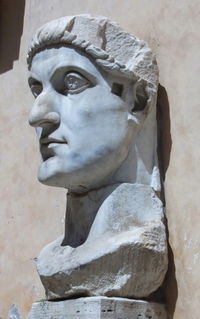
-EMPEROR WHO LEGALIZED CHRISTIANITY - 313 AD
-B/C OF A DREAM OMEN
-NOT A BUST - BROKEN
-MARBLE, HEAD ALONE MEASURES 8'
-TORSO DOES NOT SURVIVE - WAS WEARING BRONZE ARMOR
MARCUS AURELIUS
-"EQUESTRIAN" - PORTRAIT ON A HORSE
-ONLY EQUESTRIAN LEFT TODAY
-SURVIVES B/C PEOPLE CAME TO BELIEVE IT WAS CONSTATINE
-POSITION OF HORSE SYMBOLIZES HOW RIDER DIED
0 LEGS UP = NATURAL CAUSES
1 LEG UP = ON A CAMPAIGN
2 LEGS UP = IN BATTLE
ARCH OF TITUS
-TRIUMPHAL ARCH
-BUILT TO HONOR MILITARY VICTORY
-GENERAL TITUS CONQUERED JERUSALEM
-USED FOR VICTORY PARADES
-DECORATED WITH GREEK ELEMENTS
-DECORATED WITH LATIN INSCRIPTION
-DECORATED ON INSIDE WITH RELIEF
-SHOWS PARADE
-SHOWS COMBINATION OF LOW & HIGH RELIEF (CREATES DISTANCE)
TECHNOLOGY
-first to use rounded arch
-pushes weight out, support lies therefore in the side walls
-ADVANTAGE = allows builders to open up the inside for larger spaces
-kestone - top of the arch, anchors, pushes weight out
-barrel vault - like a tunnel - big space but not much natural light possible
-dome - based on rounded arch
-first to use concrete - faster & cheaper than stone construction
TYPES OF ROMAN BUILDINGS:
1. roads & bridges
2. triumphal arches
-built in honor of military victories
-used in parades
-for ex: Arch of Titus
- honors Titus' victory over Jerusalem
-50' tall
-use of columns for decoration rather than support
-relief carvings on interior
-showing the parade
-shows use of low and high relief together
-creates the effect of depth & distance
3. aqueducts
-carry water
-flows along the top
-flows by gravity
-stacking rows of arches allowed for different levels of terrain
-sudden changes of direction controlled the water's speed
-built mostly by Roman soldiers
4. basilica
-meeting hall
-accomodated large crowds
5. sports arenas
-for ex:
TEST SLIDE, COLOSSEUM, ANON, ROMAN
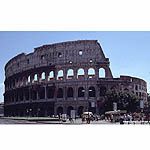
-8 yrs to build, in Rome
-torn apart in Renaissance to re-use its materials
-50,000 to 80,000 specators
-3 levels of arches - separated by columns - used doric, ionic & corinthian
-white marble to cover all the concrete surfaces
-model upon which modern football stadiums are built
-many survive today
6. temples
-for ex:
TEST SLIDE, PANTHEON, ANON, ROMAN
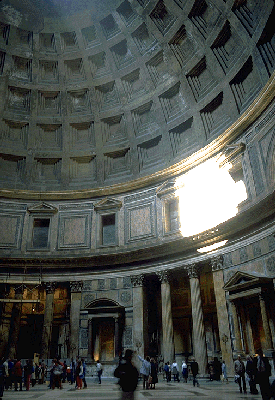
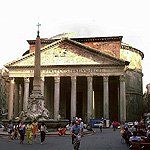
-temple in Rome
-best preserved building of Romans - used today as a Christian church
-front is based on greek design
-post & beam, columns, corinthian capitals, pediment
-dome technology
-made of concrete
-measures 144' across
-very heavy, requires lots of support
-side walls are 20' thick
-no windows in wall
-opening in center left as only natural light source
-can rain into the center - drains in the floor to carry water out
-30' across opening
-keystone constructed in a ring-like shape to stablize the top
-dome is thinner to center and thicker to the sides
-weight is further reduced by "coffereing"
-coffering is the square-shaped designs in the ceiling
-coffering gets smaller to the center
-gives the illustion of greater height
-Pantheon was dedicated to the Roman PLANET GODS
-building symbolsim refers to planets
1. spherical shape
2. "dome of heaven" was painted blue
3. bronze stars in the coffering
4. opening allows a view of the sky at all times
5. circle of light enters as a sun dial to tell time
PAINTNG
-survives at Pompeii
-a roman city destroyed by a volcano
-volcanic ash ended of preserving the town as well
-Roman houses open to center courtyard
-no outside windows - kept the house cool
-painted "pretend windows"
-picture frame like a window frame to look thru to a 3-d space
-popular subjects included:
cityscape - view of the city
landscape - view of nature
still life - arrangement of objects on a table top
mythology
-used painting techniques:
1. atmospheric perspective - distant view where colors & details fade
2. shading - lights & dark to create volume
3. natural light source - look of shadows casting in specific direction
4. foreshortening - things coming forward in the picture
-also did "mosaics"
-design of colored tiles placed into cement or plaster
-tiles are called tesserae
-very versatile - can go in places where painting can't go - like on the floor
(painting , however, is quicker to do & easier to shade & detail
|
|
