The Lost Generation
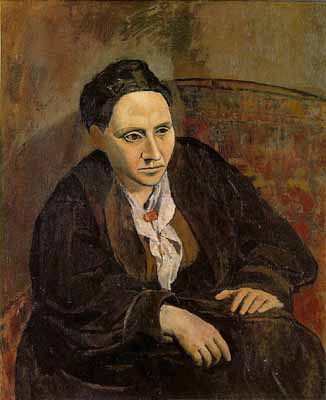
"You are all a lost generation."
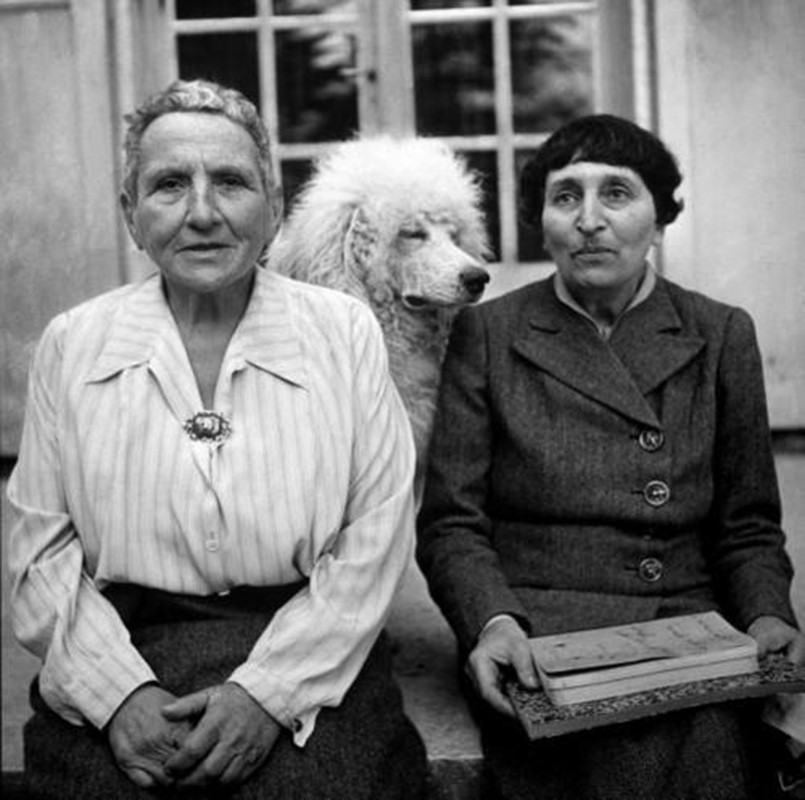
Gertrude Stein
COURSE OVERVIEW
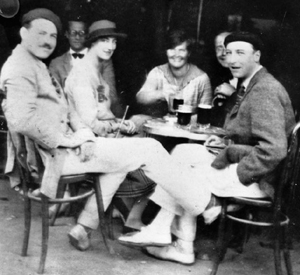
After World War I, a group of enormously talented American writers fled to Paris seeking
intellectual freedom and cultural refuge. Together with their European counterparts, this
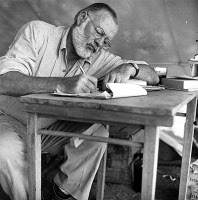
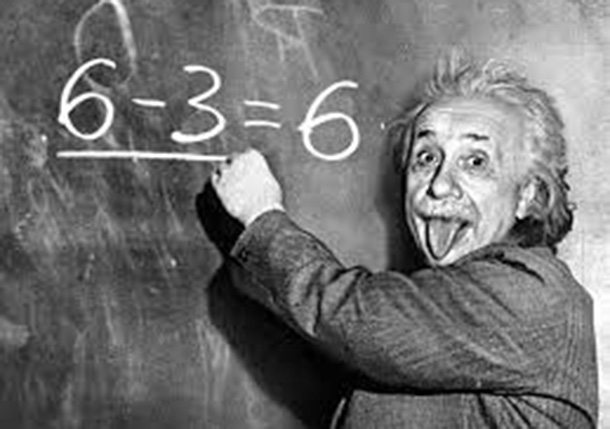
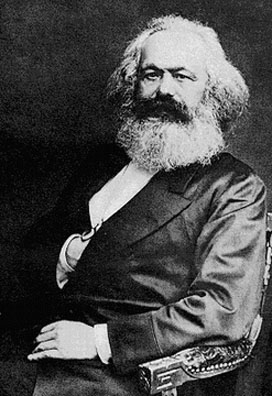
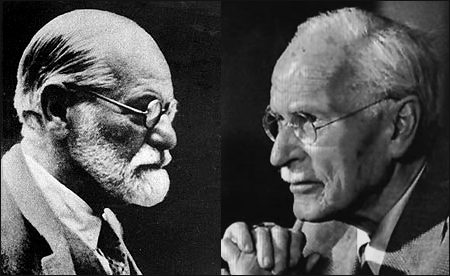
“Lost Generation” lived a decadent, bohemian lifestyle. They partied late into the night, drank to excess, engaged in casual romances, and at the same time produced some of the world’s great fiction, poetry, and art. As a counter-cultural movement, members of the Lost Generation, together with such contemporaries as Freud, Marx, Einstein, and Nietzsche, challenged conventional ideas and values, inspired profound intellectual, cultural, and literary changes, and forged new world views. Concurrent developments in science, art, architecture, music, and fashion transformed popular culture and social mores
in America.

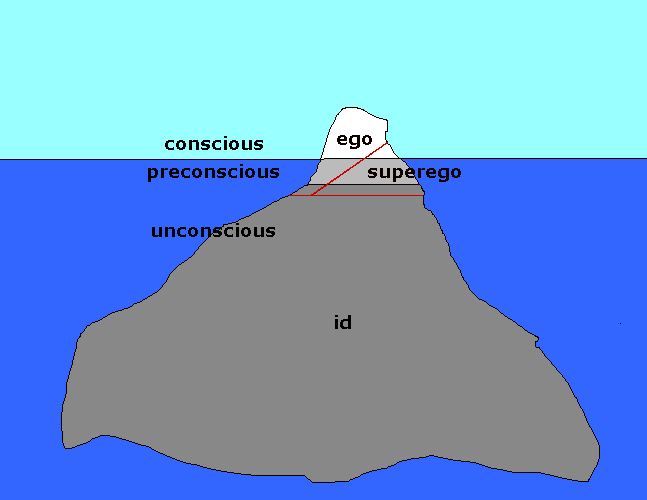
To gain an understanding of this rich and complex period, we will study selections of prose and poetry from a number of Lost Generation writers, including Stein, Hemingway, Fitzgerald, Joyce, H.D., Loy, Barnes, Eliot, Pound, and others, the influence of such profound thinkers as Freud, Marx, Darwin, Jung, and Nietzsche, and the development of literary modernism. We will also investigate the art, architecture, fashion, and popular culture of the period. Our approach will be multi-cultural, multi-genre, and interdisciplinary. A number of guest speakers will present background material to the class.
COURSE EXPECTATIONS
Students must complete all assignments by the published due date in accordance with English Department policy (see below). Students must bring all assigned texts, handouts (many readings will be distributed as handouts), utensils, etc., to each class, and they should be prepared to participate in class discussions. "Multi-tasking" in class, especially on electronic devices, is prohibited. All assignments, due dates, schedule changes, handouts, etc., will be posted on the class website--students are expected to check the website daily. A link to this site is posted on Canvas and the LFA website.
COURSE OBJECTIVES
1. Identify, understand, and assimilate the intellectual, social, and cultural changes
that occurred in the late nineteenth and early twentieth centuries that relate to
"The Lost Generation."
2. Identify, understand, and assimilate the relevant historical events of the late
nineteenth and early twentieth centuries that contribute to the development of
"Modernism."
3. Identify, understand, and assimilate the literary and artistic movement known as
"The Lost Generation," its important participants, and its influence on later
literature and art.
4. Identify, understand, and assimilate the literary, artistic, and cultural movement
known as "Modernism" and its roots in "The Lost Generation."
5. Develop the ability to write through various modes of rhetorical analysis effective critical
and creative essays.
6. Develop the ability to conduct research into the topics under discussion.
7. Develop the ability to present one's research orally using appropriate technologies.
8. Develop the ability to lead class discussions.
ACADEMIC HONESTY
Students are expected to adhere to LFA's policy on academic honesty at all times. Please refer to the Student Handbook and English Department policy (see below) for a complete discussion of these expectations.
GRADING
Three major papers (25%), five short papers (15%), two full-period exams (15%), one formal oral presentation and discussion leadership (10%), classroom participation (5%), frequent quizzes (10%), and a final paper/project (in lieu of a final exam) (20%) will determine grades. The number and weight of assignments are subject to change based on class progress; percentages are approximate. Students will be assigned to lead most class discussions.
_______________________________________________________________________
English Department Policies
The English Department has standardized the following elements of the syllabus for all courses:
English Department Policies
2018-2019 Academic Year
Late Work/Absence Policy
Excused Absences
If a student is “excused absent” from class(es) and misses graded work (quiz, test, presentation, in-class activity), he/she has X + 1 days to make up all required missed work for full credit. If work is completed after the X + 1 time period, the work is to be accepted and the grade penalized 1/3 of a letter grade for each school day beyond the X + 1 period. Partial day absences, athletic activity, and field trips are included in this policy because they have been previously announced.
If a student has an excused, full-day absence on the day a long-term major assignment (assigned one cycle or more prior to the due date) is due, the assignment should be submitted the day the student returns to class in order to receive full credit. If work is not submitted at that time, the late work policy as outlined above will be applied.
Unexcused Absences
For unexcused absences, graded work is to be submitted the day the student returns. There is no “X + 1” policy.
On a point scale, the lowest score recorded will be at 50%.
If a student is present in class but simply fails to submit requested work, the teacher has the autonomy to accept 50% credit toward the assignment if the work is turned in at the following class meeting or no credit if the assignment is submitted beyond one class date.
In all cases, it is the student’s responsibility to consult with the teacher regarding missed work. Failure to do so does not alter any of the above guidelines. The teacher, likewise, has an obligation to respond to the student when this information is requested.
Individual teachers have the autonomy for discretion in consultation with the Department Chair, if deemed appropriate/necessary. Daily homework is at the discretion of the individual teacher; the teacher will have no expectation/obligation to give credit for late homework.
Late work connected to academic honesty/integrity will be considered in consultation with the Department Head.
Academic Honesty and Integrity:
Samuel Johnson once said, "Integrity without knowledge is weak and useless, and knowledge without integrity is dangerous and dreadful."
Academic integrity is more than just obeying the rules. How you conduct yourself at LFA says a lot about the type of person you are; which speaks to your personal integrity and moral courage. At Lake Forest Academy, academic integrity refers to your acknowledgment of and respect for the academic principles and behaviors that support the school's mission. This includes:
• Completing your own work (cooperation is fine; copying is not);
• Documenting your research (citing the work of others); • Acting ethically and with integrity as you pursue your academic studies;
• Being responsible and taking responsibility for your actions;
• Learning from your mistakes; and
• Setting the example (being a good academic citizen).
Students enrolled in this course are expected to maintain school policies on academic honesty and integrity. All work that you turn in should be yours. Proper credit must be given to the ideas and work borrowed from or influenced by others. Failure to do so may result in disciplinary actions according to school policy. You will review examples of what is and is not academic honesty and integrity at the beginning of each semester.
All students are required to act ethically and with integrity in academic matters and demonstrate behaviors that support academic values. To reiterate, these behaviors may include, but are not limited to:
a. Completing one’s own original work;
b. Knowing and following the appropriate citation method in regards to the use
of quotation marks and paraphrasing (ie, Review MLA style and the
expectations for a Works Cited and Works Consulted listing.);
c. Collaborating appropriately (unless teamwork is permitted, it is prohibited);
d. Acknowledging the contribution of others (giving credit);
e. Ensuring that others do not use a student’s work inappropriately;
f. Acting ethically and with integrity while conducting research and in the
reporting of research results; and
g. Following published examination rules and protocols
More on academic integrity, honesty, and plagiarism will be discussed in class. You may be required to submit some written work through the cloud-based service Turnitin, which manages the submission, tracking, and evaluation of student work and originality.
If a student has become involved with an act of academic dishonesty, the teacher should speak with the offending student and notify the Department Chair. Then, the student will be referred to the Dean of Student’s Office who will advise as to whether or not notification to the student’s advisor will be made. The DOS and Advisor should not be spoken with until the teacher speaks with the student whose integrity is being challenged. The DOS and the Discipline Committee will determine the institutional consequence for an academic honesty violation.
The individual teacher should consult with the Department Head who will verify the academic consequence involved which will be based on the Department’s overall philosophy:
• In order to receive credit for a paper that has violated the Academic Honesty/Integrity Policy, the student must write on a new topic (or will receive a 0% for failure to complete the work.
• Freshmen and sophomores can earn up to 70% credit for the rewrite
• Juniors and seniors can earn a maximum of 50% credit.
• Tests, quizzes, and homework connected to Academic Dishonesty do not
have to earn any credit.
(Adapted from Brock University)
Retakes/Rewrites/Revisions
The English Department has a revision process philosophy that is not tied to your final paper grade. Test retakes and in-class timed essay rewrites are not given.
At the time a significant writing assignment is given, the teacher will highlight the writing process (brainstorming, drafting, revising, and final copy) along with accompanying deadlines (i.e., B3 for brainstorming, D4 for 1st draft, A1 for final copy). During the writing process, you may seek support in-class, over cycle meetings with your teacher, with peer reviewers, and/or with the writing center. Students may use an external reviewer but should be mindful of the school’s position on academic honesty and integrity. Your classroom teacher may provide guidance and direction (i.e., review a paragraph for input and support) but will not be expected to provide “full paper” review until the time of submission. The essence of your process is for you to demonstrate your capabilities.
Your teacher may provide feedback on your writing during the writing assignment’s process, may provide some revision suggestions and examples, and may provide an assessment tool for “needs improvement” (such as a checklist or rubric). However, students are barred from revisions after the final due date and will not be permitted to revise further. A teacher’s grade will correlate with teacher comments and feedback at the time your writing is assessed.
Our philosophy is to encourage the process of writing—not the writing for a particular grade. Use your brainstorming, drafting, and revising process time to get the necessary feedback you need to shape and improve your writing skills. Students should submit their entire writing process (word maps, percolating, brainstorming, drafting, and revising) as part of their final submission. Students should have evidence of their writing process and not indicate they revised “as they wrote.” MLA expectations are held in Grades 9-12, which means including a Works Cited and Works Consulted page. Further, students will also have in-class timed writings (revisions not permitted) to refine other types of writing skills.
Papers connected to a final exam may constitute an exception and will be discussed with your individual teacher.
If merited, rewritten/revision work may be done on a case-by-case, exceptional basis. This will be a rare occurrence due to extenuating circumstances. The Department Chair will be consulted with individual questions and concerns.
Curriculum Queries
Issues that might, from particular social, historical, or cultural viewpoints, be considered controversial, including references to ethnicities, nationalities, religions, races, dialects, sexualities, gender, or class, may be addressed in texts that have been deemed appropriate for LFA English courses. Fair representation of issues and peoples may occasionally include controversial material. Since LFA students have chosen a school that emphasizes citizenship, scholarship, responsibility, and character, participation in this course depends on a level of maturity consistent with students who have engaged in thoughtful analyses of a variety of texts (Adapted from the AP College Board). See page 21 of the LFA Student Handbook for further information or consult with the English Department Chair with concerns and questions about course materials.
________________________________________________________________________
________________________________________________________________________
REQUIRED TEXTS
1. Hemingway, Ernest, A Farewell to Arms. New York: Scribner, 2003.
ISBN 9780684801469.
2. Wiser, William, The Crazy Years: Paris in the Twenties. London: Thames and Hudson, 1990. ISBN 978-0500275894. (Note to Students: Please purchase the 1990 edition--Amazon offers many new and used.)
______________________________________________________________________
DUE DATES/ASSIGNMENTS
1. A-day, 1/7
In class: Policies, Course introduction (important terms; general overview)
2. B-day, 1/8 (Double)
HW: Read/analyze "First Texts" (Handout #1)
In class: View documentary, "Archdukes, Cynicism, and World War I"
3. D-day, 1/10
HW: Read/analyze "First Texts" (Handout #2)
In Class: In Class: Guest Speaker: Mr. Dolbee ("Why so many Americans left the U.S. after WWI")
4. E-day, 1/11
In Class: Read/analyze "First Texts" (Handout #2)
5. G-day, 1/15
HW: Think about your top five beliefs
Read Chap. 1 in Farewell to Arms
_________________________
CYCLE 2
_________________________
6. A-day, 1/16
HW: Read Hemingway, A Farewell to Arms, to end of Chap. IV
Work on Paper #1
7. B-day, 1/17 (Double)
In Class: View "The Lost Generation"
HW: Work on Paper #1
8. D-day, 1/22
HW: Read Hemingway, A Farewell to Arms, to end of Chap. IX (Quiz!)
Work on Paper #1
In class: Discuss FTA and decline of traditional belief systems.
9. E-day, 1/23
HW: Work on Paper #1.
In class: Discuss FTA and decline of traditional belief systems

10. G-day, 1/25
HW: Paper #1 DUE!
Read Hemingway, A Farewell to Arms, to end of Chap. XII
In class: Discuss decline of traditional belief systems.
_________________________
CYCLE 3
_________________________
11. A-day, 1/28
Catch up with discussion
12. B-day, 1/29
HW: Read Hemingway, A Farewell to Arms, to end of Chap. XVI
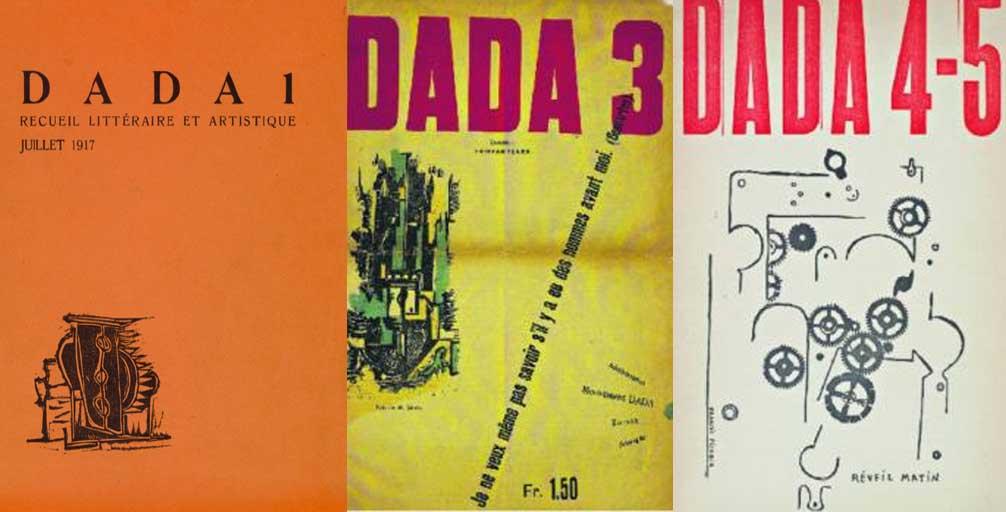
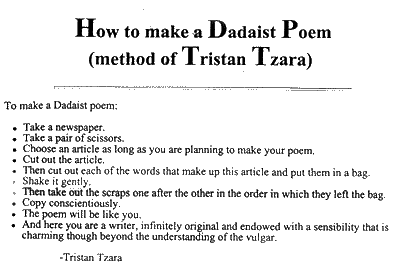
In class: Dada Manifesto
13. D-day, 1/31
HW: Read Hemingway, A Farewell to Arms, to end of Chap. XIX (Quiz!)
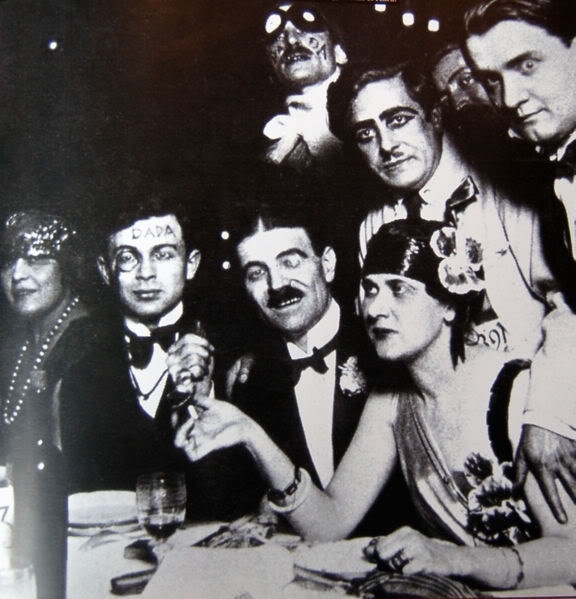
"Dada is the groundwork to abstract art and sound poetry, a starting point for performance art, a prelude to postmodernism, an influence on pop art, a celebration of anti-art to be later embraced for anarcho-political uses in the 1960s and the movement that lay the foundation for Surrealism."
—Marc Lowenthal, translator's introduction to Francis Picabia's I Am a Beautiful Monster: Poetry, Prose, And Provocation
____________________________________________________________
____________________________________________________________
14. E-day, 2/1
Read Hemingway, A Farewell to Arms, to end of Chap. XXIII (quiz)
Catch up with discussion
15. G-day, 2/5
Read Hemingway, A Farewell to Arms, to end of Chap. XXIV

_________________________
CYCLE 4
_________________________
16. B-day, 2/8
Read The Crazy Years, Chap. 1
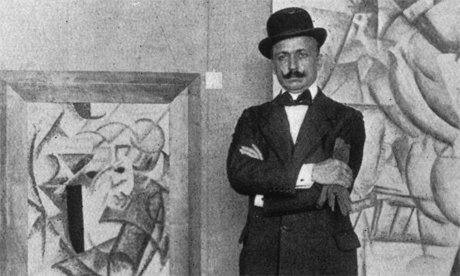
In class: Modigliani, Deschanel, Dada
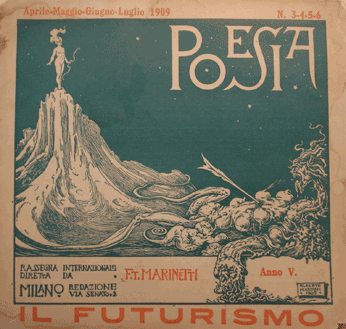
In class: Futurism

17. D-day, 2/12
In class: Finish Futurism
18. E-day, 2/13
Read Hemingway, A Farewell to Arms, to end of Chap.
Work on Short Paper #2 on Hemingway, A Farewell to Arms.
19. G-day, 2/15
Read Hemingway, A Farewell to Arms, to end of Chap. XXVII
Work on Short Paper #2 on Hemingway, A Farewell to Arms.
______________________________________________________________
Short Paper #2: Analyze in 1-2 pages the thematic significance of the passage in A Farewell to Arms in Chap. XXVII, p. 161 ("We won't talk about losing...to go back to Gorizia.").
______________________________________________________________
_________________________
CYCLE 5
_________________________
20. A-day, 2/19
Read Hemingway, A Farewell to Arms, to end of Chap. XXXII (Quiz for sure!)
Work on Short Paper #2 on Hemingway, A Farewell to Arms.
21. B-day, 2/20
Final Draft of Personal Manifesto due!
Work on Short Paper #2 on Hemingway, A Farewell to Arms.
22. D-day, 2/22
Read Hemingway, A Farewell to Arms, to end of Chap. XXXVII
Work on Short Paper #2 on Hemingway, A Farewell to Arms.
23. E-day, 2/25
DUE: Short Paper #2 on Hemingway, A Farewell to Arms!
In class:
_________________________
CYCLE 6
_________________________
24. A-day, 2/28
25. B-day, 3/1
26. D-day, 3/5
28. E-day, 3/6
Read The Crazy Years, Chap. 4
29. G-day, 3/8
Read The Crazy Years, Chap. 5
Review for Test #1 (Mid-term Exam)

Read Stein, selections from "Tender Buttons" (handout)
Prepare for in-class, timed writing based on FTA, Chap. XLI (final chapter): "I sat down...only steamed the ants." Analyze this passage in relation to one or more of the larger themes we've discussed this first half of the term.
_________________________
CYCLE 7
_________________________
29. A-day, 3/9
Review for Test #1 (Mid-term Exam)
30. B-day, 3/12 (Double)
Review for Test #1 (Mid-term Exam)
31. D-day, 3/15
Review for Test #1 (Mid-term Exam)
32. G-day, 3/16
Test #1 (Mid-term Exam)
Spring Break!
_________________________
CYCLE 8
_________________________
33. A-day, 4/5
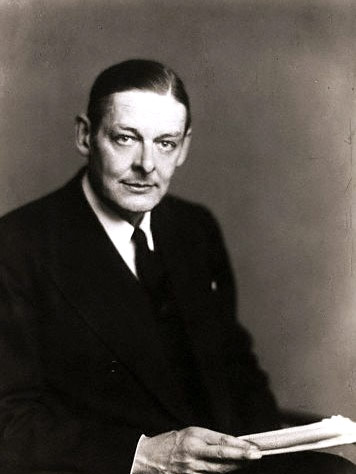
Read/Analyze Eliot, "Preludes" (handout)
34. B-day, 4/6
Read/Analyze Eliot, "Preludes" (handout)
Read/Analyze Eliot, "The Love Song of J. Alfred Prufrock" (handout)
In Class: Group Work: Produce a variorum commentary on Google Doc!
D-day, 4/10
Read/Analyze Eliot, "The Love Song of J. Alfred Prufrock" (handout)
E-day, 4/11
Read/Analyze Eliot, "The Hollow Men" (handout)
G-day, 4/13
Read/Analyze Eliot, "The Hollow Men" (handout)
_________________________
CYCLE 9
_________________________
A-day, 4/16
Read/Analyze Eliot, "The Hollow Men" (handout)
B-day, 4/17
D-day, 4/19
Discuss Surrealism in art and literature
E-day, 4/20
Discuss Surrealism in art and literature
G-day, 4/25
Work on Surrealism project
_________________________
CYCLE 10
_________________________
A-day, 4/24
Discuss Surrealism in art, literature, and photography
Work on Surrealism project
B-day, 4/26
Work on Surrealism project
D-day, 4/30
Surrealism Project Due!!
E-day, 5/1
Read Yeats, "The Second Coming" (handout)
G-day, 5/3
Discuss Symbolic Immortality
Read Yeats, "Sailing to Byzantium" (handout)
_________________________
CYCLE 11
_________________________
A-day, 5/6
Read The Crazy Years, Chap. 15
Discuss Man Ray
B-day, 5/7
D-day, 5/9
E-day, 5/10
Paper Due: Analysis of Symbolic Immortality in Yeats' "Sailing to Byzantium" (handout)
G-day, 5/14
_________________________
CYCLE 12
_________________________
A-day, 5/16
Finish discussing Yeats
B-day, 5/17
In-class writing: How does Yeats express the idea of symbolic immortality in "Sailing to Byzantium?"
D-day, 5/21
Work on Final Project
E-day, 5/22
Work on Final Project
Read "Myra Meets His Family" (in class)
View film: "Under the Biltmore Clock"
G-day, 5/24
Work on Final Project
View Film
A-day, 5/25
Work on Final Project
View Film
Stop here!!
Longer Paper #1 (four page minimum) Topics:
1. Identify one major theme in a A Farewell to Arms and show how Hemingway develops this theme (consult your class notes).
2. Analyze the role of Catherine's character in a A Farewell to Arms. What does this say about the presentation of women in the novel?
3. Discuss the uncertainty of meaning/belief in a A Farewell to Arms. What, if anything, provides meaning/belief for the characters?
4. How does a A Farewell to Arms reflect the cultural/social/intellectual milieu of the late nineteenth-early twentieth centuries?
5. Develop your own topic. (Consult with me first.)
|
|
