Peer Mediation and Behavioral/Emotionally Handicapped
Peer mediation is an alternative discipline program in which peers work out problems together. There are usually one or two trained mediators and one or more students who have a problem they need to work out. Together they brainstorm ideas in order to come up with realistic solutions to their problems. It is voluntary and eliminates the pressure some kids feel when dealing with adults. A typical session of peer mediation includes:
Agreement of ground rules
Each person tells their own side
Discuss possible solutions and their effects
Decide on a solution
All parties make a commitment to follow through with the solution

Peer mediated instruction and/or intervention is an alternative way of teaching in which part of the teaching is placed in the hands of a student peer. There are different ways this is made possible but all involve some training from the teacher first. The following are just a few peer mediated instruction programs.
Peer Modeling – target students learn appropriate social interactions and classroom behavior by observing a peer student, who has been trained by the teacher, demonstrate appropriate behavior.
Peer Initiation Training – a trained student demonstrates appropriate ways of maintaining social interactive behaviors such as eye contact, starting conversations, asking for help, and showing appropriate emotions, affections, and feelings.
Role Reversal Tutoring – Students with emotional and/or behavioral disorders, who are at grade level, are paired up with students who are below grade level, in order to help tutor the below grade level student. This provides an opportunity for responsibility and is a great intrinsic motivator because they can feel proud of themselves for helping others.
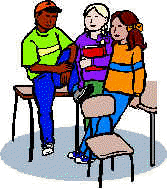
These types of interventions provide an opportunity for students with emotional and/or behavioral disorders to work with their peers in a positive and beneficial setting. In peer mediation sessions, they are not being punished once again by an adult and are able to explore the options with a peer. During peer mediation instructions, they are able to gain social skills, which are some of the most important things in order to make the transition into adulthood and enter the “real world.” Through the role, reversal tutoring these students are able to experience pride and responsibility in helping others, which they rarely are given the opportunity to do considering most of the time others are attempting to help them.
|
|

