| A | B |
|---|
Homo sapiens,  | Migrated from Africa to Eurasia, Australia, and the Americas, |
| Hunter-gatherer societies | Were nomadic, invented the first tools, learned how to make fire, lived in clans, developed oral language, and created "cave art" |
| Neolithic Era societies | developed agriculture, domesticated animals, used advanced tools, made pottery, and developed weaving skills |
| Archaeologists | study past cultures by locating and analyzing human remains, fossils, and artifacts |
| Stonehenge | example of an archaeological site in England that was begun during the Neoithic and completed during the Bronze Age, 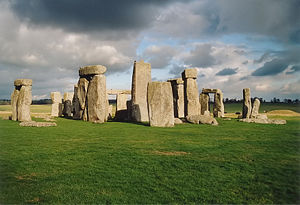 |
| River valley civilizations | Eyptians, Mesopotamian, Indian, and Chinese |
| Eyptians | Nile River Valley and Delta (Africa) |
| Mesopotamians | Tigris and Euphrates River Valleys (Southwest Asia), 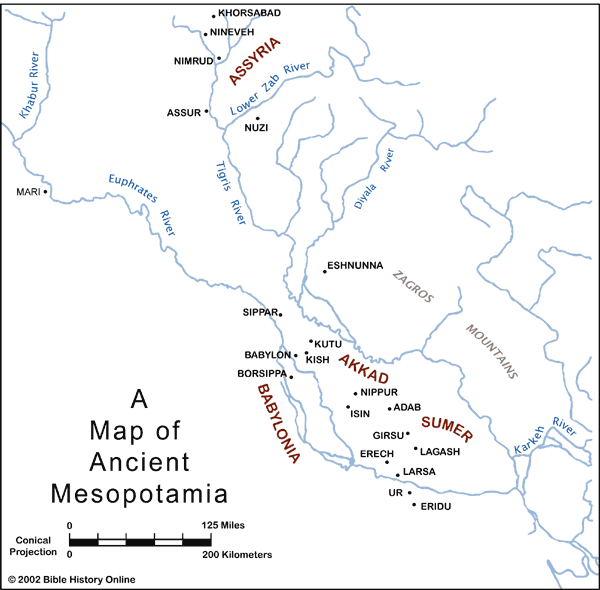 |
| Indians | Indus River Valley (South Asia) |
| Chinese | Huang He Valley (East Asia) |
| Hebrews | Between Mediterranean Sea and the Jordan River Valley (part of the Fertile Crescent in Southwest Asia) |
| Phoenicians | Mediterranean coast (part of the Fertile Crescent in Southwest Asia), 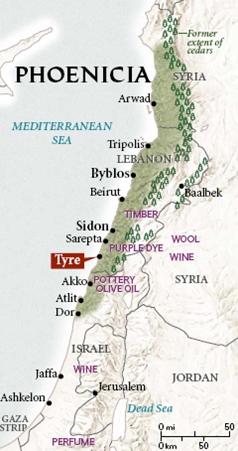 |
| Kush | upper (southern) Nile River (Africa) |
| polytheism | practiced by most early civilizations; belief in multiple gods |
| monotheism | practiced by the Hebrews; belief in one god |
| origins of Judaism | Abraham, Moses, Jerusalem |
| Torah | contains written records and beliefs of Hebrews,  |
| pictograms | earliest written symbols, 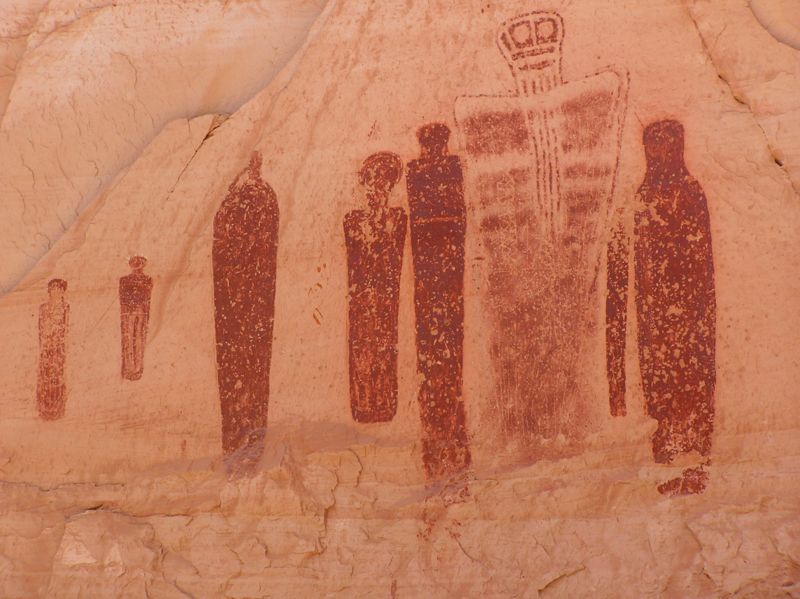 |
| hieroglyphics | early writing in Egypt, 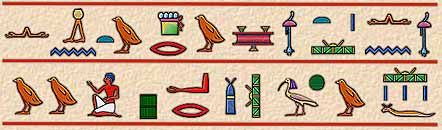 |
| cuneiform | early writing introduced by the Sumerians, 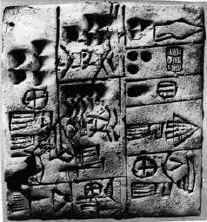 |
| alphabet | introduced by Phonecians, 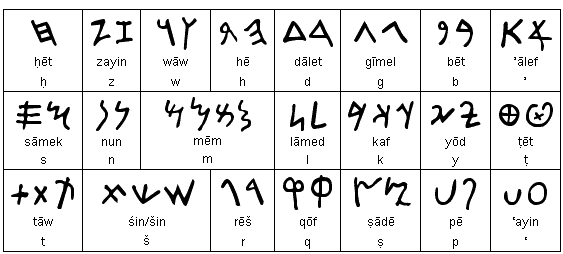 |


