| A | B |
|---|
| The name of the late stages of HIV infection, defined by a specific reduction of T cells and the appearance of characteristic secondary infections. | AIDS (acquired immunodeficiency syndrome) |
| AIDS stands for _____. | Acquired immunodeficiency syndrome |
| The type of virus that can lead to AIDS is called ____. | HIV (human immunodeficiency virus),  |
| HIV stands for _____. | human immunodeficiency virus, |
| ______ is an enzyme encoded by some certain viri (retroviri) that use RNA as a template for DNA synthesis. | Reverse transcriptase (The HIV virus pictured below is a retrovirus. Notice the reverse transcriptase and how it is used once in the host cell),  |
| A(n) _______ is a membrane that surrounds the capsid of some viri. | viral envelope (The picture below shows how viri acquire a viral envelope from the membrane of the host with extra components coded for by the virus), 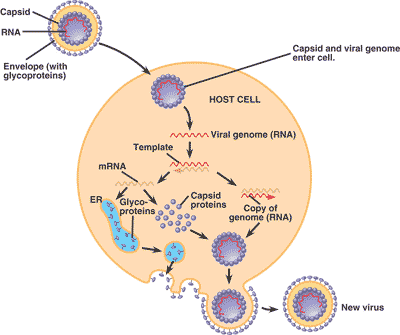 |
| A(n) _____ is a virus that infects bacteria. | bacteriophage (can also be called "phage"),  |
| A phage is a _________. | virus that infects bacteria (a.k.a. bacteriophage), |
| A _______ phage is a phage virus that reproduces only by a lytic cycle. | virulent.,  |
| A virulent phage is a virus that reproduces only by a _____ cycle. | lytic cycle, |
| Viral DNA that inserts into a host genome is called a(n) _____. | provirus (notice the provirus in this diagram of HIV infection), |
| A provirus is ___________. | viral DNA that inserts into a host genome., |
| A phage replication cycle in which the viral genome becomes incorporated into the bacterial host chromosome as a prophage and does not kill the host. | lysogenic cycle (the phage will eventually be triggered to enter the lytic cycle and kill the host),  |
| ______ are DNA segments that can move from one location to another within a cell's genome. | transposons |
| A ______ phage is a phage virus capable of reproducing by either the lytic or lysogenic cycle. | temperate phage, |
| An RNA virus that reproduces by transcribing its RNA into DNA and then inserting the DNA into a cellular chromosome. | retrovirus (these include some cancer-causing viri and HIV pictured below), |
| A(n) _______ is a unit of genetic function common in bacteria and phages, consisting of coordinately regulated clusters of genes with related functions. | operon |
| ______ is a phage genome that has been inserted into a specific site on the bacterial chromosome. | prophage (This type of DNA can lie basically dormant for long periods of time while bacteria continue to reproduce. At some point, the prophage DNA will be triggered to create new phages and enter the lytic phase of its reproduction cycle. Although dormant as far as not killing the host, prophage DNA can cause the bacterial cell to make toxins, which is the case with bacterial diseases such as diptheria, botulism, and scarlet fever. The bacteria themselves would be harmless if it were not for the prophage DNA that they are infected with), |
| A(n) _____ is an infectious form of mis-shaped protein that may increase in number by converting related proteins to mis-shaped protein. | prion (Prions are responsible for brain wasting diseases in animals such as mad cow disease and Creutzfeldt-Jacob disease in humans), 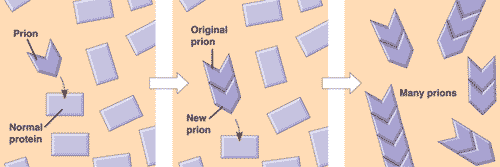 |
| What is responsible for brain wasting diseases in animals such as mad cow disease and Creutzfeldt-Jacob disease in humans? | Prions (mis-shaped proteins that are nearly impossible to destroy and cause other proteins to become mis-shaped), |
| A(n) _____ is a plant pathogen composed of naked circular RNA only several hundred nucleotides long. | viroid |
| A(n) ______ is a protein that suppresses the transcription of a gene. | repressor |
| A(n) ______ is a harmless variant or derivation of a pathogen that stimulates a host immune system to mount defenses against the pathogen. | vaccine |
| A disease causing agent is called a(n) _______. | pathogen |
| The limited range of host cells that each type of virus can infect and parasitize. | host range |
| A virus that can reproduce without killing the host is called a(n) ______. | temperate virus (some viri never kill the host cell. However, temperate phage viri, pictured below, eventually enter the lytic cycle and kill the host bacterium), |
| The protein shell that encloses the viral genome is called the _____. | capsid, |
| A type of viral (phage) replication cycle resulting in the release of new phages by lysis (and death) of the host cell. | lytic cycle, |
| To lyse something means to _____. | break it open |
What is the little green enzyme that the letter "A" is pointing to in this diagram of HIV infection?,  | reverse transcriptase (remember, it's an RNA retrovirus), |
| What is the letter "B" pointing to in this diagram of HIV infection?, | provirus (viral DNA incorporated into the host cell's genome), |
What is the letter "A" pointing to in this picture of HIV?, 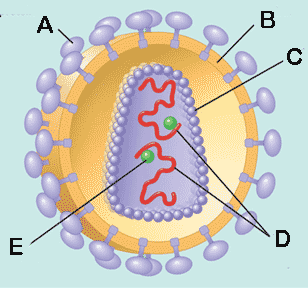 | glycoprotein, |
| What type of virus is this and what is its specific name?, | retrovirus, HIV, |
| What is the letter "B" pointing to in this picture of HIV?, | viral envelope, |
| What is the letter "C" pointing to in this picture of HIV?, | capsid (the protein coat surrounding the nucleic acids), |
| What is the letter "D" pointing to in this picture of HIV?, | RNA, |
| What is the letter "E" pointing to in this picture of HIV?, | reverse transcriptase (the enzyme that will help build viral DNA in the host cell of the viral RNA template), |
| What type of virus has the types of life cycles pictured below?, | temperate phage, |
Which type of phage lifecycle is pictured on the right?,  | lysogenic, |
| Which type of phage lifecycle is pictured on the left?, | lytic, |



