| A | B |
|---|
| The process by which cells become specialized in structure and function is called ________. | cell differentiation |
| Any cell that is still capable of differentiating into any of the specialized cell types of the mature organisms is said to be _______. | totipotent |
| Using one or more somatic cells from a multicellular organism to make another genetically identical individual is called _____. | cloning |
| ________ cells are cells that are relatively unspecialized that can reproduce indefinitely and are capable of differentiating into one or more specialized cell types. | Stem cells,  |
| Adult stem cells are said to be _______ because they can give rise to multiple, but not all cell types. | pluripotent, |
| What are the two sources of information that tell a cell which genes to express at any given time during embryonic development? | 1) Cytoplasmic determinants in the egg. 2) Induction by nearby cells., 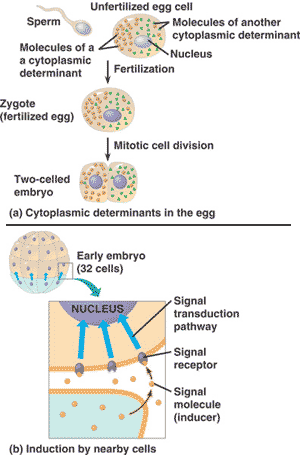 |
| During development, certain cells are meant to die instead of divide. This programmed cell death is called ______. | apoptosis |
| "Evo-devo" stands for _____. | evolutionary developmental biology |
| Any of the genes that control the overall body plan of animals and plants by controlling the developmental fate of a group of cells is called a(n) ______. | homeotic gene |
| A 180-nucleotide sequence within homeotic genes and some other developmental genes that is widely conserved in animals. Related sequences occur in plants and prokaryotes. | homeobox |



