| A | B |
|---|
| Weather | The condition of Earth's atmosphere at a particular time and place. |
| Ozone | A form of oxygen that has three oxygen atoms in each molecule instead of two. |
| Atmosphere | The envelope of gases that surrounds the planet. |
| Water vapor | Water in the form of gas. |
| Pressure | The force pusheing on an area or surface. |
| air pressure | The result of the weight of a column of air pushing down on an area. |
barometer, 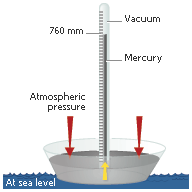 | An instrument that is used to measure air pressure. |
| altitude | The distance above sea level. |
| Troposphere | Lowest layer of Earth's atmosphere. Weather takes place here. |
| Stratosphere | Second layer of Earth's atmosphere. Contains ozone. |
| Mesosphere | The middle layer of Earth's atmosphere. This layer protects Earth from meteoroids. |
| Thermosphere | The outermost layer of Earth's atmosphere. |
| Temperature | The average amount of energy of motion of each particle of a substance. |
| thermometer | An instrumrnt used to measure temperature. |
| conduction | The direct transfer of heat from one substance to another. |
| convection | The transfer of heat by the movement of a fluid. |
| convection currents | The upward movement of warm air and the downward movement of cool air. |
Wind,  | The horizontal movement of air from an area of high pressure to an area of low pressure., |
Anemometer, 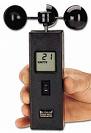 | An instrument used to measure wind speed. |
Global winds, 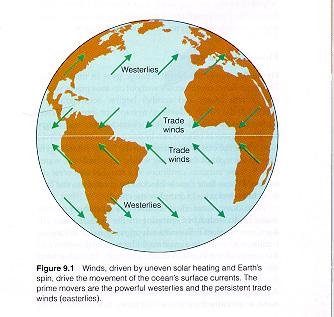 | Winds that blow steady from specific directions over long distances. |
| Coriolis effect | The curvature of winds due to the rotation of the Earth., 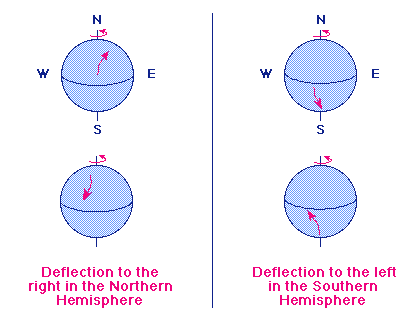 |
| Jet stream | Bands of high-speed winds at the top of the troposphere. |
| Humidity | A measure of the amount of water vapor in air. |
| Relative humidity | The percentage of water vapor in the air compared to the maximum amount of water vapor that the air can hold at a particular temperature. |
| Psychrometer | An instrument used to measure relative humidity. |
| Dew point | The temperature at which condenstion occurs. |
| Cirrius clouds | Wispy, feathery clouds., 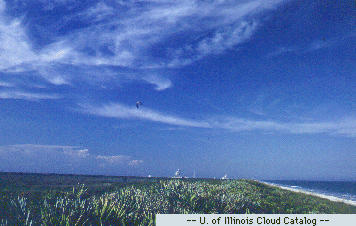 |
| Cumulus clouds | Rounded, fluffy clouds that resembel cotton balls., 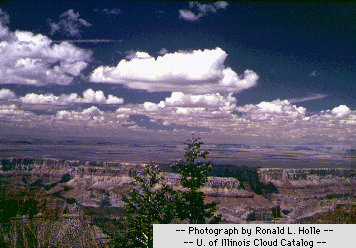 |
| Stratus clouds | Clouds that form in flat layers., 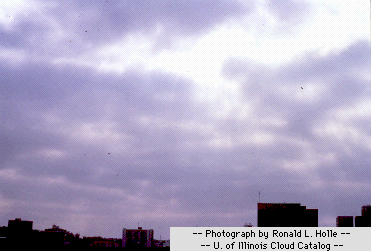 |
Precipitation,  | Any form of water that falls from clouds and reaches Earth's surface. |
| air mass | A large body of air in the troposphere with similar characteristics of pressure, moisture, and temperature. |
| atmospheric transparency | How easily insolation can pass through the air |
| cyclone | A low-pressure portion of the troposphere that has air moving toward the cneter. |
| front | The boundary between two air masses. |
| jet stream | Easterly moving winds generally at he top of the troposphere |
isobar, 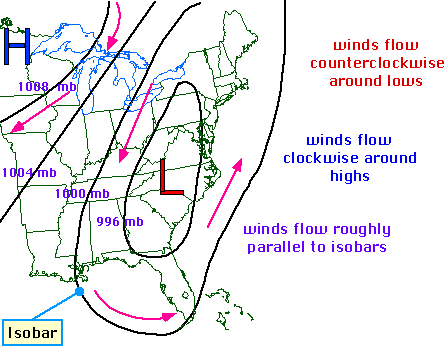 | Lines connecting points of equal barometric pressure. |
| monsoon | Cyclic and extreme weather changes caused by the shifting wind and pressure belts. |
| occluded front | Boundary of opposing wedges of cold air masses formed when a cold front over takes a warm front. |
| planetary wind belt | East-west zones where winds blow from one direction much of the time. |
| polar front | Boundary between cold air masses toward the poles and mid-latitude warm air masses. |
| radar | An instrument that uses radio waves to observe weather. |
| stationary front | Boundary betwee two air masses remains in one place. |
| station model | A representation of weather variables. |
warm front, 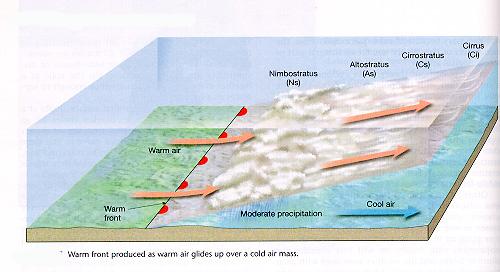 | The boundary of an advancing warm air mass. |


