| A | B |
|---|
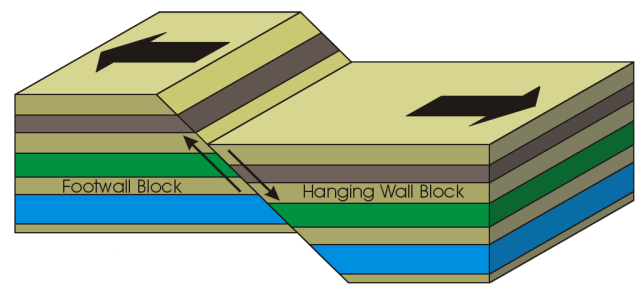 | Normal Fault |
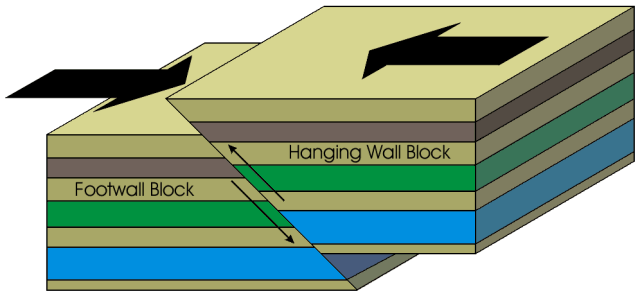 | Reverse Fault |
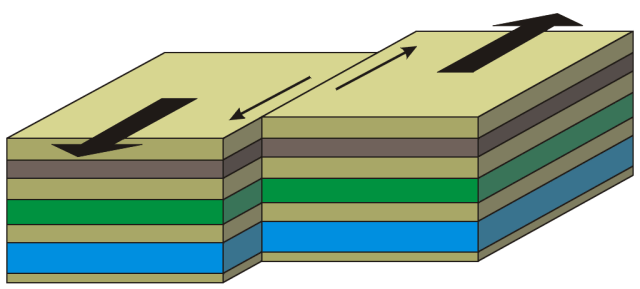 | Strike Slip Fault |
| Fault | A fracture, or break, in Earth's lithosphere, along which blocks of rock move past each other. |
| Stress | The force exerted when an object presses on, pulls on, or pushes against another object. |
| Earthquake | A shaking of the ground caused by the sudden movement of large blocks along a fault. |
| Seismic Wave | Vibrations caused by earthquakes. |
| Focus | The point underground where rocks first begin to move. |
| Normal Fault | The block of rock above the fault plane slide down relative to the other block. |
| Reverse Fault | The block of rock above the fault plane moves up relative to the other block. |
| Strike-Slip Fault | Blocks of rock move sideways on either side of the fault plane. |
| Epicenter | The point on the Earth's surface directly above the focus. |
| Primary Waves | The fastest seismic waves that are the first to reach any particular location after anearthquake. |
| Secondary Waves | The second seismic waves to arrive at any particular location after an earthquake. |
| Surface Waves | The seismic waves that move along Earth's surface, ot through its interior. |
| Seismograph | An instrument that constantly records ground movement. |
| Afterschock | A smaller earthquake that follows a more powerful earthquake in the same area. |
| Liquefaction | A process in which shaking of the ground causes soil to act like a liquid. |
| Tsunami | A water wave triggered by an earthquake, volcanic eruption, or landslide. |



