| A | B |
|---|
| DNA | the genetic material found in all living cells that contains the information needed for an organism to grow, maintain itself, and reproduce |
| chromosome | a structure formed when the DNA in the nucleus of a eukaryotic cell condenses before the cell divides; the physical structure in a cell that contains the cell's genetic material |
| cell cycle | the normal sequence of growth, maintenance, and division in a cell |
| interphase | the period in the cell cycle in which a cell grows, maintains itself, and prepares for division; the cell's DNA is copied |
| mitosis | the phase in the cell cycle during which the nucleus divides |
| mitosis- prophase | chromosomes condense; nuclear membrane disappears; long strands of DNA condense to distinct chromosomes, each with two chromatids that are exact copies of each other |
| mitosis- anaphase | chromosomes separate; chromatids of each chromosome split into two separate chromosomes; separated chromosomes pull to the opposite ends of the cell |
| mitosis- telophase | nuclei form; new nuclear membranes form |
| cytokinesis | the division of a parent cell's cytoplasm following |
| mitosis- metaphase | chromosomes line up in the middle of the cell |
| MITOSIS IMAGE- PROPHASE | 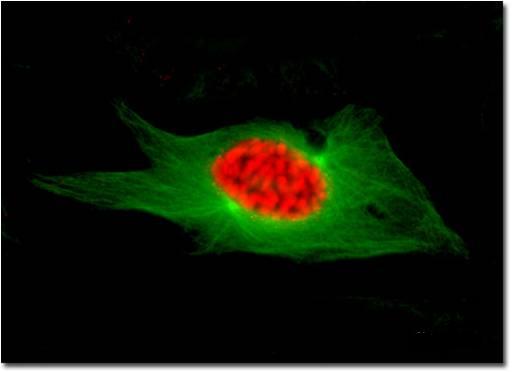 |
| MITOSIS IMAGE- METAPHASE | 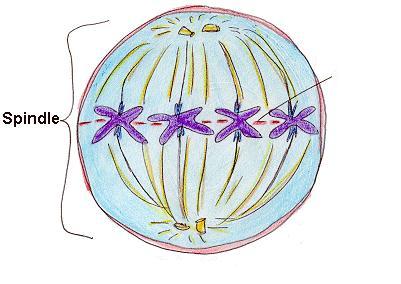 |
| MITOSIS IMAGE- ANAPHASE | 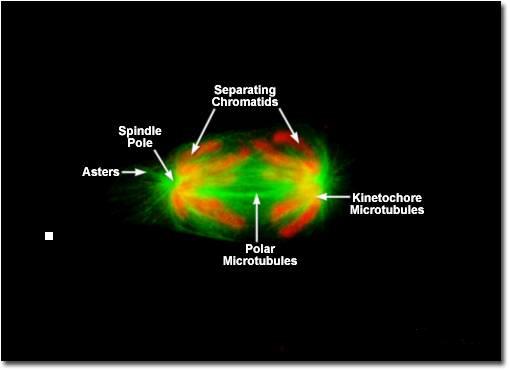 |
| MITOSIS IMAGE- TELOPHASE | 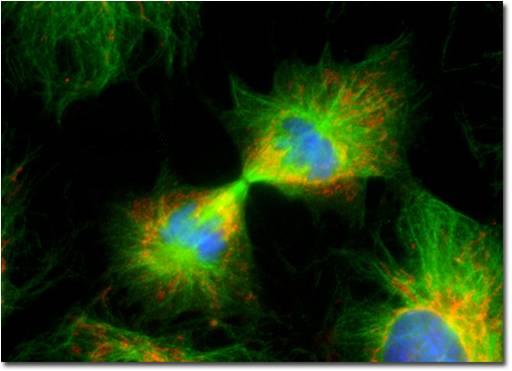 |
| CYTOKINESIS IMAGE | 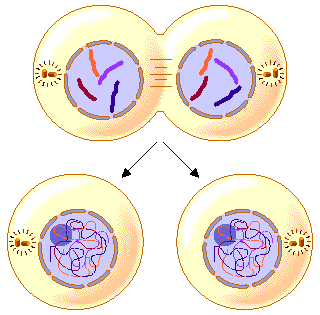 |


