| A | B |
|---|
| angiosperm | a plant that produces seeds that are enclosed in a protective structure |
ovary, 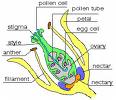 | part of a plant that contains an egg cell |
| Flower | reproductive part of an angiosperm |
petals, 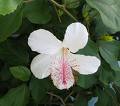 | colorful, leaflike structures that attract insects |
sepals, 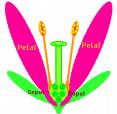 | leaflike structures that protect the developing flower |
| stamens | male reproductive parts of a plant |
| pistils | female reproductive parts of a plant |
| stigma | sticky, tip of the style that traps and collects pollen |
| style | a slender tube that connects the stigma to the ovary |
| anther | a knob at that top of the stamen that produces pollen |
| filament | thin stalk that holds the anther |
| seed | contains a young plant inside a protective covering |
| embryo | a young plant that develops from a fertilized egg |
| cotyledon | stored food |
| seed coat | outer covering of seed, that protects the embryo and stored food from drying out |
| germination | the early growth stage of the embryo in a seed |
| xylem | vascular tissue that allow water and nutrients to move in some plants |
| phloem | vascular tissues that allow food to move in some plants |
| taproot | one long, thick main root that grows deep in the soil |
| fibrous root | several main roots that repeatedly branch and form a tangled mass |
| root cap | contains dead cells that protect the root from injury |
| monocot | flowers that usually have 3 petals or multiples of 3 petals |
| dicot | flowers that often have 4 or 5 petals or multiples of these |
| stomata | small openings on the undersides of most leaves which allows oxygen and carbon dioxed to move into or out of the plant |



