| A | B |
|---|
| Minoans | Civilization which developed on the Island of Crete. |
| Knossos | Minoan capital city. |
| King Minos | Legendary king who owned a half-human, half-bull monster. |
| Mother Earth Goddess | Deity which ruled over the other gods and the people of Crete. |
| 1470 B.C. | Date of a series of disasters which began the decline of Minoan culture. |
| Phoenicians | Mediterranean trading culture that developed a phonetic alphabet. |
| Aegean and Ionian Seas | Location of the Greek civilization. |
| Mycenaean Greeks | Bronze Age peoples who settled on the Greek mainland around 2000 B.C. |
| Mycenae | Fortified city in southern Greece, its kings dominated Greece from c. 1600 - 1100 B.C. |
| Trojan War | Ten-year conflict between the Myceneans and a city in Anatolia. |
| Dorian Greeks | Their arrival began a "Greek Dark Age" from 1150 to 750 B.C. |
| Homer | Blind poet who composed narrative poems such as the Illiad. |
| Arete | Concept of virtue, excellence and cunning found in many Greek heroes. |
| Polis | A Greek city and its surrounding countryside. |
| Acropolis | Fortified hilltop found in all Greek city-states., 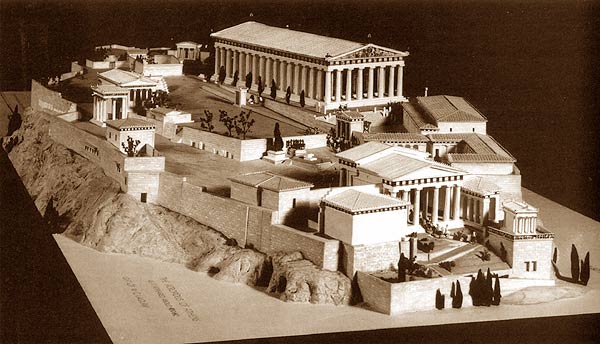 |
| Agora | Marketplace that was the economic center of any Greek city-state. |
| Monarchy | Form of government in which one person rules by inheriting their authority from relatives. |
| Aristocracy | "Rule by the Best," a small group of individuals or families rule. |
| Timocracy or Oligarchy | A government ruled by a few powerful, usually rich, people. |
| Tyrants | Powerful individuals who seized control of the government by appealing to the common people for support. |
| Democracy | Government in which the people rule. |
| Draco | Athenian tyrant who formed a very harsh legal code which made all citizens equal under the law. |
| Solon | Athenian tyrant who outlawed debt slavery and organized citizens into four social classes based on wealth. |
| Cleisthenes | Athenian tyrant who reorganized the citizens into four groups based on where they lived, increased the power of the assembly and created the Council of 500. |
| Peloponnesus | Large southern peninsula of Greece. |
| Helots | The Messenians who were conquered by Sparta and forced to work the land as slaves. |
| Council of Elders | Group of 30 older citizens who proposed laws to the Spartan assembly. |
| Hoplites | Heavily armed Greek foot soldiers. |
| Phalanx | Formation of soldiers standing side by side, each holding a spear in one hand and a shield in the other. |
| Darius the Great | Presian King who invaded Greece in 490 B.C. because of help given by Athens to the Ionians. |
| Marathon | Battle in 490 B.C. in which the Greeks defeated the first Persian invasion of Greece. |
| Pheidippides | Messenger who ran 26 miles to inform Athens of a victory over the Persian invaders. |
| Xerxes | Persian king who organized the second invasion of Greece in 480 B.C. |
| Thermopylae | Narrow mountain pass where the Greeks, led by Sparta, delayed the Persian Advance for three days. |
| Themistocles | Athenian commanded who convinced most Athenians to abandon their city and fight the Persians at sea. |
| Salamis | Great naval battle in which the Greeks worked together to defeat the Persian fleet. |
| Plataea | Battle in 479 in which the Greeks led by Sparta crushed the Persian army invading Greece. |
| Delian League | Alliance of Greek city-states against the Persians. |
| Athens | City-state which came to lead the Delian League. |
| Delos | Island on which the Delian League had its headquarters and treasury. |


