| A | B |
|---|
| Greek Polis | Greek City State |
| Parthenon | Rebuilt After Persian War- Temple of Greek Goddess Athena, 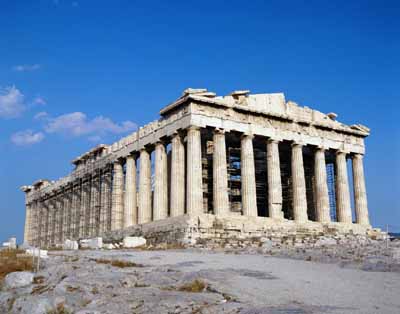 |
| Oligarchy | Ruled by a small group |
| Tyrant | Person who gains power by force |
| Aristocracy | rule by land owning elites |
| democracy | government by the people |
| monarchy | ruled by a king or a queen |
| civic participation | citizens participation in the government or community |
| direct democracy | citizens participate directly in the government |
| Zeus | Leader of the gods |
| Hera, Apollo, Athena, Aphrodite, Artemis | Greek gods and goddesses |
| Athens | Greek city state which became a democracy |
| Sparta | Militaristic and Aggressive Society |
| Persian Wars | United Athens and Sparta against the Persian Empire |
| Peloponnessian War | Caused in part by competition for the Greek world |
| Athens and Delian League | Alliances of Athens and other Greek city states after the Persian Wars |
| Sparta and Peloponnesian League | Sparta's allies after the Persian war |
| Phillip II | King of Macedon that conquered most of the Greek world |
| Alexander the Great | Established an empire from Greece to Egypt to margins of India; extended Greek cultural influence |
| Hellenistic Age | Blending of Greek and Oriental Customs |
| Hellenic | Another word for Greek Culture |
| Draco and Solon | Tyrants who worked for reform in Greece |


