| A | B |
|---|
| Roman Republic | Government where officials were chosen by the people |
| Senate | A council of nobles that passed laws and handled foreign affairs in Roman Republic |
| Patrician | Landholding upper class (Roman Republic) |
| Plebians | (Majority of the Population) Farmers, merchants, trader |
| Consuls | Two elected representatives in charge of the military and supervising the government in Roman Republic |
| Twelve Tables | Written law of Rome (Roman Republic) |
| Assemblies | Composed of plebians to vote |
| Punic Wars | Conflicts between Rome and Carthage leading to victory for Rome |
| Hannibal | General who crossed the Alps with army of elephants during second Punic War |
| Julius Caesar | Roman General who became dictator ending the Roman Republic |
| First Triumvirate | Three person alliance to rule Rome: Between Julius Caesar, Crassus, Pompey |
| Augustus Caesar | First Roman Emperor; Began the Pax Romana |
| Pax Romana | 200 years of Peace and Prosperity of the Roman Empire |
| Jesus | Founder of Christianity; Son and incarnation of God |
| New Testament | 27 books of the Bible that contain the life and teachings of Jesus |
| Paul | Apostle of Jesus that spread the teachings to non Jews |
| Constantine | Roman emperor who converted to Christianity and founded Constantinople as capiatal |
| Persecution | to mistreat or harass: Romans persecuted Christians |
| Greek Orthodox | main branch of christianity in Byzantine Empire |
| Hagia Sophia | Byzantine domed Church, 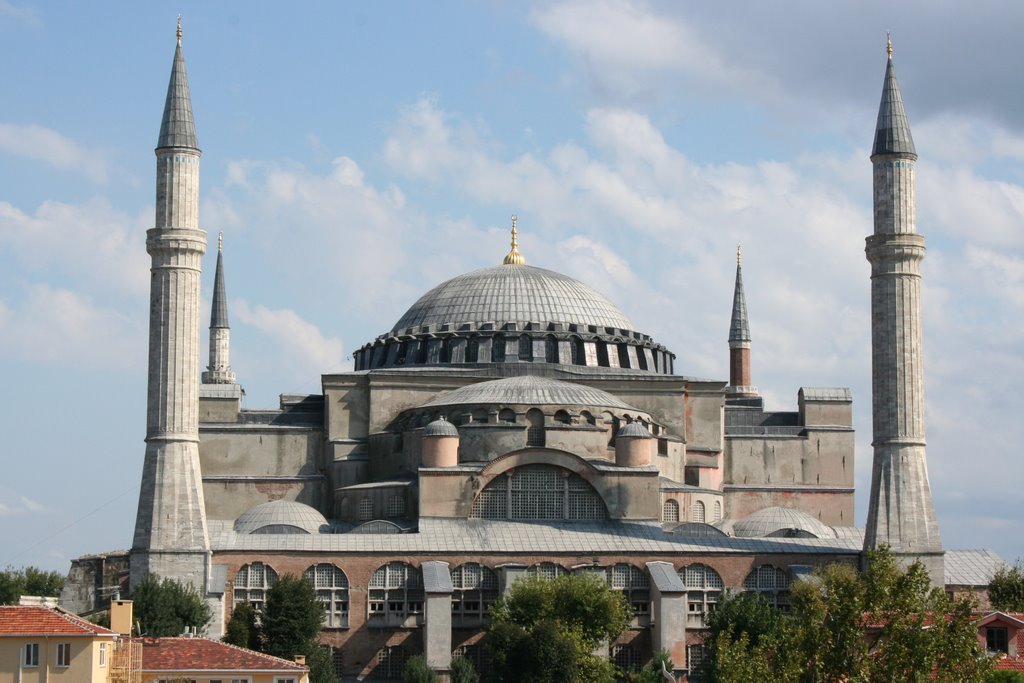 |
| Justinian | Emperor of Byzantine Empire: Codified Roman |
| Codified Roman Law | Became basis for most European legal system |


