| A | B |
|---|
| large stores of carbon trapped under the earth's surface | fossil fuels |
| examples of fossil fuels | coal, oil and natural gas |
| burning trees or fossil fuels releasing carbon dioxide into the atmosphere quickly | combustion |
| examples of greenhouse gases | carbon dioxide, water vapor, methane, and nitrogen oxide |
| layer of gases in the upper atmosphere that absorb and re-emit heat rays | greenhouse gases |
| breathing in oxygen to "burn" food for energy releases carbon dioxide into the atmosphere | respiration |
| removes carbon dioxide from the atmosphere and stores carbon in living organisms | photosynthesis performed by plants, algae and phytoplankton - stores carbon as sugar and other plant tissue |
| source of carbon found deep in the ocean | marine shells, rocks and sediment |
| type of rock found in the earth containing large amounts of carbon | limestone & chalk |
| releases carbon dioxide in the atomosphere from "once living" organisms | decomposition |
| process of carbon dioxide gas moving from air to water, or from water back to the air | diffusion |
| two human processes that increase the carbon dioxide concentration in the atmosphere | combustion (emissions) and deforestation |
| part of an ecosystem, such as a tree, that takes in more carbon dioxide from the air than it gives off, storing the carbon in some other form | carbon sink |
| examples of carbon sinks | absorption of carbon dioxide by the ocean - absorption of carbon dioxide by plants |
| nutrient atoms (such as carbon, nitrogen, and oxygen) moving, changing form, and being used over and over again in the environment | nutrient cycle |
| gas that makes up 78% of the air around us | atmospheric nitrogen gas |
| unusable nitrogen gas in the air converted into molecules that plants can take up from the soil and use | nitrogen fixation |
| lightning converts unusable nitrogen gas in the air into nitrates that rain into the soil and nourish plants | atmospheric nitrogen fixation |
| bacteria contained in the soil or in the root nodules of legumes convert nitrogen gas into ammonia in the soil | biological nitrogen fixation |
| nitrogen contained in fertilizer, explosives and industrial products | industrial nitrogen fixation |
growths on the roots of legume plants that contain nitrogen-fixing bacteria,  | root nodules |
| plants taking up nitrates in the soil and using it as a nutrient to build plant proteins | assimilation |
| bacteria or fungi convert nitrogen compounds into ammonia in the soil - part of the natural process of decomposition | ammonification |
| two part process in which soil bacteria first convert ammonia into nitrites and then into the nitrates that are absorbed by plant roots as nutrients | nitrification |
| process in which soil bacteria convert nitrates back into nitrogen gas that is released back into the atmosphere | denitrification |
| soybeans, peas and bean plants that contain nitrogen-fixing bacteria in "swellings" or growths on their roots called nodules | legumes |
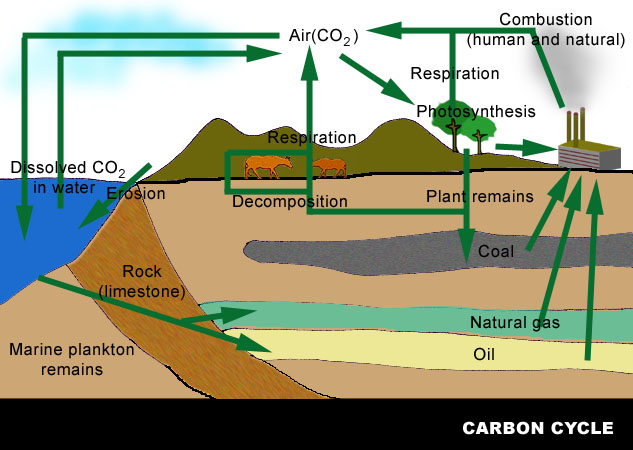 | carbon cycle |
 | nitrogen cycle |
 | atmospheric nitrogen gas |
 | nitrate |
 | nitrite |
 | ammonia |


