 |
Java Games: Flashcards, matching, concentration, and word search. |
 |
|
Lab Safety Symbols & It's Precautions
Use the following activites to help you learn the lab safety symbols and its precaution. Test at the end of the week.
|
| A | B |
|---|
Heating safety,  | Avoid wearing hair spray or hair gel on lab days. Whenever possible, use an electric hot place as a heat source instead of using an open flame. When heating materials in a test tube, always angle the test tube away from yourself and others. Make sure that glass contains used for heating are made of heat-resistant glass. Know your school’s fire-evacuation routes. |
Chemical Safety, 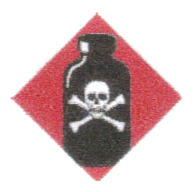 | Always use caution when working with chemicals. Never mix chemical unless specifically directed to do so. Never taste, touch, or smell chemicals unless specifically directed to do so. Always add acid or base to water; never add water to an acid or base. Never returned unused chemicals to the original container. Follow instructions for proper disposal. Never transfer substances by sucking on a pipette or straw; use a suction bulb. |
Animal Safety,  | Always obtain permission before bringing any animal to school. Handle animals carefully & respectfully. Wash your hands thoroughly after handling any animal. |
Clothing protection safety,  | Secure loose clothing and remove dangling jewelry. Do not wear open-toed shoes or sandals in the lab. Wear an apron or lab coat to protect your clothing when working with chemicals. If a spill gets on your clothing, rinse it immediately with water for at least five minutes while notifying your instructor. |
Electrical safety, 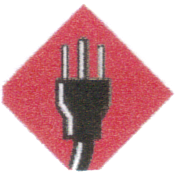 | Do not place electrical cords in walking areas. Do not let cords hang over a table edge such that equipment will fall if the cord is pulled. Do not use equipment that has damaged cords. Be sure that the power switch for a piece of equipment is in the off position before plugging the equipment in. Never use an electrical appliance when you are near water or when your hands are wet. Be sure to turn off and unplug electrical equipment when you are finished using it |
Eye protection safety,  | Wear safety goggles when working around chemicals, acids, bases, flames, or heating devices. Contents under pressure may become projectiles and may cause serious injury. Never look directly at the sun through any optical device or use direct sunlight to illuminate a microscope. Avoid wearing contact lenses in the lab. If any substance gets in your eyes, notify your instructor immediately and flush your eyes with running water for at least 15 minutes. |
Glassware safety, 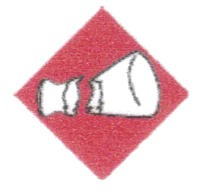 | Check the condition of glassware before and after using it. Inform your teacher of any broken, chipped, or cracked glassware because it should not be used. Do not pick up broken glass with your bare hands. Place broken glass in a specifically designated disposal container. |
Hand safety,  | To avoid burns, wear heat-resistant gloves whoever instructed to do so. Always wear protective gloves when handling chemicals. If you are unsure of whether an object is hot, do not touch it. Use tongs when heating test tubes. Never hold a test tube in your hand to heat it. |
Plant safety,  | Do not eat any part of a plant or plant seed used in the lab. Wash hands thoroughly after handling any part of a plant. When outdoors, do not pick any wild plants unless your teacher instructs you to do so. |
Sharp object safety, 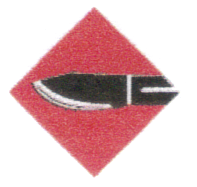 | Be extremely careful when using knives and other sharp instruments. Place objects on a suitable work surface for cutting, never cut towards your hand or body. Never use a double-edged razor in the lab. |
Waste disposal safety,  | Clean and decontaminate all work surfaces and personal protective equipment as directed by your instructor. Dispose broken glass, contaminate sharp objects, and contaminated materials (biological and chemical) in special containers as directed by your instructor. |
|
|
| |
