| A | B |
|---|
#1, 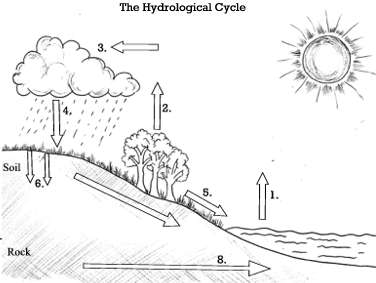 | evaporation |
| #2, | transpiration |
| #3, | condensation |
| #4, | precipitation |
| #5, | surface runoff |
| #6, | infiltration |
| #8, | movement of groundwater |
| characteristic of materials such as clay and granite that do not allow water to pass through them | impermeable, 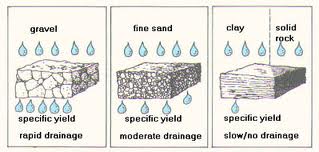 |
| characteristic of materials such as sand and gravel that allow water to pass easily through them | permeable, 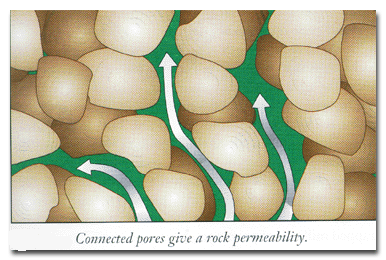 |
| a layer of permeable rock or soil in which the cracks and pores are completely filled with water | saturated zone (Zone of Saturation), 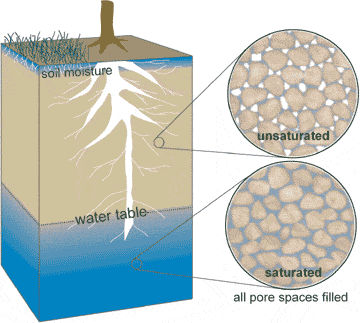 |
| a layer of rock and soil above the water table in which the pores contain air as well as water | unsaturated zone (Zone of Aeration), |
| the top of the zone of saturation, or the depth to the top of the groundwater in an aquifer | water table, 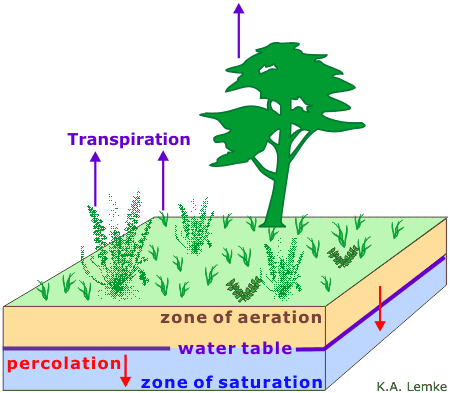 |
| an underground layer of saturated rock or soil that holds water | aquifer, 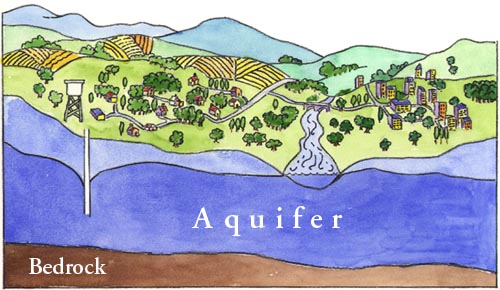 |
| ultimate source of energy to keep the water cycle going | sun |
| water that flows over the earth's surface and moves into nearby rivers, lakes, streams or drains | runoff |
| water soaking into the earth's surface through soil or porous layers of rock | infiltration |
| the invisible, gaseous form of water | water vapor, 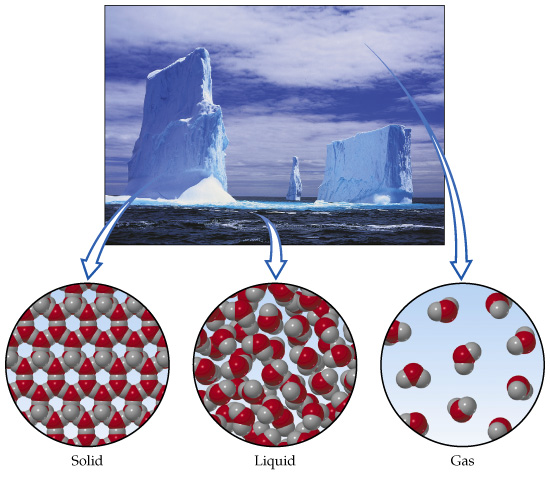 |
| water that completely fills the cracks and pores in underground soil and rock layers | groundwater, 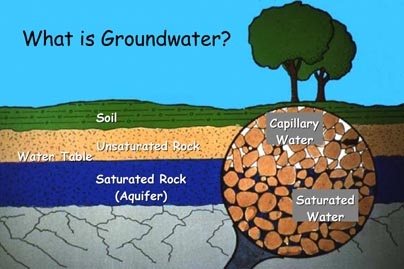 |
| the continuous process by which water moves from the Earth's surface to the atmosphere and back, passing through the living and non-living parts of the environment | water cycle |
| process by which water vapor in the air loses enough energy to combine and change into the liquid state, forming visible water droplets (usually occurs on cooler surfaces or microscopic particles in the air) | condensation, 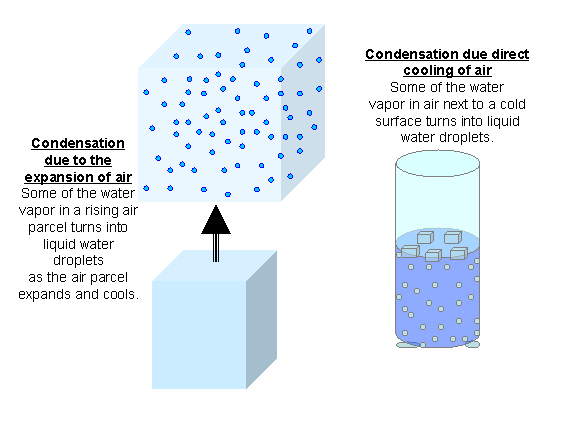 |
| the process by which molecules at the surface of a liquid, such as water, absorb enough energy to change into water vapor | evaporation, 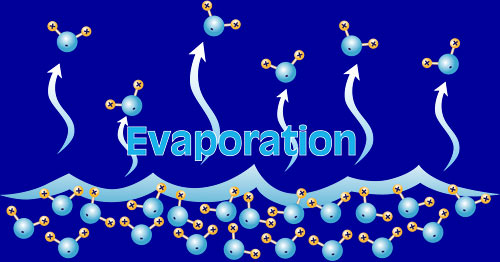 |
| the process by which animals release water vapor when they exhale | respiration |
| the process by which water vapor evaporates through small pores in the surface of plant leaves | transpiration, 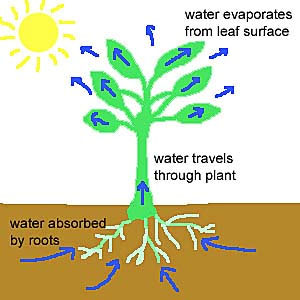 |
| forms of water such as rain, snow, sleet or hail that fall from clouds and reach the earth's surface | precipitation |
| tiny openings in and between particles of rock and soil that may contain air or water | pores (porous materials can hold water), 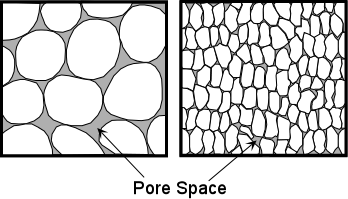 |


