| A | B |
|---|
| Addition Reaction | When in its simplest terms an organic reaction where two or more molecules combine to form a larger one, 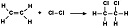 |
| Alcohol | In chemistry, an alcohol is any organic compound in which a hydroxyl functional group (-OH) is bound to a carbon atom, usually connected to other carbon or hydrogen atoms. In chemistry, an alcohol is any organic compound in which a hydroxyl functional group (-OH) is bound to a carbon atom, usually connected to other carbon or hydrogen atoms., 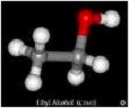 |
| Aldehyde | Any of a class of highly reactive organic chemical compounds obtained by oxidation of primary alcohols, characterized by the common., 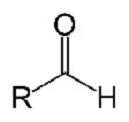 |
| Alkane | An alkane in organic chemistry is a type of hydrocarbon in which the molecule has the maximum possible number of hydrogen atoms and so has no double bonds (they are saturated).,  |
| Alkene | Is a hydrocarbon containing a double carbon-carbon bond, 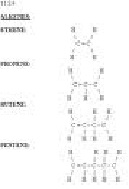 |
| Alkyl Group | A funtional group on an organic molecule which is derived from an alkane which has lost a hydrogen atom., 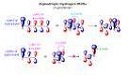 |
| Alkyl Halide | Organic compound in which halogen atoms have been substituted for hydrogen atoms in an alkane?, 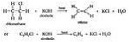 |
| Alkyne | Are hydrocarbons that have a triple bond between two carbon atoms, with the formula CnH2n-2., 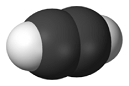 |
| Amine | A compound derived from ammonia by replacing hydrogen atoms by univalent hydrocarbon radicals, 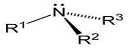 |
| Aromatic Hydrocarbon | Is a hydrocarbon characterized by general alternating double and single bonds between carbons., 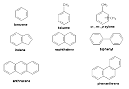 |
| Benzene | A colorless, flammable liquid with a sweet odor. It evaporates quickly when exposed to air., 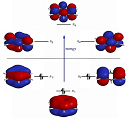 |
| Carboxylic Acid | A substance containing the carboxyl group. The carboxylic hydrogen can be lost as a hydrogen ion, so these substances are also acidic. An example includes acetic acid., 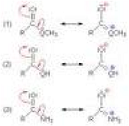 |
| Condensation Reaction | Any reaction in which two molecules react with the resulting loss of a molecule of water (or other small molecule); the formal reverse of hydrolysis, 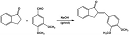 |
| Copolymer | A polymer consisting of two or more different monomers, 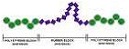 |
| Cycloalkane | Cyclic compounds that contain carbons and hydrogens. , 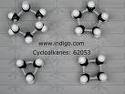 |
| Elimination Reaction | A chemical reaction in which a molecule decomposes to two different molecules, 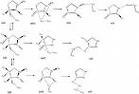 |
| Ester | Formed by reaction between an acid and an alcohol with elimination of water, 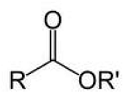 |
| Ether | An organic compound having an oxygen atom bonded to two carbon atoms., 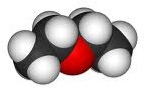 |
| Functional Group | An atom or group of atoms, such as a carboxyl group, that replaces hydrogen in an organic compound and that defines the structure., 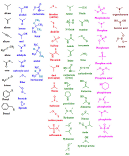 |
| Geometric Isomer | Characterized by simple geometric forms in design and decoration,  |
| Hydrocarbon | Is a substance sosisting only of carbon and hydrogen atonms., 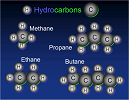 |
| Hydrocarbon | Any of a class of compounds containing only hydrogen and carbon, as an alkane, methane, CH4, an alkene, ethylene, C2H4, an alkyne, acetylene, C2H2, or an aromatic compound, benzene, C6H6., |
| Isomer | A compound displaying isomerism with one or more other compounds., 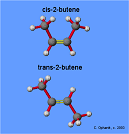 |
| Ketone | Any of a class of organic compounds having a carbonyl group linked to a carbon atom in each of two hydrocarbon radicals, 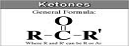 |
| Natural Gas | Is a gas consisting primarily of methane, typically with 0-20% higher hydrocarbons (primarily ethane)., 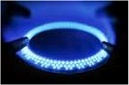 |
| Petroleum | A thick, flammable, yellow-to-black mixture of gaseous, liquid, and solid hydrocarbons that occurs naturally beneath the earth's, 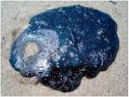 |
| Saturated Hydrocarbon | Is an organic compound consisting entirely of hydrogen and carbon., 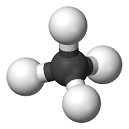 |
| Structural Formula | A chemical formula showing the linkage of the atoms in a molecule diagrammatically, as H–O–H., 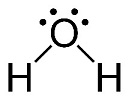 |
| Structural Isomer | Any of two or more compounds with identical chemical formulas, such as propyl alcohol and isopropyl alcohol, that differ structurally in the sequence in which the atoms are linked. Structural isomers do not exhibit the same chemical behavior. Compare stereoisomer., 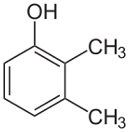 |
| Substitution Reaction | A functional group in a particular chemical compound is replaced by another group, 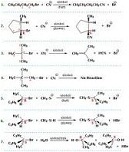 |
| Organic Compound | A covalently bonded compound that contains carbon, excluding carbonates and oxides., 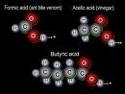 |
| Catenation | The binding of an element to itself to form chains or rings,  |
| Cycloalkane | A saturated carbon chain that forms a loop or a ring, |
| Alkyl Group | A group of atoms that forms when one hydrogen atom is removed from an alkane molecule, |
| Unsaturated Hydrocarbon | A hydrocaron that has avaliable valence bonds, usually from double or triple bonds with Carbon.,  |
| Polymer | A large molecule that is formed by more than five monomers, or small units,  |
| Monomer | A simple molecule that can combine with other like or unlike mole cules to make a polymer,  |


