| A | B |
|---|
| Half-Cell | A structure that contains a conductive electrode and a surrounding conductive electrolyte separated by a naturally-occurring Helmholtz double layer, 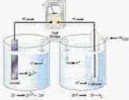 |
| Anode | An electrode through which electric current flows into a polarized electrical device, 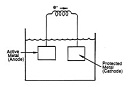 |
| Reduction Potential | Is a measure of the tendency of a chemical species to acquire electrons and thereby be reduced., 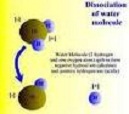 |
| Electrode Potential | Is the electromotive force of a cell built of two electrodes, 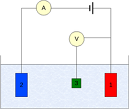 |
| Electrochemistry | Is a branch of chemistry that studies chemical reactions which take place in a solution at the interface of an electron conductor (a metal or a semiconductor) and an ionic conductor (the electrolyte), and which involve electron transfer between the electrode and the electrolyte or species in solution, 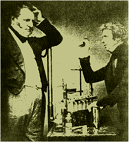 |
| Electrode | Is an electrical conductor used to make contact with a nonmetallic part of a circuit, 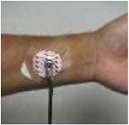 |
| Electroplating | Plating a metal onto a (cathodic) surface by electrolysis., 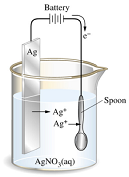 |
| Electrolysis | The process where an electric current is passed through an electrolytic solution or other appropriate medium, causing a chemical reaction. Similar to what happens within a battery., 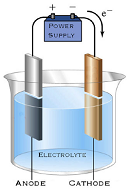 |
| Cathode | The electrode on whose surface reduction lakes place, 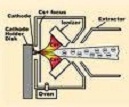 |
| Volataic Cell | A primary cell that consists of two electrodes made of different metals imersed in an electolyte; Used to generate voltage, 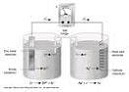 |
| Reduction Potential | The decrease in voltage that takes place when a positive ion becomes less positive or neutral or when a neutral atom becomes negative ion, |
| Standard Electrode Potential | The potential developed by a metal or other material immersed in an electrolyte solution relative to the otential of the hydrogen electrode, which is set at zero, 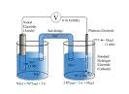 |
| Electrolytic Cell | An electrochemical device in which electrolysis takes place when an electric current is in the device., 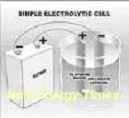 |


