| A | B |
|---|
| Boiling-Point Elevation | The phenomenon that the boiling point of a liquid (a solvent) will be higher when another compound is added, meaning that a solution has a higher boiling point than a pure solvent. This happens whenever a non-volatile solute, such as a salt, is added to a pure.,  |
| Colligative Properties | Are properties of solutions that depend on the number of molecules in a given volume of solvent and not on the properties/identity (e.g. size or mass) of the molecules., 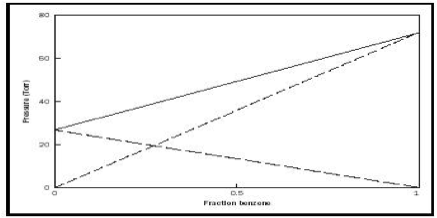 |
| Dissociation | The general process in which ionic compounds separate or split into smaller particles ions, or radicals usually in a reversible manner.,  |
| Freezing-Point Depression | The freezing point of a liquid (a solvent) is depressed when another compound is added, meaning that a solution has a lower freezing point than a pure solvent, 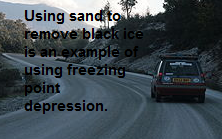 |
| Hydronium Ion | The common name for the aqueous cation H3O+, the type of oxonium ion, produced by protonation of water, 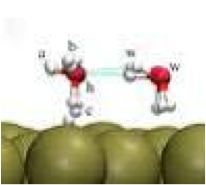 |
| Molal Boiling Point Constant | The ratio of the elevation of the boiling point of a solvent caused by dissolving a solute to the molality of the solution, taken at extremely low concentrations.,  |
| Net Ionic Equation | Chemical equation for a reaction which lists only those species participating in the reaction., 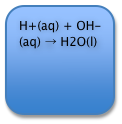 |
| Non-Volatile Substances | Substance that is not capable of changing from a solid or liquid form to a vapour.,  |
| Osmosis | Diffusion of molecules through a semi permeable membrane from a place of higher concentration to a place of lower concentration until the concentration on both sides is equal, 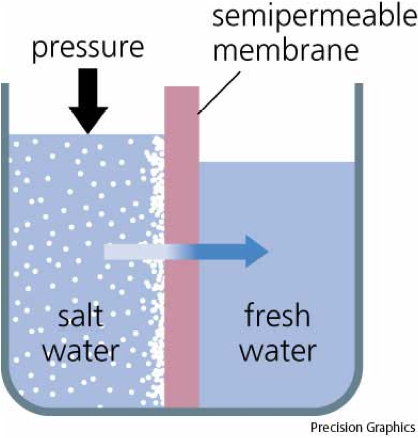 |
| Osmotic Pressure | The pressure necessary to prevent osmosis into a given solution when the solution is separated from the pure solvent by a semi permeable membrane, 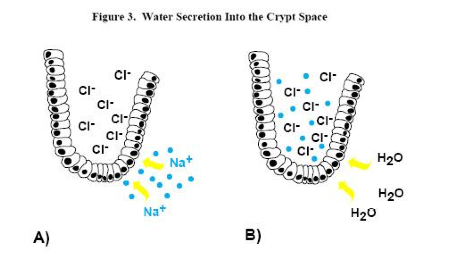 |
| Semi Permeable Membrane | A membrane that will allow certain molecules or ions to pass through it by diffusion and occasionally specialized "facilitated diffusion", 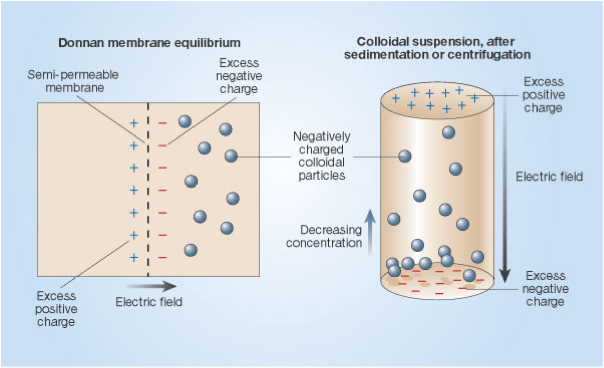 |
| Spectator Ions | An ion that exists as a reactant and a product in a chemical equation. Spectator ions can be observed in the reaction of aqueous solutions of sodium chloride and copper (II) sulfate,  |
| Strong Electrolyte | A solute that completely, or almost completely, ionizes or dissociates in a solution. These ions are good conductors of electric current in the solution., 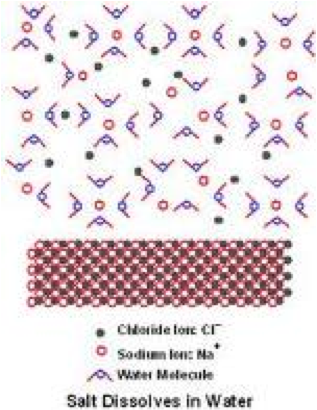 |
| Weak Electrolyte | An electrolyte that does not completely dissociate in solution. The solution will contain both ions and molecules of the electrolyte., 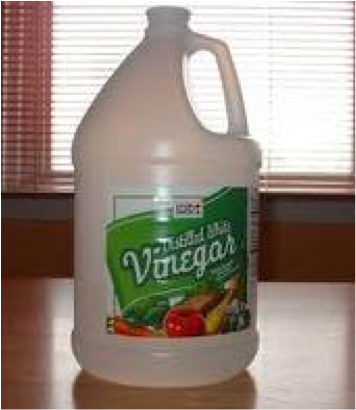 |
| Molal Freezing Point Constant | Used to calculate the freezing point depression of solvents containg nonvolatile solutes.,  |
| Ionization | The formation of ions as a result of a chemical reaction, high temperature, electrical discharge, particle collisions, or radiation, 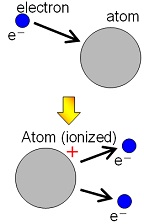 |


