| A | B |
|---|
| Data Communications | Technology that enables computers to communicate |
Modem,  | A communication deice that allows one to computer to connect to another and transfer data over telephone lines |
| Sender | The computer that is sending the message |
| Receiver | The computer receiving the message |
| Channel | The media that carries the message |
| Protocol | The rules that govern the transfer of data |
| Network | When computers are connected to other computers |
| Local Area Network | Computers connected together in a relatively close location |
| Wide Area Network | When LAN are expanded to include several local are networks within a city, state, or region |
| Central Processing Unit | Housed on a Tiny Silicon Chip, containing millions of switches that help the computer make decisions |
| Arithmetic/Logic Unit | Performs computations and logical operations |
| Control Unit | The Boss and Coordinates all of the CPU's activities |
| Random Access Memory | Memory on the Motherboard that is short term, where data is stored temporarily |
| Read Only Memory | Long Term Memory, where specific instructions that are needed for the computer are stored |
| Basic Controllers | On the Motherboard, a device that controls the transfer of data from the computer to a peripheral device |
| Serial Port | Monitor, Mouse Port, Smaller Port |
| Parallel Port | Printer Port, Larger Port |
Universal Serial Bus, 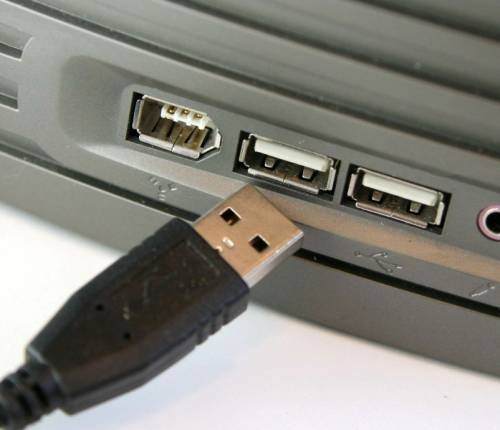 | Faster Port, Connects up to 127 peripheral devices |
| Motherboard | Mounts to the case and is a circuit board that contains many integral components |
| ASCII | Most Popular and widely used standardized coding system |
| Byte | Eight Bits or Combination of Ones and Zeros |
| Megabyte | Million Bytes |
| Gigabyte | Billion Bytes |


