| A | B |
|---|
| Two solid objects are placed in water. One sinks and the other floats. Which of the following is the most reasonable conclusion that can be drawn from this data? One object is smaller, one object is larger, one object has greater density than the other, or one object contains more air than the other? | One object has a greater density thatn the other. |
| Based on its state of matter, which of the following would be grouped with soda and pasta sauce? Potatoes, syrup, salt, or helium? | Syrup |
Boiling water was placed in four cups. Based on the data below, which cup was the best conductor of heat?, 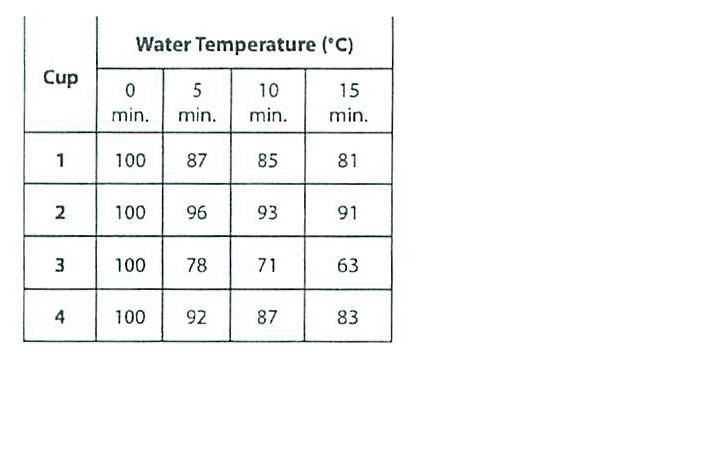 | Cup 3 |
| A student places four materials in a cup ofwater and stirs to mix. He classifies three of the materials as soluble and one as insoluble. Which material is the student likely to label as insoluble in water: sugar, sand, food coloring, or salt? | Sand |
Water and oil are poured into the same container. A cork is added. The materials are allowed to sit and their final positions are shown in the illustration. What is the most reasonable conclusion that can be made from this test? A) Cork has the lowest density, B) Water is less dense than oil. C) cork is less dense than water. D) Water has the least density., 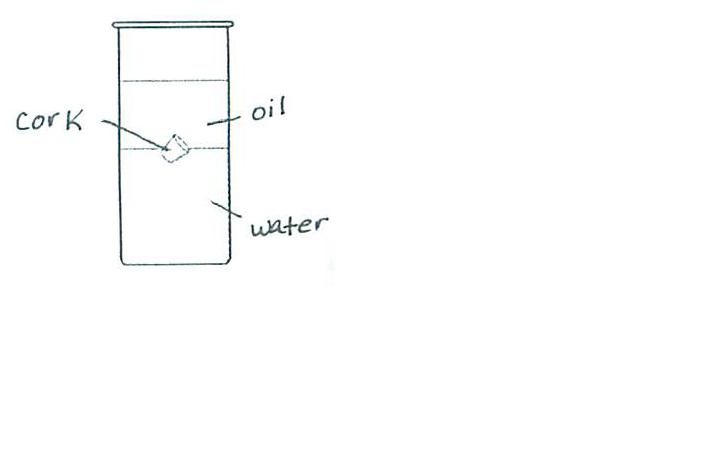 | Cork is less dense than water. |
In the picture of the aquarium below, which ball has the least density?, 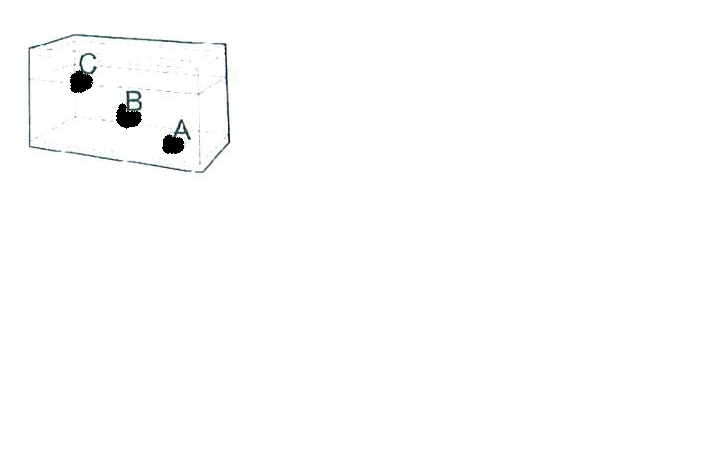 | C |
| Milk is to liquid as oxygen is to .... | gas |
| A student added sugar to a glass of colored water and stirred. As she stirred, the sugar dissolved in the water. Which of the following would also dissolve in water: sand, iron filings, salt, or pepper? | salt |
| What causes matter to change states? | Adding or taking away heat |
| How could you separate items that are different densities? | Place them in water and see which one floats. If it floats to the top, then it is less dense than the liquid it's placed in. |
| A student mixes sand and pebbles in a cup. How can the student sparate the parts of this mixture? | Pour them into a wire mesh screen (strainer) and catch what falls through |
| A student uses a hot plate to heat sugar crystals in a glass beaker. When should the student use the thermometer to measure the melting point of sugar? | When the sugar first starts to melt. |
| Chocolate is a solid at 22 degrees C. What would have to happen to chocolate in order for it to become a liquid? | Raise the temperature of the chocolate. |
| When a pan of water heating on a stove reaches the boling point, what is likely to be seen? | Steam rising from the surface of the water, bubbles rising from the bottom of the pan, and water moving from the bottom of the pan to the top of the pan. |
| Students heated a beaker of water on a hot plate. They set a plastic spoon and a metal spoon in the water. After a few minutes, the handle of the plastic spoon was warm. The handle of the metal spoon was very hot. Why is the metal spoon hotter? | The metal spoon is a better conductor than the plastic spoon. |
| Some students were studying different types of mixtures. They stirred together one cup of oil and one cup of water in a large glass beaker. They observed that the water settled to the bottom and the oil floated on top. What does this experiment demonstrate? | The oil is less dense than the water. |
| A student has a beaker containing an unknown substance. Which of the following will MOST help the student figure out the identity of the substance? Observing its shape, observing its physical state, measuring its mass, or measuring its melting point? | measuring its melting point |
| Which tool can separate plastic paper clips from metal paper clips the fastest? a metal ruler, a pair of tweezers, a filter funnel, or a horseshoe magnet | a horseshoe magnet |
| What happens when a small amount of salt mixes with water? | The salt breaks into pieces too small to be seen |
| Which of the following shows a change in an object's state of matter? A snow cone melting in a cup, grinding ice to make snow, a banana turning brown, or chilling an apple in the refrigerator? | a snow cone melting in a cup |
| Which mixture could be separated using a magnet? Pepper and sugar, Pebbles and marbles, sand grains and seashells, or iron filings and pepper? | iron filings and pepper |
| Students make a snack by mixing raisins and sunflower seeds in a bowl. Which of the following describes what happens to peanuts if theya re added to tthe snack mix? The peanuts maintain their color, texture, and taste; the peanuts cause the mixture to become a solution; The peanuts and sunflower seeds will have identical properties; or the peanuts are unable to mix with the raisins and sunflower seeds | The peanuts maintain their color, texture, and taste |
| Which statement is NOT true? Gass particles move freely; gases have a definite shape; gases fill all available space in a container; or water evaporates into a gas | gases have a definite shape |
| Beach sand is made of small, worn rocks and fragments of shells and sponges. This means that beach sand is ... a solid, a mixture, a compound, or unstable | a mixture |
| Which mixture could be separated using water? Sand grains and seashells; iron filings and sugar; salt and sugar; or pebbles and marbles | iron filings and sugar (the sugar would dissolve in the water and the iron filings would be left) |
| Which of the following items will change from a solid to a liquid if left outside on a warm day? Lemonade; orange; chocolate; or apple slice | chocolate |
| Which examples below is an example of a liquid becoming a solid? Puddles evaporating after a rainstorm; water freezing into ice; iron becoming red and flexible when heated; or liquid expanding in a thermometer? | water freezing into ice |
| Why are mittens an effective way to keep your hands warm? | the material theya re made from acts as an insulator |
Which Thermometer shows the freezing point of water?, 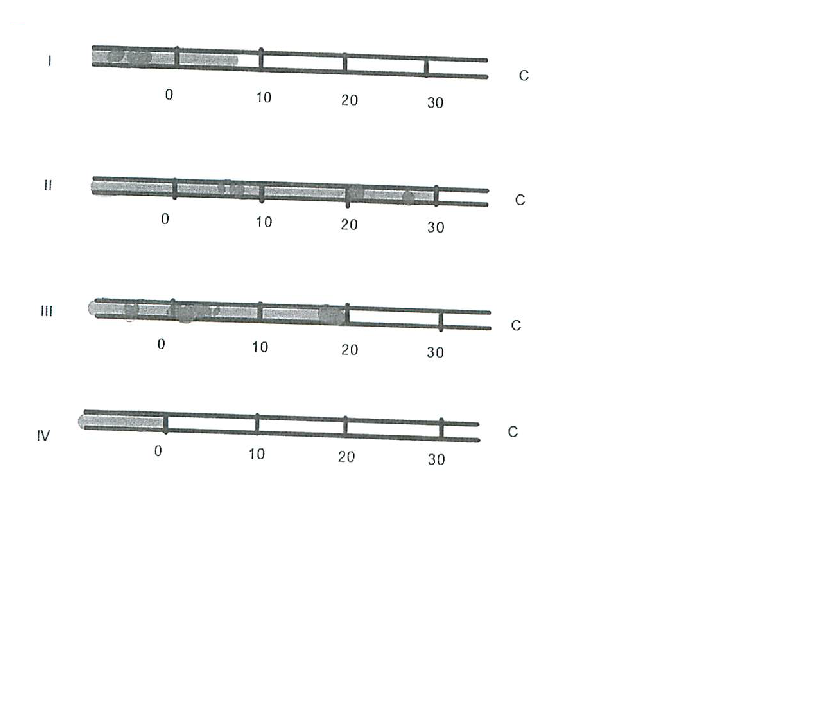 | IV |



