| A | B |
|---|
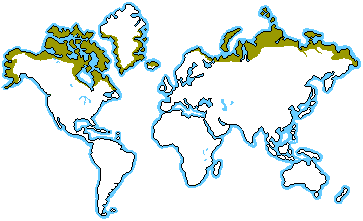 | tundra |
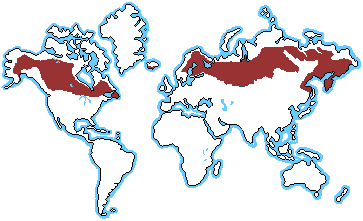 | taiga (coniferous forest) |
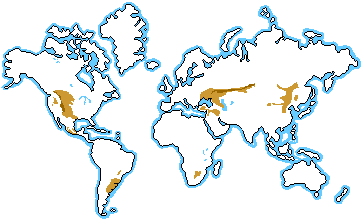 | prairie (temperate grassland) |
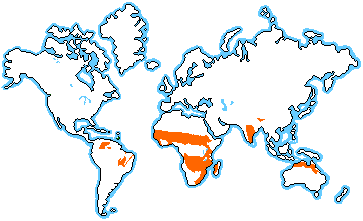 | savanna (tropical grassland) |
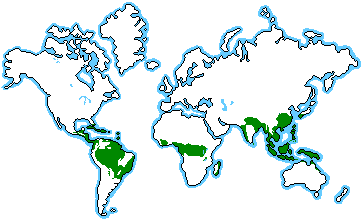 | rainforest |
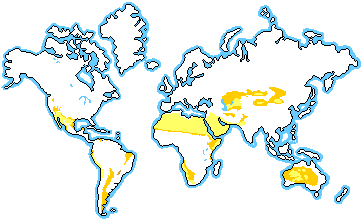 | desert |
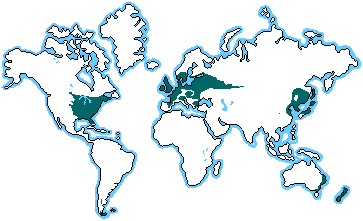 | temperate deciduous forest |
| LIMITING FACTORS: biome with 3 month growing season/cold winter | temperate deciduous forest |
| LIMITING FACTORS: biome with dry/extreme heat | desert |
| LIMITING FACTORS: biome with cold winter/fire/periods of drought/grazing animals | prairie (temperate grassland) |
| LIMITING FACTORS: biome with excess water leaches nutrients from soil/light limited by canopy | rainforest |
| LIMITING FACTORS: biome with long dry season/extreme heat/fire/grazing animals | savanna (tropical grassland) |
| LIMITING FACTORS: biome with acid soils/extreme cold and frost/slow decomposition | taiga |
| LIMITNG FACTORS: biome with shallow soil/permafrost/extreme cold/little moisture/low light intensity | tundra |
| VOCABULARY: period of inactivity or dormancy during the hot, dry season | estivation |
| VOCABULARY: period of inactivity or dormancy during the winter months | hibernation |
| VOCABULARY: plants that store water in their thickened leaves, usually as sap | succulent |
| VOCABULARY: plants that grow quickly, form seeds quickly, and live for a very short period of time | ephemeral |
| VOCABULARY: animals that are active at night or flowers that open at night and close during the day | nocturnal |
| VOCABULARY: animals moving seasonally in search of water, food, or the avoidance of the winter season | migration |
| VOCABULARY: trees or shrubs that lose their leaves seasonally | deciduous |
| VOCABULARY: mostly evergreen trees with needle-like leaves and that form seeds in cones | coniferous |
| WHICH BIOME? - Musk Ox have two layers of fur - one short & one long - and large, hard hooves for breaking through the ice to reach the water below | tundra |
| WHICH BIOME? - Plants grow together and low to the ground/small leaves to reduce water loss/dark in color to absorb solar energy | tundra |
| WHICH BIOME? - birds tend to migrate/mammals tend to hibernate/small mammals store food | temperate deciduous forest or taiga |
| WHICH BIOME? - deep tap roots reach underground water/succulent plants/waxy leaves/spines as leaves | desert |
| WHICH BIOME? - rocky, sandy soil that is very poor at holding water | desert |
| WHICH BIOME? - trees with needle-like leaves and cone shaped to shed snow | taiga |
| VOCABULARY: plants that grow on top of other plants and never root in the soil, but are not parasites | epiphytes |
| WHICH BIOME: - plants that climb up other plants, and plants that grow on other plants (epiphytes) | tropical rainforest |
| WHICH BIOME? plants with buttress, prop and stilt roots used to hold up the plants in shallow soil | tropical rainforest |
| WHICH BIOME? plants that re-grow quickly from their roots in order to survive fire, grazing and drought | savanna (tropical grassland) or prairie (temperate grassland) |
| WHICH BIOME? thick, nutrient rich soil caused by the yearly decay of dead plant matter | temperature decicuous forest (decay of leaves) or prairie (decay of dead grass or fire) |


