| A | B |
|---|
| The basic structure of a virus | DNA or RNA surrounded by a protein coat called a capsid |
| One reason viruses are classified as non-living is because | they must have a host cell to reproduce |
| Organisms within the same genus are MOST similar | Durio grandiflorus is most similar to Durio dulcis |
| Natural selection | organisms which survive to reproduce can pass favorable variations on to offspring |
| Natural selection occurs in | populations, not individuals |
| Transfer RNA | the RNA responsible for bringing amino acids to the ribosome for protein synthesis |
| Mutations occur when | the genetic code change caused the wrong protein to form |
| Translation | information in mRNA is converted into a sequence of amino acids in a protein |
| Photosynthesis | takes place in the chloroplasts |
| Meiosis results in | the new cells having half the DNA of the parent cell |
| phenotype | the physical characteristics of an organisms like brown eyes or blue eyes |
| mRNA | brings instructions from DNA in the cell nucleus to the cytoplasm |
| nucleotide | a sugar, a phosphate group, and a nitrogen base that forms the building blocks of nucleic acids |
| adenosine diphosphate (ADP) | the molecule which forms when the chemical bond between two phosphate groups in an ATP (adenosine triphosphate) molecule is broken |
| Enzymes | are proteins therefore they contain the element nitrogen |
| Nucleic acids | contain nitrogenous bases therefore they contain the element nitrogen |
| A plant cell has a | nucleus |
| A bacteria cell | does NOT have a nucleus |
| Enzymes | INCREASE the reaction rate of chemical reactions |
| Proteins and complex carbohydrates are | polymers of smaller subunits |
Ribosomes,  | the organelle which is the site where amino acids are synthesized into proteins |
| nucleotide | the monomer of nucleic acids |
| transpiration | when stomata are open and water evaporates from the pores of a plant leaf |
| When the chemical bond between the second and third phosphate group in ATP is broken | Energy is released, which can be used by the cell |
| ATP | stores energy in its chemical bonds for quick, easy use by cells |
| mitochondria | the cell organelle where energy stored in food molecules is transformed into usable energy for the cell |
This diagram represents, 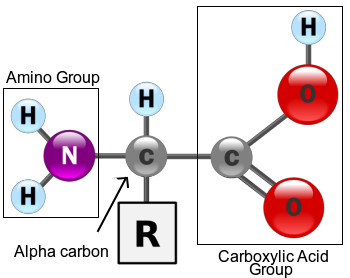 | a protein (notice it contains N) |
This diagram represents, 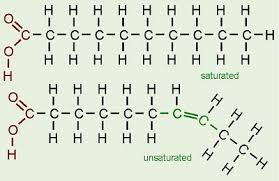 | lipid (chain of C,H,O) |



