| A | B |
|---|
| solid | state of matter in which the particles are closely packed and can only vibrate |
| liquid | state of matter in which the particles are loosely packed and can move about freely |
| gas | state of matter in which the particles are spread far apart and they move around quickly in all directions |
| temperature | a measure of the average kinetic energy of the particles in a substance |
| heat | the transfer of energy between objects that are at different temperatures |
| thermal equilibrium | The point at which the transfer of thermal energy no longer occurs and both objects reach the same temperature |
| thermal energy | the total energy of the particles that make up a substance |
| conduction | the transfer of thermal energy by direct contact |
| convection | the transfer of thermal energy by the movement of a fluid |
| radiation | the transfer of thermal energy through matter or space by electromagnetic waves |
| convection current | 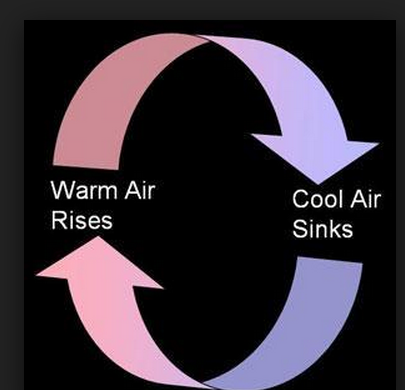 |
| fluid | a liquid or a gas |
| conductor | a substance that lets heat pass through |
| insulator | a substance that doesn't allow heat to pass through |
| how heat is transferred | heat always moves from an area of high temperature to an area of low temperature |
| solid | 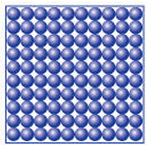 |
| liquid | 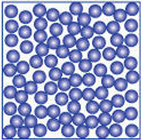 |
| gas | 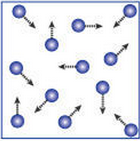 |
| convection current | the circular motion of a fluid due to differences in density brought about by differences in temperature |


