| A | B |
|---|
| scalene triangle | a triangle with no equal sides, 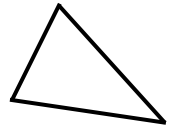 |
| isosceles triangle | a triangle with at least 2 equal sides, 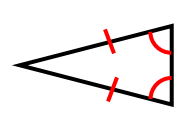 |
| equilateral triangle | a triangle with 3 equal sides, 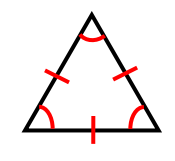 |
| acute triangle | 3 angles, each less than 90 degrees, 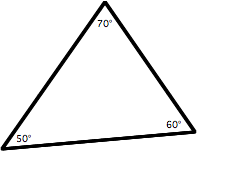 |
| right triangle | 1 angle equals 90 degrees, 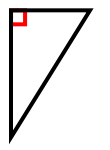 |
| obtuse triangle | 1 angle greater than 90 degrees, 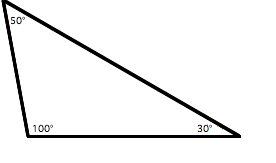 |
| equiangular triangle | 3 angles, each measures 60 degrees, 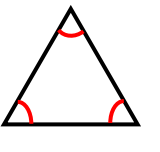 |
| triangle sum theorem | measures of the interior angles of a triangle = 180 degrees |
| exterior angle of triangle | Exterior angle, m∠ 1, is equal to the sum of the measures of the two nonadjacent interior angles.,  |
| Side-Side-Side Congruence | 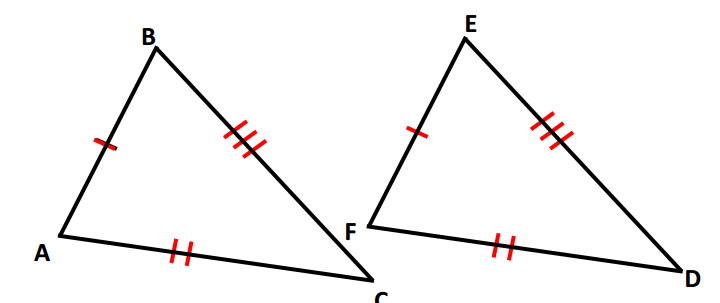 |
| Side-Angle-Side Congruence | 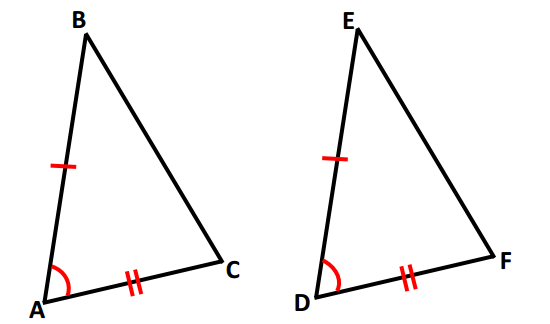 |
| Angle-Angle-Side Congruence | 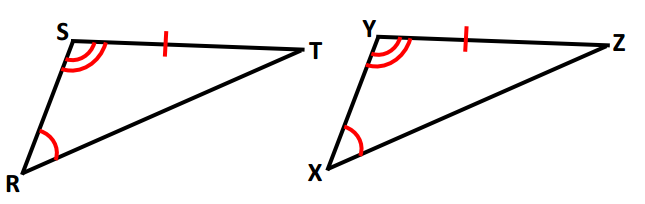 |
| Angle-Side-Angle Congruence | 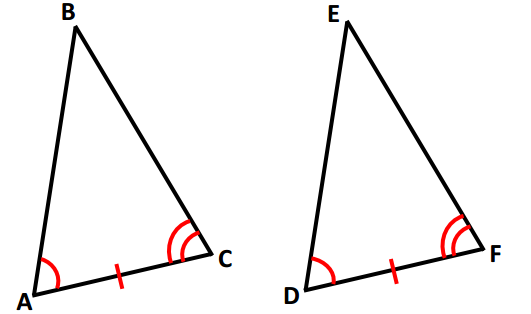 |
| Congruent Triangles | 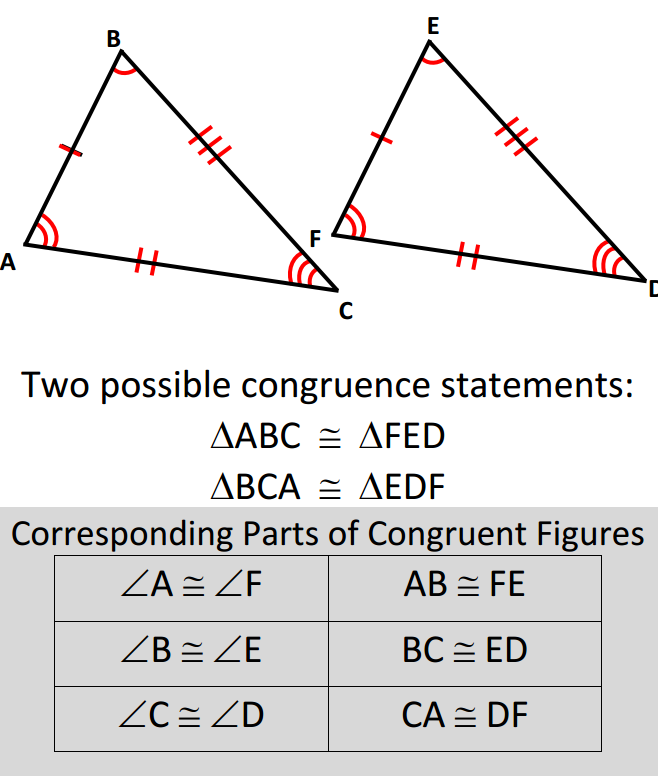 |
| Triangle Inequality Theorem | The sum of the lengths of any two sides of a triangle is greater than the length of the third side., 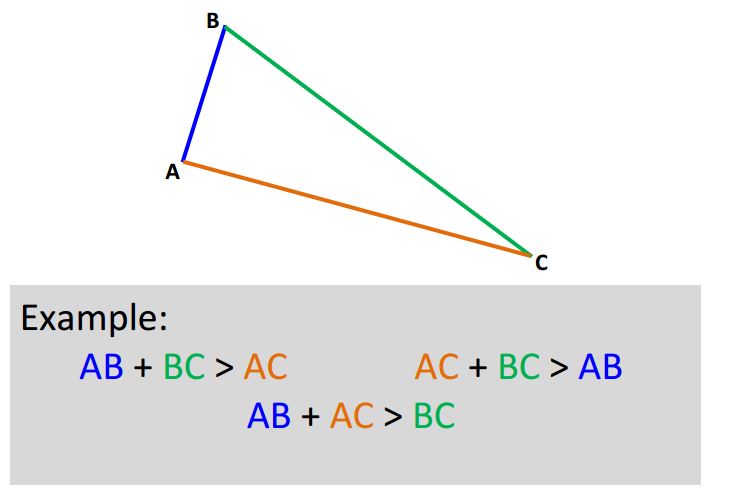 |
| shortest side | The shortest side is across from the smallest angle., 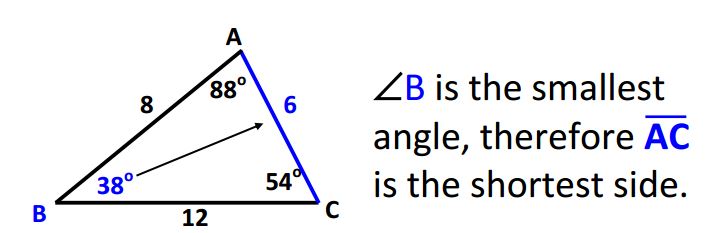 |
| longest side | The longest side is across from the largest angle., 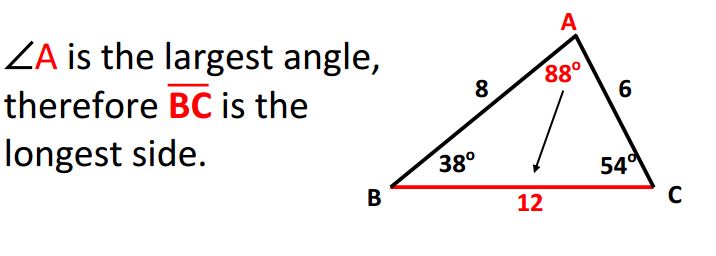 |
| median | a median of a triangle is a line segment joining a vertex to the midpoint of the opposing side, 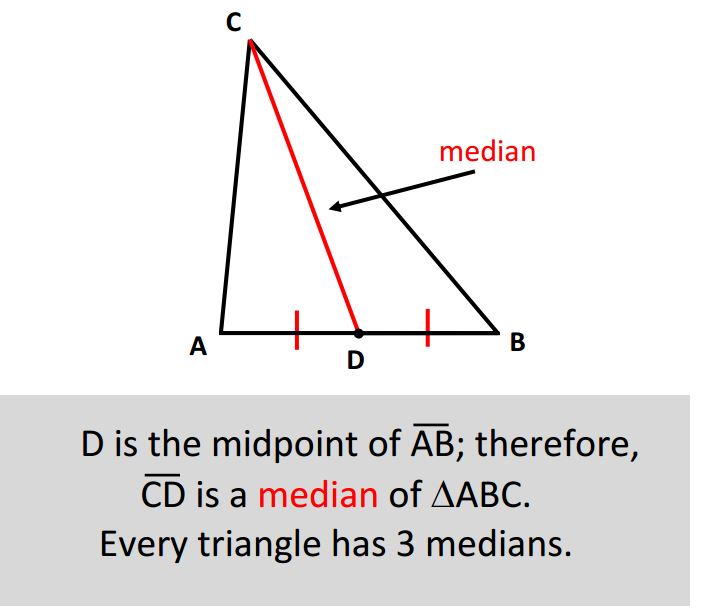 |
| centroid | Every triangle has exactly three medians, one from each vertex, and they all intersect each other at the triangle's centroid., 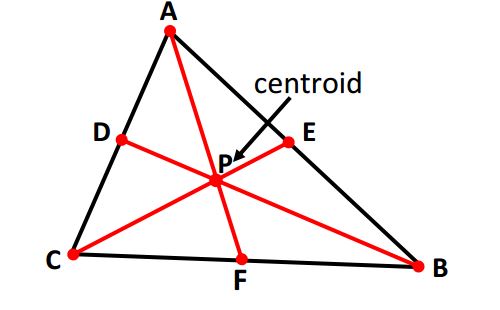 |
| altitude | a segment from a vertex perpendicular to the opposite side, 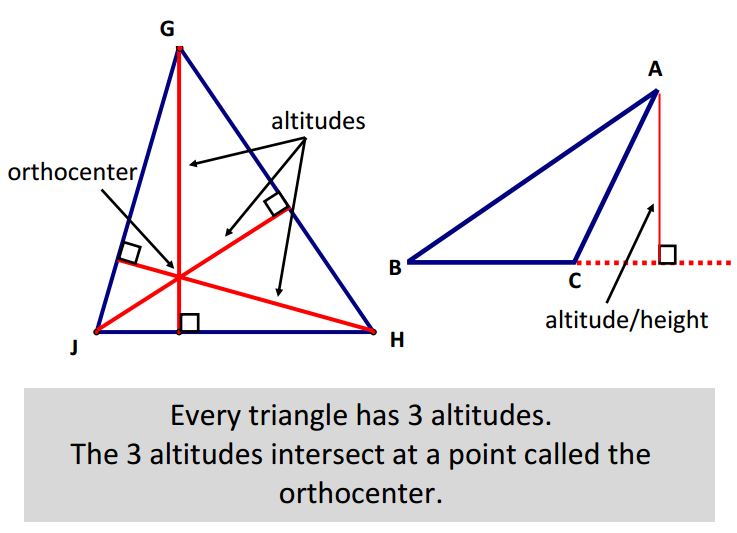 |
| angle bisector | An angle bisector in a triangle is a segment drawn from a vertex that bisects (cuts in half) that vertex angle. Every triangle has three angle bisectors., 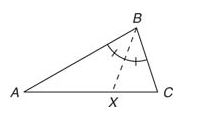 |
| perpendicular bisector | create a right angle at the midpoint of a segment, 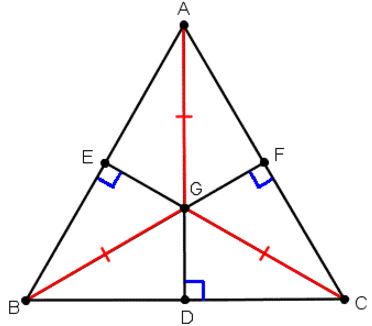 |
| Hypotenuse-Leg Theorem | The hypotenuse leg theorem states that any two right triangles that have a congruent hypotenuse and a corresponding, congruent leg are congruent triangles., 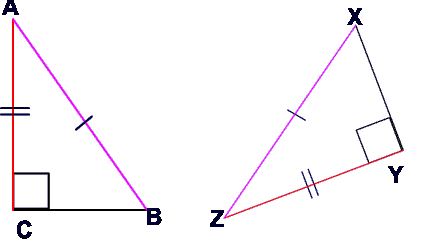 |



