| A | B |
|---|
Yahoo,  | founded by Jerry Yang & David Filo at Stanford University in 1994,  |
| How Yahoo worked | it is a web directory |
| search engine | A program for the retrieval of data, files, or documents from the Internet. |
| Examples of search engines | Yahoo, Google, Excite, Lycos, Dogpile...., 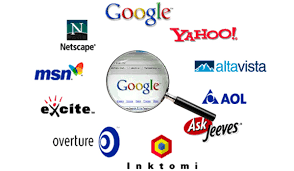 |
| Yahoo started: | as a way to collect websites to win a fantasy basketball league |
| how Yahoo makes money | used banner ads on Yahoo pages to generate revenue/income |
| web directory | Human manual catalogging of websites by subject, often providing brief descriptions of each website’s content |
Excite,  | started in 1994 at Stanford University |
| How Excite worked | used web crawlers to find search results automatically without human interaction |
| How Excite made money | used banner ads on Excite pages to generate revenue/income |
| web crawlers | a computer program that browses the World Wide Web in a methodical, automated manner and reports back back to a search engine with results |
Google,  | founded by Sergey Brin and Larry Page at Stanford University in 1998,  |
| How Google Works | uses a web crawler to find websites and count the number of in-links for search results with higher results listed higher on the search list |
| "In-Links" | when a website is listed by other websites |
| Google's name | named GOOGLE after the mathematical term googol which means 1 followed by 100 zeros or 1 to the 100th power, 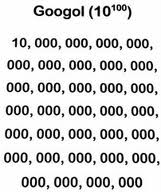 |
| Google's company motto | “Don’t be evil”,  |
| the verb "to Google" | means searching for something on the Internet |
| How Google made money | purposely did not use banner ads to generate income but “pirated” the idea of sponsored links to generate income |
| Adwords | using keywords typed in a search to generate related sponsored ad’s in a search query,  |
| ARPANET | Advanced Research Projects Agency Network, 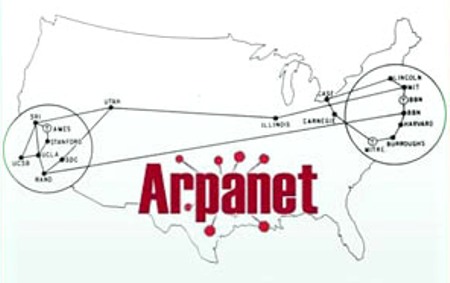 |
| What is ARPANET | allowed offices and campuses across the country to connect together to work together on projects for the Department of Defense |
| When ARPANET started | 1959 |
| dot-com bubble | the founding of a group of new Internet-based companies commonly referred to as dot-coms from 1995-2000 |
| Web Bubble Burst | 2000-2001 when over 50% of newer Tech companies closed up or greatly scaled back production and many investors lost billions of dollars at this time |
| Stanford University | major Ivy League university in California, outside of San Francisco where Yahoo, Excite and Google were founded,  |
| web browser | program installed to your computer that allows you to access the internet |
| web browser examples | Google Chrome, Mozilla Firefox, Apple Safari, and Internet Explorer,  |
| BING | Microsoft's search engine,  |
| what does BING stand for | Because It's Not Google |


