| A | B |
|---|
| Organisms, such as plants, that make their own food are called ___. | autotrophs |
| Organisms that can't make their own food and must obtain their energy from food they consume are called ___. | heterotrophs |
| How many phosphate groups does ATP have? | Three (that's why it is called adenosine tri-phosphate) |
| How many phosphate groups does ADP have? | Two (that's why it is called adenosine di-phosphate) |
| Energy is released from an ATP molecule when __. | a phosphate group is removed. |
| When ATP releases energy, ___ is formed. | ADP |
| ATP provides ____ for the mechanical function of cells. | energy |
| The energy in most food comes originally from ___. | sunlight |
| The formation of ADP from ATP ____ energy. | releases |
| The formation of ATP from ADP ____ energy. | requires |
| The energy required to convert ADP into ATP usually comes from burning ___. | carbohydrates |
What is the name of the molecule pictured below?,  | ATP (adenosine tri-phosphate). Notice the three phosphate groups.,  |
What is the name of the molecule pictured below?, 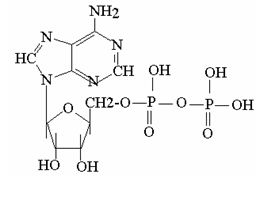 | ADP (adenosine di-phosphate). Notice it has two phoshate groups),  |


