| A | B |
|---|
| Limit dimensions | are two dimensional values stacked on top of each other. The dimensions show the largest and smallest values allowed. |
| Unilateral tolerance | when a target dimension is given along with a tolerance that allows variation to occur in only one direction. when a target dimension is given along with a tolerance that allows variation to occur in only one direction. |
| bilateral tolerance | the variation from a target dimension is shown occurring in both the positive and negative directions. |
| Bilateral tolerance | 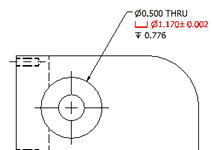 |
| Limit tolerance | 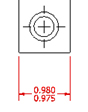 |
| Unilateral | 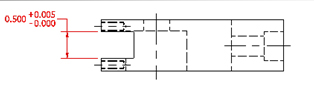 |
| General Tolerances | If no tolerances are specified at the dimension level, then general tolerances may be applied by deliberately controlling the number of values past the decimal point on each dimension. |
| Interference | have limits of size so prescribed that an interference always results when mating parts are assembled. |
| Transition Fit | have limits of size indicating that either a clearance or an interference may result when mating parts are assembled. |
| Clearance Fit | have limits of size so prescribed that a clearance always results when mating parts are assembled. |


