| A | B |
|---|
LAN-Local Area Network,  | connects PC's together in one building by cable. |
WAN- Wide Area Network,  | connects Local Area Networks from different locations to each other by telephone, cable, DSL, or ISDN lines. |
Server,  | the central computer that stores files on the network. |
Client,  | a computer that can access the information stored on the network. |
Node, 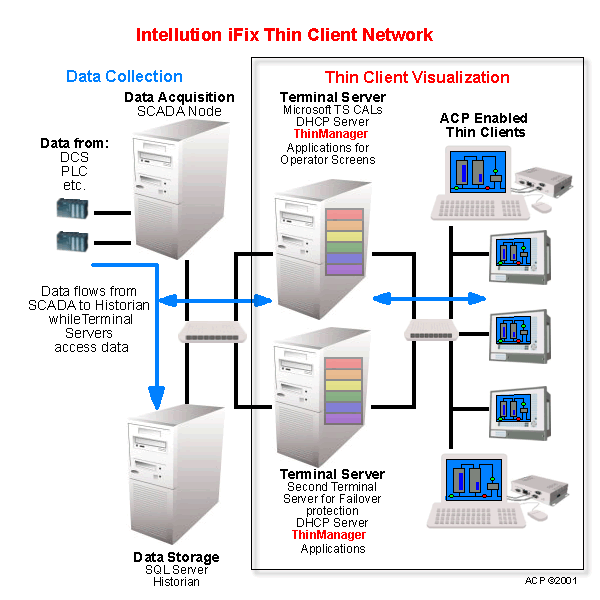 | a connection point for data transmissions. |
Internet,  | an interconnection of computer networks and enabling communication. |
Intranet,  | smaller version of the Internet used within organizations to distribute internal information. |
Extranet, 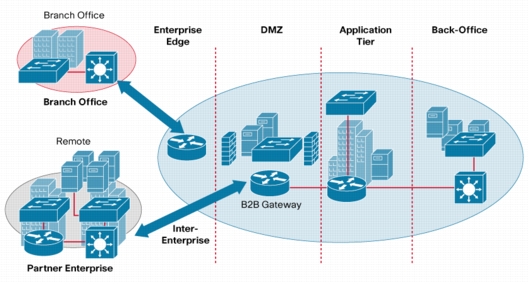 | private network used to share part of an organization's information with external contracts. |
Electronic mail (e-mail),  | exchange of computer-stored messages by telecommunication. |
World Wide Web (WWW),  | collection of documents stored on computer's around the world. |
modem, 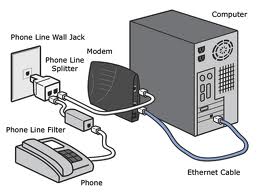 | are the usual means of connecting to the Internet. |
Web site,  | a related collection of World Wide Web files that include a home page. |
switch, 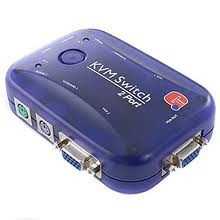 | a network device that selects a path for sending a unit of data to the next destination. |
router, 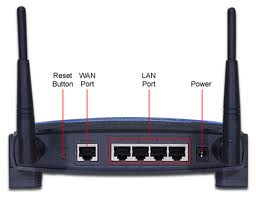 | located where one network meets another. |
web browser, 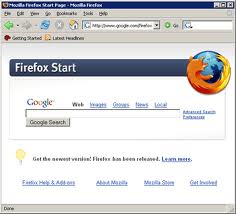 | the software program used to access the World Wide Web. |
connection, 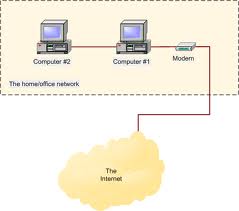 | in order to surf the Internet, you must have a connection |
ISP (Internet Service Provider),  | host computer that provides service to the Internet |
bridge, 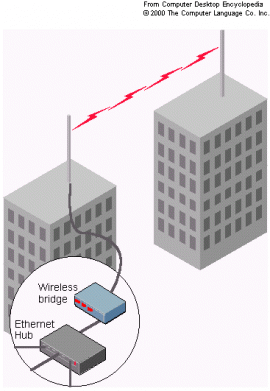 | a device that connects LAN to LAN |
firewall, 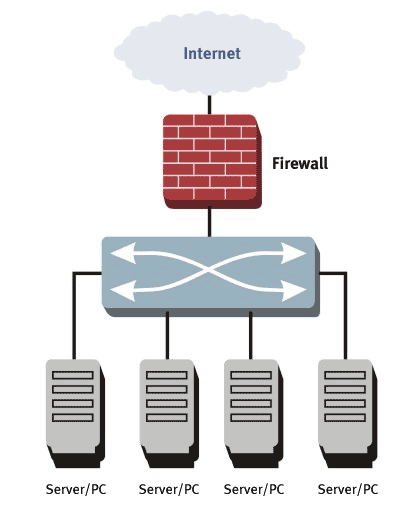 | special software or hardware that protects a private computer from unauthorized use |
satellite,  | system makes it possible for anyone to access the Internet |
| The From: box | contains the e-mail name of the sender. |
| The To: box | contains the e-mail names of each recipient. |
| The Cc: box | contains the e-mail names of each recepient to whom the message is copied. |
| The Subject: box | contains the message title. |
| The Bcc: box | contains the name of which are hidden from all other recepients. |



