| A | B |
|---|
| Layer 2 PDU | Frames |
| OSI Layer Model | 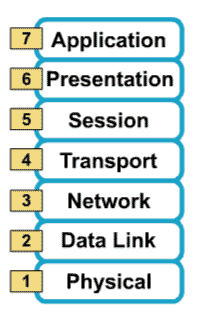 |
| Concerned with data transfer syntax and encryption | Presentation Layer |
| Concerned with providing network services to user applications and has protocol like DNS and FTP | Application Layer |
| Innitiates, manages and terminates communication between Presentation layer entities | Session Layer |
| Concerned with fault detection and correction, the flow of data and reliability | Transport Layer |
| Concerned with logical addressing, path determination and the switching of packets | Network Layer |
| Concerned with network topology, physical addressing and reliability across network media | Datalink Layer |
| Concernec with the electrical and functional specifications of networking including wires, cables and connectors | Physical Layer |
| Layer 3 PDU | Packets |
| Layer 1 Protocol Data Unit (PDU) | Bits |
| Layer 4 Protocol Data Unit (PDU) | Segments |
| Layers 5, 6 and 7 PDUs | Data |
| Definition of network media | Material through which information can flow |
| Application Layer Protocols | FTP, DNS, SMTP, HTTP and TFTP |
| The TCP/IP Layer Model | 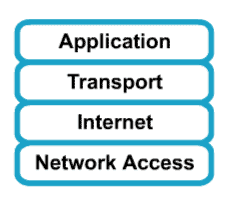 |
| Network Media (picture) | 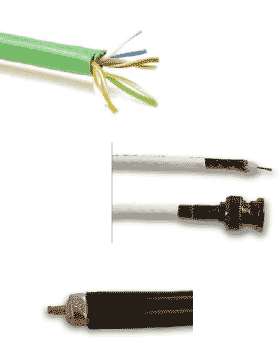 |
| Correct encapsulation order of PDU's | Data, Data, Data, Segments, Packets, Frames, Bits |
| TCP/IP Layer responsible for error correction, data flow control and reliability | TCP/IP Transport Layer |
| TCP/IP Layer responsible for path selection and routing | TCP/IP Internet Layer |



