 |
Java Games: Flashcards, matching, concentration, and word search. |
 |
|
| A | B |
|---|
AMPHIBIAN, 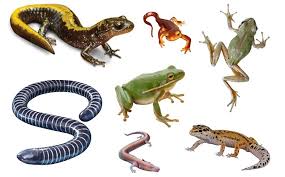 | A cold-blooded vertebrate animal of a class that comprises the frogs, toads, newts, and salamanders. |
CAECILIANS, 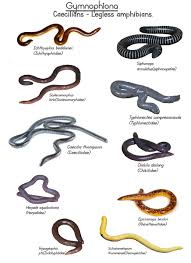 | A burrowing wormlike amphibian of a tropical order distinguished by poorly developed eyes and the lack of limbs. |
ECTOTHERM,  | Being cold-blooded, any animal whose regulation of body temperature depends on external sources, such as sunlight or a heated rock surface. Example: fishes, amphibians, reptiles, and invertebrates. |
CLOACA, 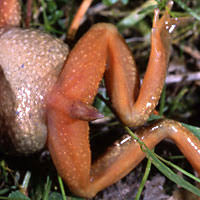 | A body cavity through which urine and feces are eliminated and acts as the reproductive organ in birds, reptiles, and amphibians, |
FROG, 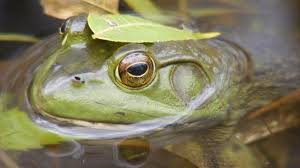 | An amphibious animal of the genus rana. Adults live mainly in fresh water |
TOAD, 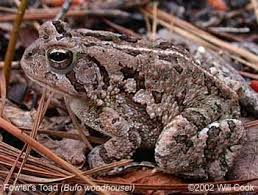 | The common name for certain frogs, of the family Bufonidae, that are characterized by dry, leathery skin, short legs, and large bumps. Adults live mainly on land. |
SALAMANDER, 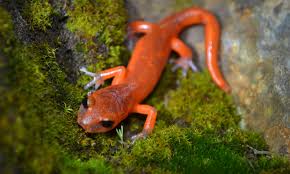 | A group of amphibians typically characterized by a lizard-like appearance, with slender bodies, blunt snouts, short limbs. |
EXTERNAL NARES, 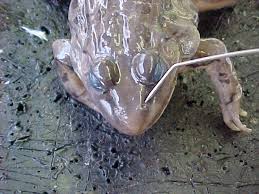 | The two external openings of the nose, which lead to the nasal cavity in amphibians. |
TETRAPOD, 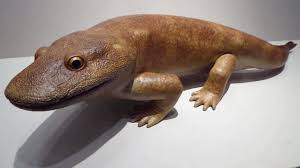 | A vertebrate having four limbs or leg-like appendages. |
TYMPANUM, 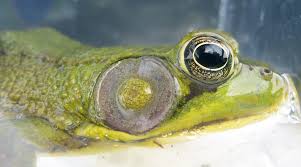 | A large external oval shape membrane made up of nonglandular skin. It is located just behind the eye. It transmits sound to an amphibians ear. |
|
|
|

|
|
|
Bend Senior High |
| Bend, OR |
|
|
|
|
|
| |
