| A | B |
|---|
* What structure is #1 pointing to?,  | p703,  |
| * What structure is #2 pointing to?, | p703, 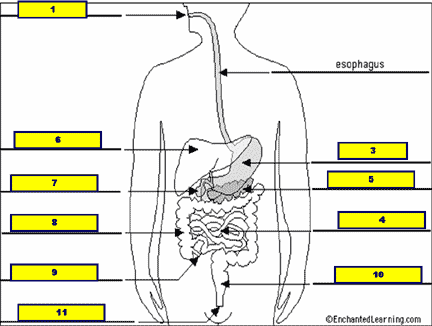 |
| * What structure is #3 pointing to?, | p703, 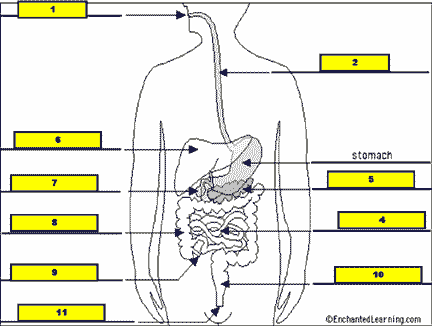 |
| * What structure is #4 pointing to?, | p703, 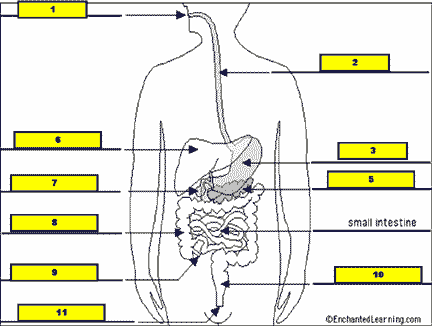 |
| * What structure is #5 pointing to?, | p703, 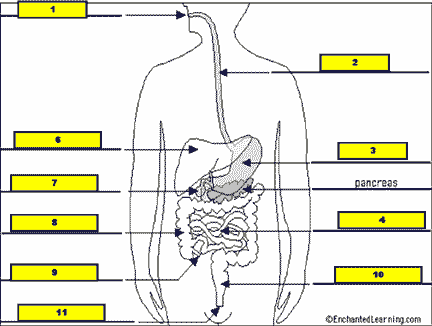 |
| *What structure is #6 pointing to?, | p703,  |
| * What structure is #7 pointing to?, | p703, 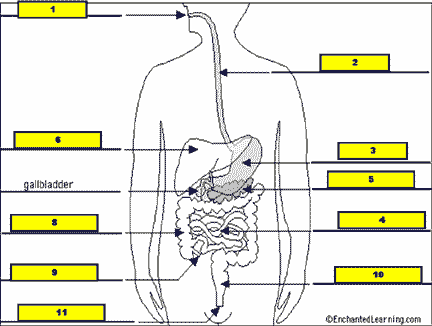 |
| * What structure is #8 pointing to?, | p703, 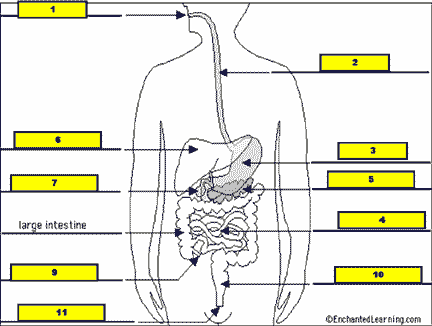 |
| * What structure is #9 pointing to?, | p703, 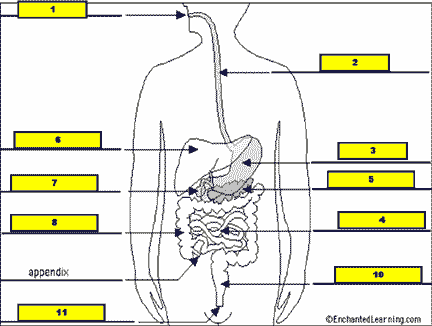 |
| * What structure is #10 pointing to?, | p703,  |
| * What structure is #11 pointing to?, | p703, 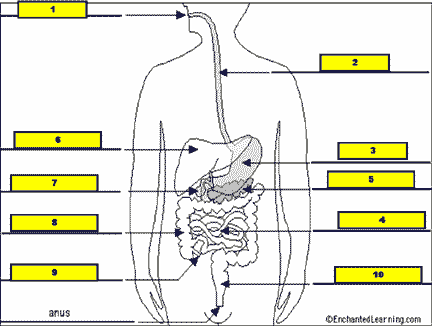 |
| * What is the name of the tube that carries food from the mouth to the stomach? | esophagus p703 |
| * Where does chemical digestion of food start? | In the mouth (when salivary amylase starts breaking down complex carbohydrates) p703 |
| *Where does mechanical digestion of food start? | In the mouth (when food is broken into smaller chunks by mastication (chewing) p703 |
| * How is food mechanically digested in the stomach? | Strong muscular contractions of the stomach (grind the food in a process called churning. These contractions occur about once every 20 seconds) p704 |
| * The stomach breaks down mainly ___. | proteins p704 |
| * Lipids are broken down in the ___. | small intestine pp705&706 |
| * Carbohydrates are broken down in the ___. | mouth and small intestine p705 |
| * Where in the digestive tract does digested foods leave the digestive tract to enter the bloodstream? | small intestine p706, 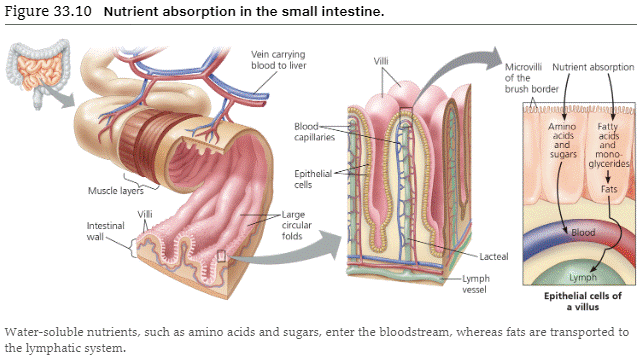 |
| * Where do digested foods go after they leave the small intestine? | bloodstream (except for fats, which enter the lymphatic system before entering the bloodstream) p706, |
| * Where does undigested food go after it leaves the small intestine? | large intestine-->rectum-->anus-->out, 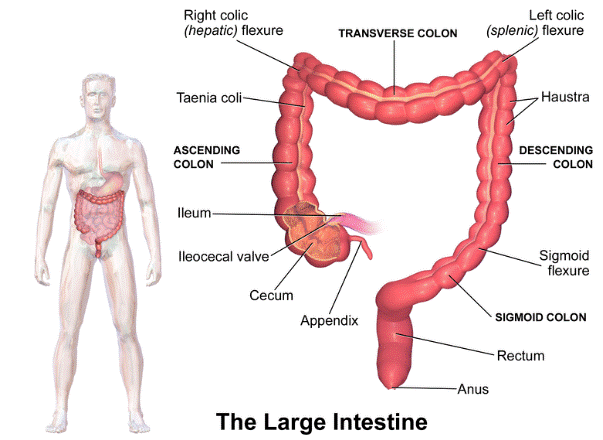 |
| * _____, a series of wave-like contractions, pushes food down your esophagus into your stomach. | Peristalsis (wave-like contractions of the muscles surrounding the esophagus) p704, 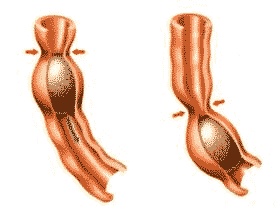 |
| * Lipase is an enzyme released by the pancreas that breaks down ___. | Lipids (which include fats and oils) p705 |
| * What is the biggest difference between proteases that work in the stomach versus proteases that work in the small intestine? | The pH at which they are active (Proteases in the stomach need a low pH to become activated while those in the small intestine need a fairly neutral pH to be active) pp705&706 |
| * The large organ that lies above the stomach and produces bile is called the ____. | liver (Remember, bile is a substance that breaks apart water insoluble fats into smaller globules so they can be attacked by enzymes) p706 |
| * ____ is a substance that is produced in the liver and is released by the gall bladder into the small intestine in order to break up fats into smaller droplets. | Bile p706 |
| * If part of the stomach wall digests itself, a(n) ___ will develop. | ulcer (It was recently discovered that ulcers are caused by an acid tolerant bacterium and can be cured with antibiotics. The bacteria damage the mucous lining, opening the stomach up for damage by the low pH) p704 |
| * Stomach juices have a ___ pH and would be described as being ___. | low pH, acidic p704 |
| * What are two organs that are part of the digestive system, but not the digestive tract? | Pancreas and liver (food doesn't pass through them. They produce substances that get dumped into the digestive tract to help with digestion) p703, 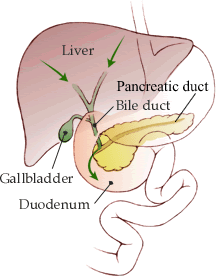 |
* Villi and microvilli are small fingerlike projections on the inside of the small intestine that help increase absorption of food by increasing the ___ that food comes in contact with., 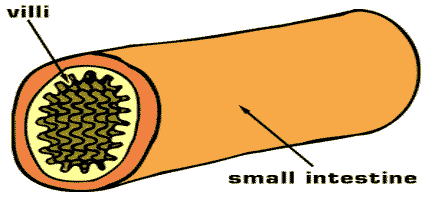 | surface area p706, |
| * TRUE or FALSE: Transport of nutrients across the cell membranes of the intestinal lining and surrounding capillaries is always passive | FALSE (It can be active or passive depending on the type of molecule being transported) p706 |
| * The flap of cartilage in the back of the throat ( _________ ) of humans that keeps food from going down the windpipe (trachea) is called the ______. | pharynx, epiglottis p703 (they took the term "epiglottis" out of the book, but I still want you to know it) p703, 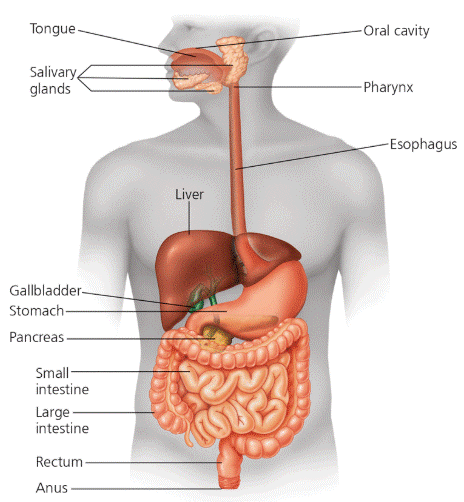 |
| * What causes the inactive stomach enzyme pepsinogen to attain the active configuration to become pepsin? | low pH p704 |
| * Pepsin breaks down _______ in the _______. | proteins, stomach p704 |
| * ___ are animals that eat only plants or algae. | herbivores p698 |
| * ___ are animals that eat only other animals. | Carnivores p698 |
| * ___ are animals that eat both producers and other animals. | Ominivores p698 |
| * Overall, an adequate diet must satisfy three nutritional needs. What are they? | chemical energy for cellular processes, building blocks for large organic molecules, and essential nutrients p699 |
| * To build the complex molecules it needs to grow, maintain itself, and reproduce, an animal must obtain two types of organic molecules from its food: a source of organic _____ (such as sugar) and a source of organic _____ (such as protein). | carbon, nitrogen p699 |
| *_______ are substances that an animal requires but cannot assemble from simple organic molecules | Essential nutrients p699 |
| * If the word "essential" comes before something (like "essential amino acid"), it means that ___. | your body can't make it itself p699 |
| * _____ are organic molecules that are required in the diet in very small amounts. | Vitamins p699 |
| * When our skin is exposed to sunlight, our bodies synthesize vitamin ___. | D p700 |
| * When our skin is exposed to ___, our bodies synthesize vitamin D. | sunlight p700 |
| * If you are taking vitamin supplements, you need to be careful because excesses of _____-soluble vitamins can accumulate to toxic levels. | fat p700 |
| * Dietary ____ are inorganic nutrients that are usually required in small amounts. | minerals p700 |
| * Vertebrates require calcium and phosphorus for building and maintaining ____. | bone p700 |
| * Ingesting too much of some minerals can impair health. For example, excess ___ can contribute to high blood pressure. | salt p700 |
| * If the body is not receiving enough calories in its diet, the body first uses up stored _____ and then ___. It then begins breaking down its own ___ for fuel. | proteins, fat, protein (This is why diet and exercise can be hard. The body starts out by breaking down the sugars and glycogen it has stored along with a little fat. You have to exercise for awhile before you start to burn fat in large quantities. It's important to exercise while dieting though because if you don't, you will burn protein along with fat once you have starved yourself to the point where you don't have many carbs in your system. Whenever you are low in stored carbs, the low blood-glucose levels signal your brain to feel hungry. It's hard to ignore) p700 |
| * ______ involves weight loss to a level that is unhealthy for the individual’s age and height and may be related to a distorted body image. | Anorexia nervosa p700 |
| * During _____ , food is broken down into molecules small enough for the body to absorb. | digestion p701 |
| * Chewing or grinding food to break food into smaller pieces is a type of digestion called _____ digestion. | mechanical p701 |
| * Cleaving large molecules into smaller components is a type of digestion called ____ digestion. | chemical p701 |
| * A cell engulfs solid food by ____ or liquid food by _____. | phagocytosis, pinocytosis p702 |
| * Newly formed food vacuoles fuse with ____, organelles containing hydrolytic enzymes. This fusion of organelles brings food in contact with these enzymes, allowing digestion to occur safely within a compartment enclosed by a protective membrane. | lysosomes p702 |
| * TRUE or FALSE: Digestion of food in the stomach is an example of extracellular digestion. | TRUE (The digestion is not intracellular because it is not occurring inside of cells) p702 |
| * Animals with relatively simple body plans typically have a digestive compartment with a single opening. This pouch, called a _______, functions in digestion as well as in the distribution of nutrients throughout the body. | gastrovascular cavity (Notice the Planarian, a type of flatworm, on the right has only one opening, the pharynx. for bringing in food and getting rid of waste) p702, 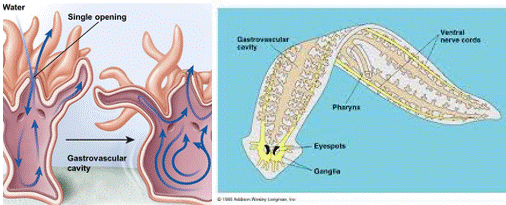 |
| * Animals with relatively simple body plans typically have a digestive compartment with _____ opening(s). This pouch, called a gastrovascular cavity, functions in digestion as well as in the distribution of nutrients throughout the body. | a single (Notice the Planarian, a type of flatworm, on the right has only one opening, the pharynx. for bringing in food and getting rid of waste) p702, |
| * Animals with complex body plans have a digestive tube with ____ opening(s). Such a tube is called a complete digestive tract or, more commonly, an alimentary canal. | two (The earthworm below has an easy alimentary canal to visualize. This body plan is often called a tube within a tube. We have the same body plan though. It's just that our alimentary canal twists and turns many times in order to increase the surface area of the intestine for absorption of nutrients) p702, 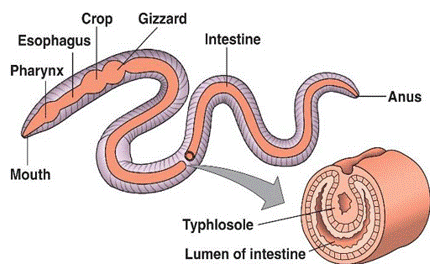 |
| * Animals with complex body plans have a digestive tube with two openings: a(n) _____ at the anterior end and a(n) ____ near the posterior end. Such a tube is called a complete digestive tract or, more commonly, an alimentary canal. | mouth, anus (The earthworm below has an easy alimentary canal to visualize. This body plan is often called a tube within a tube. We have the same body plan though. It's just that our alimentary canal twists and turns many times in order to increase the surface area of the intestine for absorption of nutrients) p702, |
| * Animals with complex body plans have a digestive tube with two openings: a mouth and an anus. Such a tube is called a complete digestive tract or, more commonly, a(n) _____. | alimentary canal (The earthworm below has an easy alimentary canal to visualize. This body plan is often called a tube within a tube. We have the same body plan though. It's just that our alimentary canal twists and turns many times in order to increase the surface area of the intestine for absorption of nutrients) p702, |
| * Animals such as earthworms and birds have an enlarged compartment in their digestive tract called the _____ where food is ground up (mechanical digestion) often with the help of small stones or sand that are ingested. | gizzard p720, |
| * Another word for the throat region of your digestive tract is the ______. | pharynx p703, |
| * The pharynx leads to two passageways: the _____ and the trachea. | esophagus, trachea p703, |
| * Another word for the windpipe that leads to the lungs is ____. | trachea p703, |
| * What kind of acid is secreted by cells that line the stomach? | Hydrochloric acid (HCl) p704 |
| * What are the two main purposes of having an acidic environment in the stomach? | denature (unravel) proteins and kill bacteria p704 |
| * In which part of the digestive tract does most of the digestion of food take place? | small intestine p705, |
| * TRUE or FALSE: In addition to regulating blood sugar through the release of insulin and glucagon, the pancreas also releases digestive enzymes straight into the small intestine. | TRUE (secretes numerous digestive enzymes into the small intestine. These include the proteases trypsin and chymotrypsin, which are produced in inactive forms. In a chain reaction similar to that for pepsin, they are activated when safely located in the lumen of the duodenum after the pH of the stomach contents is neutralized by bicarbonate ions releases from the pancreas) p705 |
| * Which organ stores bile? | The gall bladder (Bile is originally synthesized in the liver, then goes to the gall bladder where it is released into the small intestine as needed) p706 |
| * After blood absorbs nutrients from the small intestine, where does it go next? | The liver (Via the hepatic portal vein. This arrangement serves two major functions. First, it allows the liver to regulate the distribution of nutrients to the rest of the body. Because the liver converts many organic nutrients to different forms for use elsewhere, blood leaving the liver may have a very different nutrient balance than the blood that entered. Second, the arrangement allows the liver to remove toxic substances before they can circulate broadly) p706) |
| * The ____ is the primary site for detoxifying many organic molecules foreign to the body, including drugs. | liver p706, |
| * As by-products of their metabolism, many colon bacteria generate gases, including ______, a flammable greenhouse gas, and _____, the latter of which has an offensive odor. | methane, hydrogen sulfide p707 |
| * Herbivores rely on ______ to digest cellulose. | microorganisms in special chambers in their digestive tract (Animals produce no enzymes capable of breaking down cellulose, the key component in cell walls, into simple sugars, so they have to rely on mutualistic bacteria and protists to do the job for them) p710 |
| * When an animal takes in more food than it requires for its energy needs, it first stores the extra energy as _____, and once it can't store any more of that, it stores it as ____. | glycogen, fat p711 |
| * Fat is stored in a special type of cell called a(n) _____ cell. | adipose |
| * TRUE or FALSE: Oxidizing a gram of carbohydrates will liberate more energy than oxidizing a gram of fat or protein. | FALSE (Lipids have over twice as many calories per gram as proteins or carbs) p712 |
| * The pancreas maintains homeostasis of blood sugar levels by releasing _____ when blood sugar levels are too high and _____ when blood sugar levels are too low. | insulin, glucagon (These hormones travel through the bloodstream and attach to receptors on muscle and liver cells to either initiate the uptake of glucose from the blood to turn it into glycogen stores, or, in the case of glucagon, the opposite) p712 |
| * The pancreas maintains homeostasis of blood sugar levels by releasing glucagon when blood sugar levels are too ____ and insulin when blood sugar levels are too ____. | low, high (These hormones travel through the bloodstream and attach to receptors on muscle and liver cells to either initiate the uptake of glucose from the blood to turn it into glycogen stores, or, in the case of glucagon, the opposite) p712 |
| * _______ is a disease caused by a deficiency of insulin or a decreased response to insulin in target cells. | Diabetes mellitus p712 |



