| A | B |
|---|
ATP, 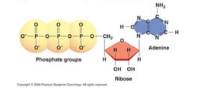 | (adenosine triphosphate) main energy source that cells use for most of their work |
ADP, 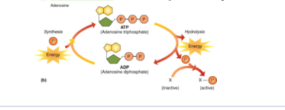 | adensosine diphosphate; molecule that ATP becomes when it give up one of its three phosphate groups |
| substrate level phosphorylation | the enzyme mediated direct transfer of phosphate from another molecule ( the substrate) to ADP |
| reduction | gain of electrons by chemical reactant; any reduction is accompanied by an oxidation |
| oxidation | relative loss of electrons in a chemical reaction; either outright removal to form an ion, or the sharing of electrons with substances having a greater affinity for them such as oxygen |
| oxidized | loses electrons |
| reduced | gains electrons |
| cellular respiration | the catabolic pathways by which electrons are removed from various molecules and passed through intermediate electron carriers to O2 , generating H2O and ATP |
aerobic, 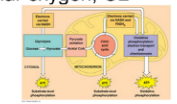 | requiring molecular oxygen, O2 |
citric acid cycle, 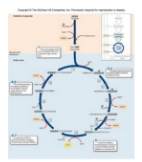 | a set of chemical reactions whereby acetyl COA is oxidized to carbon dioxide and hydrogen atoms are stored as NADH and FADH2. also called KREBS CYLCE |
anaerobic, 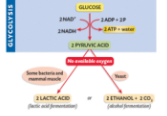 | occurring without the use of molecular oxygen, O2 |
alcoholic fermentation, 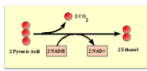 | anaerobic series of reactions that convert glucose to ethyl alcohol (ethanol) and carbon dioxide in some plants and yeast cells. |
| photosynthesis | metabolic processes carried out by green plants and cyanobacteria, which converts CO2 via light into glucose and oxygen |
| light reactions | the initial phase of photosynthesis in which light energy is converted into chemical energy |
| chlorophyll | any of several green pigments associated with chloroplasts or with certain bacterial membranes; responsible for trapping light energy for photosynthesis |
enzyme- substrate complex,  | when an enzyme binds to its substrate, it forms; |
| substrate | the substance an enzyme catalyzes changes |
denature, 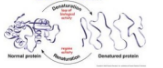 | characteristics of proteins; a change in shape that stops the protein from functioning |
| catalyst | an agent that speeds up a chemical reaction without itself being altered. A protein. |
| metabolism | the totality of how organisms mange their energy resources. |



