| A | B |
|---|
 | Attribution - in order to use the work, you must attribute the author of the work |
 | Non-Commercial - not primarily intended for or directed towards commercial advantage or monetary compensation |
 | Derivative - if you create an adaptation of a work that has this license, the adaptation must be licensed under the same or a compatible license. |
 | Share-Alike - the lawful exclusive right of a creator to exploit, use and distribute his or her literary, music, or other creative or artistic work, whether it be recorded in the form of print, audio, video or otherwise. |
 | Copyright - refers to the legal right of the owner of intellectual property. In simpler terms, the right to copy. This means that the original creators of products and anyone they give authorization to are the only ones with the exclusive right to reproduce the work. |
 | Public Domain - creative materials that are not protected by intellectual property laws such as copyright, trademark, or patent laws. The public owns these works, not an individual author or artist. Anyone can use a public domain work without obtaining permission, but no one can ever own it. |
 | Creative Commons - a nonprofit organization that enables the sharing and use of creativity and knowledge through free legal tools. Creative Commons is devoted to expanding the range of creative work available for others to build upon and share. |
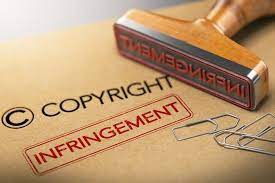 | Occurs when a copyrighted work is reproduced, distributed, performed, publicly displayed, or made into a derivative work without the permission of the copyright owner. |
 | Fair Use - a set of exceptions in copyright law which allow people other than the copyright holder to use copyrighted material. This allows other authors to quote a work, or educators to use material without having to get permission from the copyright holder first. |


