| A | B |
|---|
geocentric system, 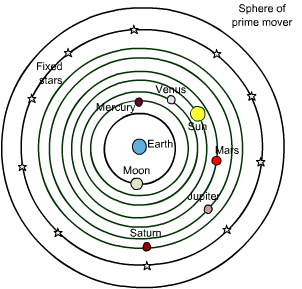 | describes solar system where all planets revolve around the EARTH. |
heliocentric system, 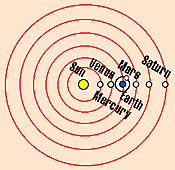 | describes solar system where all planets revolve around the SUN. |
solar system,  | large planetary sustem with many smaller planetary systems and objects. |
| ellipse | oval shape; shape of planets' orbit/path. |
| inertia | moving object continues in a straight line; or; non-moving object to stay in place. |
| gravity | attractive force between two objects |
| nuclear fusion | how smaller nuclei combine into larger nuclei, forming heavier elements and releasing energy. |
core, 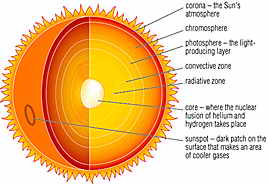 | central part of sun or earth. |
| photosphere | Inner layer of sun's atmosphere. |
| chromosphere | middle part of sun's atmosphere. |
corona,  | outer layer of sun's atmosphere. |
solar wind, 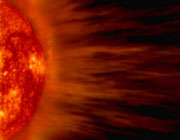 | A stream of electrically charged particles moving very fast from the sun's corona. |
sunspot, 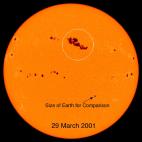 | dark, cooler areas on the sun. |
| prominence | Loop of gas sticking out of the sun. Connects sunspots. |
| solar flare | Explosion of hydrogen gas from sun's surface that happens when loops in sunspot areas quickly connect. |



