| A | B |
|---|
| Natural Rights | John Locke describes as Life, Liberty, Happiness, 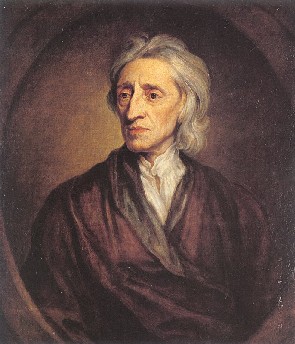 |
| State of Nature | Imaginary situation in which government does not exist |
| Law of Nature | Tenet that obligates everyone that no one ought to harm another's natural rights |
| Social Contract | Describes how the power of the governed given to government for protection of natural rights |
| Implicit Concent | "Tacit", agreement by acceptance. |
| Democracy | Authority is based on the will of the majority |
| Constitutional Governement | Limits on government based on laws on customs |
| Checks & Balances | A system of shared powers preventing dominance of one group over another |
| Civic Virtue | Public participation in which individual interest are subordinated to the common good |
| Montesquieu | He promoted divided or mixed government and a balance of power. |
| Madison | He believed a republican government could exist with competing factions |
| Providence | God’s involvement in world affairs |
| Middle Ages | The period of time between the fifth century and the Renaissance |
| Christendom | describes how society was united in the middle Ages,  |
| Reformation | Religious movement stressing individual interpretation of the bible in contrast to universal Catholicism,  |
| Secular Government | a system of political power not exercised by ecclesial bodies or the clergy |
| Renaissance | —“Rebirth” or revival of intellectual life that began in Italy after the middle Ages, 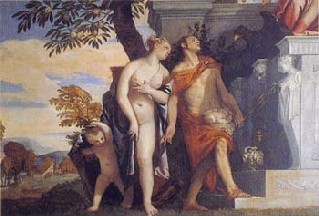 |
| Age of Enlightenment | Time period characterized by an intellectual movement of the late 17th early 18th century that sparked the natural rights philosophical approach to government. |
| Contracts | These agreements of exchange must have mutual benefit to be legal |
| Papacy | The office or authority of the Pope as the spiritual leader of the Catholic Church |
| hierarchial | Organized or classified according to rank, capacity or authority |
| capitalism | An economic system in which the mens of producing and distributin goods are privately owned and operated for profit in a competitive market |


