| A | B |
|---|
| Natural Rights | John Locke describes as Life, Liberty, Happiness, 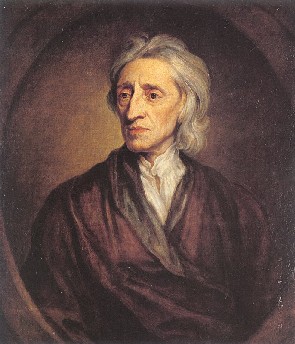 |
| Law of Nature | Tenet that obligates everyone that no one ought to harm another's natural rights. |
| Social Contract | Describes how the power of the governed given to government for protection of natural rights |
| Democracy | A form of government in which political control is exercised by all the people, either directly or through representatives. Authority is based on the will of the majority. |
| Constitutional Government | Powers of government are both written and unwritten and based on laws on customs in this form of Government. |
| Checks & Balances | A system of shared powers preventing dominance of one group over another. |
| Civic Virtue | Describes behaviors in which public participation in which individual interest are subordinated to the common good |
| Montesquieu | French philosopher who promoted divided or mixed government and a balance of power. He believed that parliment mixed the interest of the people with the interest of the "common good". |
| Madison | The writer of the Constitution, he believed a republican government could exist with competing factions. Created the U.S. Constitution. |
| Secular Government | a system of political power not exercised by ecclesial (religious) bodies or the clergy. |
| Feudalism | economic system in the middle ages characterized by contracted land ownership., 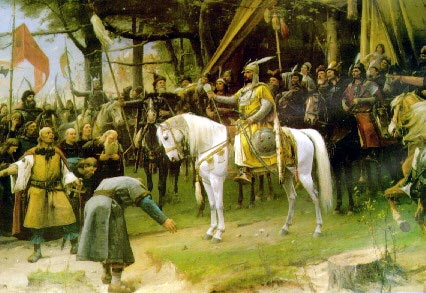 |
| Common Law | Accumulated legal decisions which become the basis for legal decisions by judges |
| Magna Carta | Document that established due process rights for the nobility |
| Due Process | Government must use consistent procedures and rules in applying the law in a society |
| Habeas Corpus Act | Due process law where the accused must be presented to a jury |
| Rule of Law | Laws, and not the executers of laws, govern social behaviors. No one is above the law. |
| Mayflower Compact | Contract that gave Plymouth colonials a civil authority empowered by the people (Popular Sovereignty),  |
| Primogeniture | Property is handed down to the eldest son explaining the continued concentration of wealth in Britain. |
| Fundamental Order of Connecticut | The first colonial constitution applying principles that would be adapted by other colonies and by the new country |
| Suffrage | The right to vote |
| Seven Years War: AKA The French and Indian War | Colonist were made to pay for this British conflict |
| Quartering Act | Colonist had to feed and house British Troops |
| Stamp Act | Legal documents were charged under this tax. |
| Popular Sovereignty | Political power is held by the people |
| Name the presidential Candidate |  |
| The Sugar Act of 1764. | Placed a tax on colonial exports like coffee and coffee Placed a tax on colonial exports like coffee and coffee sweatners |
| First Continental Congress | 56 Delegates attended this meeting held in Philadelphia on September 5, 1774 to create the Declaration of Rights and Resolve. |
| Preamble | The name for the introduction to the Declaration of Independences that contained many of John Locke’s ideas about government. That power derives from the consent of the people. |
| The Articles of Confederation | The compact made among the thirteen original American states to form the basis of their covernment: adobted by Congress in 1781. |
| confederation | A form of political organization in whhich the sovereign states combine for certain specified purposes such as defense. A loose collection of states. |
| Federalism | A form of political organization in which governmental power is divided between a central governemnt and territorial subdivisions. |
| Jamestown | The location of the first colony in the United States |
| Separation of Powers | The division of powers among differnt branches of government. In the United Stes among a legislative, executive and judicial branch. |
| Republic/republicansim | A form of governement where the people's representative act for the best interested of the electorate for the "common good". |


