| A | B |
|---|
| motor neuron | carries impulses from the brain to muscles |
neuron, 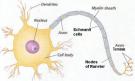 | basic unit of nervous system |
| interneuron | nerve cell between sensory and motor neurons |
| synapse | space between neurons |
central nervous system, 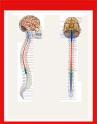 | contains brain and spinal cord |
| reflex | automatic response to stimuli |
| retina | light-sensitive tissue of the eye |
cerebellum, 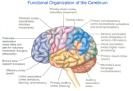 | coordinate voluntary muscle action and balance |
| cochlea | inner-ear structure containing fluid |
| olfactory cell | nerve cell that responds to gas molecules |
| chemical | allow impulses to cross synapses |
| dendrites | carry impulses to the cell body |
| sensory neurons | detect stimuli and carry implulse to the brain |
| cerebrum, | largest part of the brain;2 hemispheres |
| skeletal muscles | controlled by somatic division of PNS |
| hormones | produced by ductless glands |
| pituitary gland | controls many other endocrine glands |
| axon | carries messages away from the cell body |
| autonomic | controls involuntary actions- heart rate |
| somatic | controls voluntary actions- cranial and spinal nerves |
| target tissues | specific tissures affected by hormones |
| hormones | chemical produced by the glands in response to a stimuli |
| a type of depressant | alcohol- slows activities of CNS |
| a type of stimulant | caffeine- speeds up activities of CNS |
| reflexes are controlled by the | spinal cord |


