| A | B |
|---|
Gems, 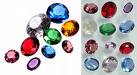 | Beautiful, rare, and highly prized mineral that can be used for jewelry |
| Magma | Hot, melted rock material beneath Earth's surface. |
| Hardness | How easily a mineral can be sratched. |
Fracture, 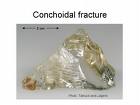 | Physical property of some minerals that causes them to break with with uneven, rough, or jagged surfaces. |
Cleavage, 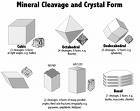 | Physical property of some minerals that causes them to break along smooth, flat surfaces |
Silicate, 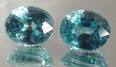 | Describes a mineral that contains silicon and oxygen and usually one or more other elements. |
Minerals, 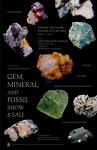 | Naturally occuring inorganic solid with definite chemical composition and orderly arrangement of atoms. |
| Specific Gravity | Ratio of its weight, compared to weight of an equal volume of water. |
| Crystal | Solid in which atoms are arranged orderly, repeating pattern p. 63 |
Ore, 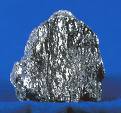 | Useful substance that can be mined at a profit. |
| Luster | Describes the way a mineral reflects light from its surface; can be metallic or nonmetallic p. 70 |
| Streak | Color of a mineral when it is in powder form. |
| Process | on going |
Diamond, 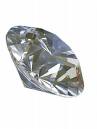 | Hardest mineral; it is also a gem |
| Talc | Softest mineral |
| Silicon and oxygen | are combined with other elements to form most minerals |
| False | T or F? All crystals have the same cubic structure |
| cubic | a salt crystal has a __________ shape |
titanium,  | a durable, lightweight metal mined from ilmenite and rutile. |
| atoms | a crystal system depends on the way _________ line up. |
| magma cools and crystallize from water | two ways minerals can be formed |
| Mohs Scale | a way of measuring the hardness of minerals |
| no | Is sugar a mineral? |
yes, 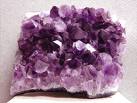 | Is amethyst a gemstone? |
hematite,  | a mineral and an ore |
sugar,  | made from plants- contains carbon |
iron,  | gives amethyst its color |


