| A | B |
|---|
| What three things do all animals have in common? | Animals are multicellular heterotrophs without a cell wall. |
| What percentage of animals are invertebrates? | about 99% |
| What percentage of animals are vertebrates? | about 1% |
Which type of symmetry does this animal have?, 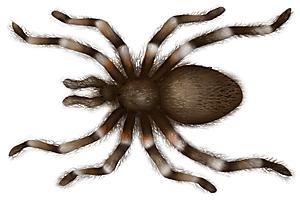 | bilateral, |
Which type of symmetry does this animal have?, 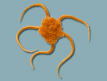 | radial, |
| A group of similar cells that have the same basic function is called a(n) ____. | tissue |
| A group of tissues that work together to complete a certain task is called a(n) ____ | organ |
| A group of organs that work together to complete a certain tasks within the body is called a(n) ____ | organ system |
| A group of organisms of the same species living in the same area is called a(n) | population |
| A group of different organisms living in the same area is called a(n) ___. | community |
| Which type of skeleton uses water pressure to keep the animals body from collapsing? | Hydrostatic |
| Which type of skeleton is located on the outside with muscles on the inside? Give an example of an organism with this type of skeleton. | Exoskeleton. Examples include spiders, insects and crustaceans (like lobsters) |
| Which type of skeleton do humans have? | Endoskeleton |
| Which type of muscles surround blood vessels and the digestive tract and aren't under the control of conscious thought? | Smooth muscles |
| What type of muscles are attached to the skeleton? | skeletal muscles |
| The system that involves skin and things in the skin such as sweat and oil glands plus hair is called the _____. | integument system |
| Chemical signals that are transported by the circulatory system are called _____. | hormones |
| ______ carry blood away from the heart. | Arteries |
| ______ carry blood back toward the heart. | Veins |
| Microscopic blood vessels where diffusion of nutrients and gases take place are called ____. | capillaries |
| Which system in your body is composed mostly of white blood cells and other proteins that fight pathogens in your blood and lymph? | Immune system |
| System of canals and nodes that collect fluids that have leaked out from blood vessels is called ____. | The lymph system (some white blood cells can also go into your lymph system to fight pathogens that might be hiding there) |
| The system that is involved with gas exchange is called ___. | the respiratory system |
| The little sacs inyour lungs that can expand, and are surrounded by capillaries are called ___. | alveoli |
| The system that breaks down food molecules into monomers small enough to enter the bloodstream is called the ____. | digestive system |
| In which part of the digestive system do nutrients pass into the bloodstream? | small intestine |
| Name two organs that help with digestive system but aren't part of the digestive tract. What do these organs do to help with digestion? | The liver produces bile which helps break up lipids so that enzymes can work on them more easily. The pancreas produces digestive enzymes. Both of these organs dump their materials straight into the small intestine. The bile goes into the gall bladder first though. |
| The kidney in humans is the main organ of the ____ system. | Excretory system |
| Which organ is your main excretory organ and what does it do? | Kidney; filters waste out of the blood |
| Which system filters waste from the body and regulates the concentration of your body fluids? | Excretroy system |
| Which system involves the use of hormones to allow for communication via the bloodstream? | Endocrine system |
| The endocrine system involves chemical messengers called ___. | hormones |
| Cells of the nervous system are called ___. | neurons |
| Nervous system messages travel via _____. | electrical impulses |
| When an electrical impulse reaches the end of one neuron, _____ are released to make contact with the next neuron so that the electrical impulses can start up again and continue. | neurotransmitters |
| The part of the nervous system that involves the brain and spinal cord is called the ___. | central nervous system |
| The part of the nervous system that involves all the nerves except those in the brain and spinal cord is called the ___. | peripheral nervous system |
| What type of symmetry do sponges have? | Sponges are usually asymmetrical (without symmetry) |
| What type of animals are found in the Porifera phylum? | Sponges |
| What does sessile mean? | "doesn't move" |
| Which type of cells in a sponge create a current of water to bring in food? | collar cells (a.k.a. choanocytes) |
| The collar cells of a sponge use a _______ create a current of water. | flagellum |
| A sponges skeleton is made up of _____. | spicules and spongin |
| Snails, clams and squid belong in the ______ phylum | mollusk |
| What is the unique structure found in all mollusks and what can it do? | What is the unique structure found in all mollusks and what can it do? |
| Most mollusks have an _____ circulatory system. | open |
| All mollusks have _______ symmetry. | bilateral |
| The class of mollusks that have 2 shells is known as the _____. | Bivalves (pelecypoda is the latin name of this class) |
| Snails and slugs are found in the class of mollusks called the _____. | gastropods |
| Squid and octopus are in the class of mollusks called the ______. | cephalopods |
| Which phylum has the most different number of animal species? | Arthropods |
| What are two unique characteristics of the Arthropod phylum? | Exoskeleton and jointed appendages |
| What process must all arthropods go through in order to grow? Describe the process? | Arthropods must "molt" their exoskeleton. They basically have to shed their exoskeleton before their body can grow any bigger. Shedding = molting |
| What type of symmetry do arthropods have? | bilateral |
| What type of circulatory system do arthropods have? | open |
| What are the three major body segments of most insects called? Which one is located in the middle? | Head, thorax (middle), and abdomen |
| What type of eyes do insects have? | compound eyes |
| How many legs do insects have and which body segment are they located on? | 6 legs located on the thorax |
| The process of transformation that most insects go through on their way to becoming an adult is called _____. | metamorphosis |
| Which class of arthropods generally live in water? | crustaceans |
| Which class of arthropods has two body segments and 8 legs? | arachnids (remember, spiders have 8 legs = 4 pairs) |
| Which class of arthropods has many body segments with one pair of legs on each segment? | centipedes |
| Which class of arthropods has many body segments with two pairs of legs on each segment? | millipedes |
What are the two body segments in this lobster called?,  | ., 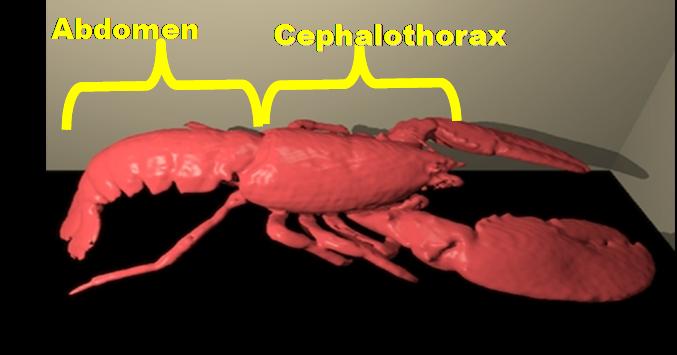 |
| Which phylum and class is this organism in?, | phylum Arthropoda, class Arachnida, |
Which phylum and class is this organism in?, 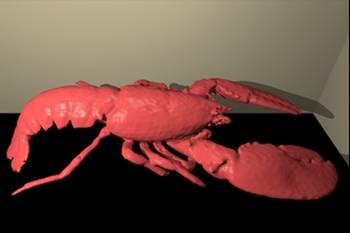 | phylum Arthropoda, class Crustacea, |
What is the name of this organism and what phylum is it in?, 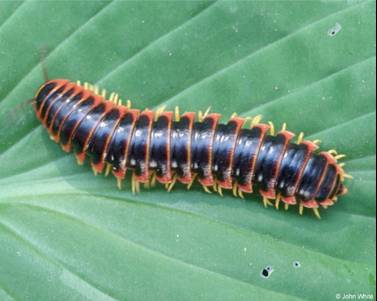 | Millipede (Arthropod phylum), |
Which phylum and class is this organism in?, 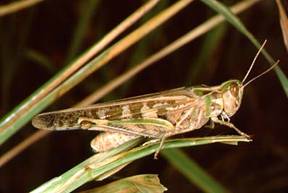 | phylum Arthropoda, class Insecta, |
| Which phylum are seastars, sand dollars, sea urchins and sea cucumbers in? | Echinoderm |
| If an organism has 5 way radial symmetry, which phylum is it in? | Echinoderm |
| Which phylum has tube feet? | tube feet |
| What are three unique characteristics of the echinoderm phylum? | 5-way radial symmetry, tube feet, and bumpy/spiny skin |
| Which phylum is believed to be most closely to the chordates (our phylum)? | Echinoderms because their larva have bilateral symmetry and they develop with their anus forming before their mouths do as embryos, just like all chordates. Animals that develop like this are called deuterostomes. All other animals besides echinoderms and chordates develop their mouth first and are called protostomes. |
| The mouth of an echinoderm is located on the ______ side while the anus is located on the ______ side. | mouth (ventral), anus (dorsal) |
| Echinoderms use a _______ system for movement and for transporting food and oxygen to all the cells in their bodies. | water vascular system |
What is the name of this structure and which phylum has them?, 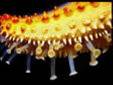 | tube feet: echinoderms, |
| Which phylum does this organism belong to and how can you tell?, | echinoderm (it has 5-way radial symmetry), |
| What is the scientific name of the "stinging cell" phylum? | Cnidaria |
What is the scientific name of the "stinging cell" phylum?, 
| Cnidaria,
|
| What type of symmetry do all cnidarians have?,
| radial symmetry,
|
| What type of cells are located on the tentacles of cnidarians?,
| stinging cells (cnidocytes),
|
| What are the stingers inside stinging cells called? | nematocysts,
|
| How many openings are there in the body of a cnidarian?,
| 1 (the one opening serves to take in food and get rid of waste) |
| What are the two main stages in the cnidarian lifecycle called?,
| medusa and polyp,
|
| Which stage in the cnidarian lifecycle is sessile? | the polyp stage,
|
| Which stage in the cnidarian lifecycle is free swimming?,
| the medusa stage,
|
| How many tissue layers do cnidarians have?,
| 2: endoderm and ectoderm |
| Do cnidarians have a nervous system or a brain?,
| They have a simple nervous system with nerves that look like a net running through their body but they do not have a brain. |
| What is the name of the single-celled organisms that live in the tissues of many cnidarians?,
| Zooxanthellae,
|
| What type of symbiotic relationship does coral have with zooxanthellae?,
| mutualism (the coral gets food from the plant-like protist and oxygen while the zooxanthellae get carbon dioxide, fertilizer, and protection from the coral),
|
Which stage of the cnidarian lifecycle is this animal in?,  , ,
| polyp stage, ,
|
Which stage of the cnidarian lifecycle is this animal in?, 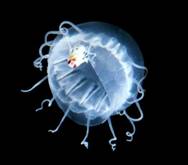 , ,
| medusa stage, ,
|
What is the name of this freshwater cnidarian?, 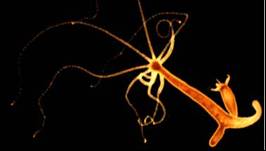 , ,
| hydra, ,
|
What is the name of this cnidarian and the fish that lives amongst its tentacles?, 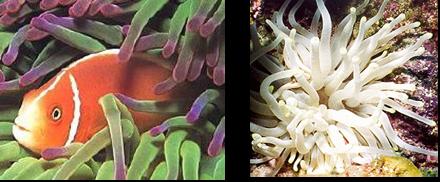 , ,
| sea anemone and clown fish, ,
|
| What are the common names of the three worm phyla?,
| flat worms, round worms, segmented worms |
| Nematoda is the scientific name for the ______ phylum,
| roundworm |
| Annelida is the scientific name for the _____ phylum,
| segmented worm |
| Planaria, flukes, and tapeworms are examples of the ___ phylum | flatworm,
|
| A long parasitic flatworm that lives in human intestines is called a ____.,
| tape worm |
| All of the worm phyla have ______ symmetry.,
| bilateral,
|
| What are the three embryonic tissue layers in all worms called? | endoderm, mesoderm, ectoderm,
|
| In which worm phylum do organisms still take in food and get rid of waste out of the same opening?,
| flatworms |
| Another word for body cavity is _____. | coelom,
|
| The tube-like mouth on a planaria is located on the _____ side of its body.,
| ventral,
|
| How do most worms get oxygen and get rid of carbon dioxide?,
| diffusion through the skin,
|
| What grows from the mesoderm?,
| muscles and organs |
| Which of the worm phyla has no body cavity surrounding the digestive tract?,
| flatworms |
| What does the endoderm line?,
| the gut (digestive tract) |
| How can you avoid getting infected with tapeworms or flukes? | Cook your meat thoroughly to kill the cysts. |
| What is the latin name of the round worm phylum?,
| Nematoda,
|
| What is the latin name of the segmented worm phylum? | Annelida |
| Which phylum includes parasitic worms like hookworms and pinworms?,
| roundworm phylum (Nematoda),
|
| Which phylum contains the most different species of worms? | roundworm phylum (Nematoda),
|
| Which phylum of worms might you find up to 4 million individuals in a square meter of soil?,
| roundworm phylum (Nematoda),
|
| What is the structure called that earthworms use to clean their blood ? | nephridia,
|
| The earthworm uses nephridia to clean the blood as part of the ________ system.,
| excretory,
|
| Which organism that you have studied has five hearts? | earthworm |
| The phylum of worms that are pseudocoelomates is ____.,
| roundworms (remember, a pseudocoelom is a body cavity that is NOT completely lined by mesoderm) |
| Animals that are coelomates have a ____.,
| true body cavity lined with mesoderm.,
|
The tissue layer that is shaded blue is known as the ____.,  | ectoderm, ,
|
| The tissue layer that is shaded red is known as the ____., | mesoderm, ,
|
| The tissue layer that lines the gut and is shaded yellow is known as the ____., | endoderm, ,
|
| What is a closed circulatory system? | It's a sytem where blood stays inside a network of blood vessels at all times |
| Which of the worm phyla have a closed circulatory system?,
| segmented worms (Annelida) |
| What are four characteristics that all chordates have at some point in their life?,
| Dorsal nerve cord, notochord, gill slits, post-anal tail,
|
| What are the names of the four sub-phyla in the chordate phylum?,
| Hemichordata, Urochordata, Cephalochordata, Vertebrata,
|
| Are all chordates vertebrates?,
| No ! Three out of the four sub-phyla (Hemichordata, Urochordata, Cephalochordata) don't have vertebrae. Only the vertebrate sub-phylum has vertebrae. However, almost all chordates these days are in the vertebrate sub-phylum. |
| The first class of vertebrates to appear in the fossil record were the _______.,
| jawless fish (class - Agnatha),
|
| What type of organisms are in the class called Agnatha?,
| Jawless fish like lampreys and hagfish |
| What kind of organisms do you find in the class called Chondrichthyes?,
| Cartilage fish like sharks, skates and rays. |
| What kind of organisms do you find in the class called Osteichthyes?,
| Bony fish like trout, perch, cod, flounder, barracuda, etc. |
| Which class of vertebrates evolved from bony fish about 350 million years ago?,
| Amphibians,
|
| Which class of vertebrates evolved from Amphibians about 300 million years ago?,
| Reptiles |
| Which two classes of vertebrates evolved from jawless fish about 400 million years ago? | Cartilage fish (Chondrichthyes) and Bony fish (Osteichthyes),
|
| Which class of vertebrates have hair and produce milk?,
| Mammals |
| Which order of mammals are humans classified in? | Primates,
|
| Which family are humans classified in? | Hominidae,
|
| Which genus are humans classified in? | Homo |
| What is the species name of humans? | sapien,
|



