In order for the Constitution to have been able to permanently protect the lives, liberty and property it has to be strictly interpreted and properly enforced. Banks can not change of the provisions of your loan with them and
Congress and/or the Supreme Court can not change the terms of a contract with the states without their approval
When Congress passed the Fugitive Slave Law and the Suprfeme Court held that it was Constitutional there were 16 states refused to w hat they considered t o be an unjust law..
The words in the Constitution mean what they meant on the day it was written. If Congress passes a law that viola tes the Constitution and the Supreme Court rules that the law is Constitutional it is the job of the states to refuse to comply.
lit Congress wants to exceed its delegate d power it musdt propose an amend andsubmit it to the state for their approval.
It is unlawful for Congress to add legislative powers to by ignoring the original intent, Congress wil continue violating the Constitution as log as we the people allow it,
<>In order for the Constitution to have been able to permanently protect the lives, liberty and propert y it has to be strictly interpreted and properly enforced. Banks can not change of the provisions of your loan with them and Congress and/or the Supreme Court can change the Constitution by misinterpreting it. The words in the Constitution means what they meant on the day it was written. If Congress wants more powers than are delegated to them in Article I Section 2 they need to propose an amendment and submitted it to the states for their approval. It is unlawful to by change the Constitution by misinterpreting it.
Congress will continue violate the Constitution and continue to masquerade as public servants. They have turned the Constitution as a meaningless piece of paper because the states have refused to hold them accountable.
When Cobgress passed the Fugitive Slave Law anmd the Sipreme Court ruled it to be Constitutional sixeen Northern States nullified the law.
The Constitution is a legally binding agreement between the states and the government officials, t is the responsibility of the states to refuse to comply with Congressional legislation that they believe is unconstitutional It is the responsibility. of the people, but is the responsibility of the people to demand that their state legislature to nullify any law that violates the Constitution.
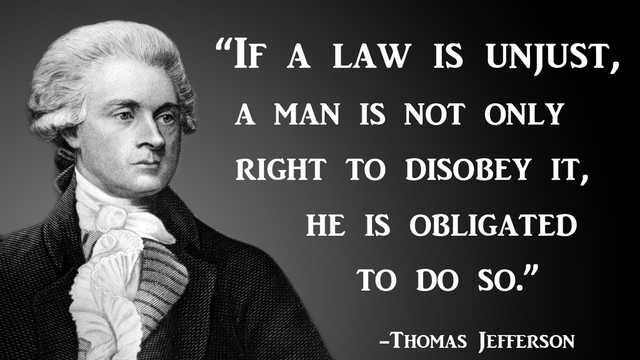
Every man and woman has a moral obligation to obey the laws that are just and refuse to comply with those that are not. All mandates issued by city, county, state, or the federal government officials are just. Any rule, regulation, code, ordinance or statute that violates the Constitution should not be enforced.
At the trial at Trial at Nurenberg the Nazi leaders claimed they were not guilty because they were just following orders.
When a government official is given an order he or she must decide to honor their oath or do as they are commanded,
It is thr responsibility of th County Sheriff not to decide if enforcing the law would violate an individual's God given rights.
When the Pharoah commanded the Hebrew Mid Wives to kill all of theJewish baby boys, they refused to follow his orders. It often takes courage to do what is right, but the price is worth paying.
The History of the Choosing Electors
The Electoral College was created to prevent the large states from completely dominating the small states. The goal was to prervent the tyranny of a democracy.
The Founding Fathers wanted the states to decide the method of choosing their Presidential Electors. They believed that only virtuous, well eductaed men could be trusted with the task of electing the President..
It was their intention to have the electors represent the people in districts rather than on a statewide basis. The elections were to choose the best, but not necessarily the most popular candidate.
They understood that if electors were chosen to represent the emtire state rather than individual districts the heavily populated areas would determine the outcome of Presodential elections.
The candidate winning the election would be determined by a panel of men of integrity that could be trusted to honor their oath to preserve, protrct and defend the Constitution..
In a republican form of government, the electors could be chosen by the legislatures of the states or elected by the voters in each Congressional District. .
The state legislatures weren't given the authority to dictate to the electors how they must vote, Compelling electors in the rural counties to vote for the candidates preferred in the metropolitan counties created a tyranny of the majority.
History of How Electors Have Been Chosen
1788 1792 1796 1800
1804 1808 1812
Once upon a time the people and the counties were
represented in the legislatures od the state. The large metropolitan counties controlled the state Hose of Representatives and the rural counties controlled the state Senate.
When the State's House proposed legislation that was detrimental to the interests od the rural counties.the state's Senate could block the legislation.
When the Supreme Court ruled that both legislative Houses in the state legislatures needed to be apportioned based on population this important check on the tyranny od the majority was lost..
At one time the legislatures of the states were bicameral with one house
to repesent the peoplee and another house to represnt yhr counties.
When lefislation is proposed and the majority in both house express their will epresnt the
the best interests of the counties are not even considered. In other words
the republican form of government was replaced with a form of democracy.
The Consti-tution gave the states the right to decide how their state electors would be chosen. With the republican model, the electors could be chosen by the legislatures of the states or elected by the voters. The state legislatures were not given the authority to allow political parties to choose the Presidential Electors It was unconstitutional for the legislatures to transfer this authority choose the electors to political parties.
In the democratic model the people are allowed to directly vote for the states electors
Choosing Electors 1788 - 1789
Choosing Electors 1792
Choosing Electors 1796
Choosing Electors 1800
Choosing Electors 1804
Choosing Electors 1808
Choosing Electors 1812
Choosing Electors 1816
Choosing Electors 1820
Choosing Electors 1824
Choosing Electors 1828
In 1820 James Monroe ran un-opposed for President as the Federalist Party failed to nominate a candidate. In the 1824 election all four of the candidates, John Quincy Adams, Andrew Jackson, William Crawford and Henry Clay were members of the Democratic Republican Party. The party realized that it would be to their advantage to have just one candidate.
When Andrew Jackson lost the election of 1824 the Democratic Party was born on January 8, 1828. They decided to nominate Andrew Jackson for President in 1828 and they became unified behind one candidate.
The 1832 Democratic National Convention was held from May 21 to May 23, 1832, in Baltimore, Maryland. In the first presidential nominating convention ever held by the Democratic Party, incumbent President Andrew Jackson was nominated for a second term, while former Secretary of State Martin Van Buren was nominated for vice president.
The Whig Party was a political party active in the middle of the 19th century in the United States. ... The Whigs emerged in the 1830s in opposition to President Andrew Jackson, pulling together former members of the National Republican Party, the Anti-Masonic Party, and disaffected Democrats.
John Adams won all 12 of the states electoral votes even though the majority of representatices in the state legislature were anti federalists. If only electors from predominatley anti federliasts districts had been allowed to vote for the candudate iod their choice Jefferson would have won the Presidential election.
