The Lukeion Project
Worst Case Scenario:
Ancient Greek Tragedy
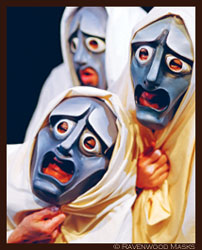
Modern version of Greek tragedy masks
by Alyssa Ravenwood
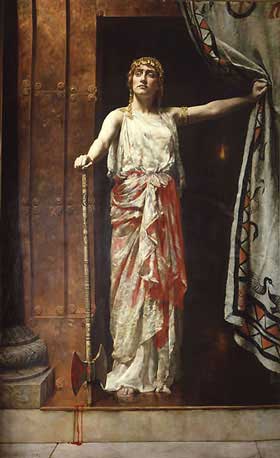
Clytemnestra, the villainess of "Agamemnon," as depicted by Collier;
one of my favorite pieces of art inspired by Greek tragedy.
Welcome!
Theater was an important part of life in Classical Athens, and no production was more revered or anticipated than the Tragedies. Because they were based on well-known mythological themes, everyone in the audience knew the basic story line in advance. That meant that only the most brilliant of playwrights could expect to dazzle the crowd, and they had to work very hard to do it. The resulting body of literature is so spectacular and timeless that they continue to be performed, and they continue to amaze audiences, 2,500 years later.
Are We Using a Textbook?
All of the tragedies that we will be reading are available online, so it's not necessary to purchase a textbook. Below are links to the tragedies online. I recommend checking out BOTH links for each tragedy before selecting a translation to read. You might even find that you already have a book of ancient literature or an anthology go Greek literature or Greek tragedies at your house. If so, it may include the three tragedies we'll be reading; they are some of the most popular. If you would like to have a book, here's one that I think is a nice version:
Greek Tragedy, edited by Shomit Dutta (Penguin Classics).
This book includes plays by each of the three great Tragedians AND it has some excellent supplemental material. Penguin Books has recently re-issued it.
Workshop Schedule
- Session 1: Introduction to Greek Tragedy
- Session 2: Agamemnon by Aeschylus
- Session 3: Oedipus Rex by Sophocles
- Session 4: Medea by Euripides
This page includes links to online versions of our tragedies, some helpful sites in the study of Greek Tragedy, and activities and games to help you review the material we cover in our sessions.
|
|


