| A | B |
|---|
| Most protists are ______-celled organisms. | single-celled |
| Protists are considered to have ______ cells because their cells have a nucleus and other membrane-bound organelles. | eukaryotic |
| What is the major characteristic that all protists have in common? | They don't really have anything in common that makes them a protist. The reason they are classified as protists is that they don't really fit into any of the other kingdoms. |
| What are the three basic types of protists? | animal-like, plant-like and fungus-like |
| Organisms that feed on decaying matter are called ____. | saprophytes |
| Which category of protists have multicellular organisms? | plant-like protists |
| What is an example of a multicellular algae? | Seaweed |
| What is an example of a fungus-like protist. | slime-mold |
| Fungus-like protists digest their food ______ of their body and absorb the digested food by _____. | outside, diffusion |
| Fungus-like protists secrete ________ outside their bodies to break down food particles. | digestive enzymes |
| Which organelle do plant-like protists use for photosynthesis? | chloroplast |
| Plant-like protists are also known as _____. | algae |
| Which types of protists are heterotrophs? | animal-like and fungus-like protists |
| Which types of protists are autotrophs? | plant-like protists (algae) |
| Which types of protists are producers? | plant-like protists (algae) |
| Which types of protists are consumers? | animal-like and fungus-like protists |
| Which type of protists have 2 flagella? | Dinoflagellates |
| What is the name of the protist that surrounds its food with its pseudopods? | Amoeba |
| The false feet on an amoeba are known as _____. | pseudopods |
| Some types of amoebas can cause a disease characterized by extreme diarrhea. This disease is known as _____. | amoebic dysentary |
| Paramecium and Didinium are two examples of protists known as _____ because they use cilia to sweep food into their mouths. | ciliates |
| The name of the single-celled organism that can swim with a flagellum and photosynthesize is ____. | euglena |
| A euglena senses light with its _____ and swims toward it using its ____. | eyespot, flagellum |
| The group of algae that is responsible for "red-tide" which kills fish is the _____. | dinoflagellates |
The single-celled algae that come in many shapes and have a covering made of glass are the ____.,  | diatoms, |
| The type of single-celled algae that glow at night are the ____. | dinoflagellates |
| When living organisms give off light (glow), it is known as _____. | bioluminescence |
| An example of an algae that live in a colony shaped like a ball is the ____. | Volvox |
| Multicellular algae are usually called _____. | seaweeds |
| Free-floating organisms that can't swim against the current are known as _____. | plankton |
| Animal-like plankton are called _____. | zooplankton |
| plant-like plankton are called ____. | phytoplankton |
| What is the name of the dinoflagellate that has a symbiotic relationship with coral? | Zooxanthellae |
| What type of symbiotic relationshiip do corals have with the single-celled algae that live inside their tissues? | mutualism |
What is the name of the organism pictured below?,  | euglena, |
What is the name of the organism pictured below?,  | paramecium, |
What is the name of the organism pictured below?,  | amoeba, |
What is the name of the organism pictured below?,  | volvox, |
What is the name of the organism pictured below?,  | dinoflagellate, |
| What are the three things that all fungi have in common? | They are consumers with cell walls and have eukaryotic cell structure., 
|
| What is the role of most fungi in nature? | Decomposers or saprophytes,
|
| What is a saprophyte?,
| Something that feeds on dead or decaying things. |
| Where do fungi digest their food? | Outside their bodies |
| What do you call a large mass of fungal hyphae? | mycellium |
| What are the long threadlike cells called that make up most of a fungus' body? | hyphae,
|
| What do hyphae release in order to break down the food that they are growing into? | digestive enzymes |
| What is the name of the structure that holds spores? | fruiting body |
| What are the four types of fungi? | sporangium fungi, club fungi, sac fungi and fungi imperfecti |
| Bread mold is an example of a ________ fungi. | sporangium,
|
| Mushrooms, toadstools and puffballs are examples of ______ fungi. | club |
| Morels, truffles, and yeast are examples of ______ fungi.,
| sac |
| An example of a fungus that is usually found as a single-celled organism is _____. | yeast |
| Yeast causes dough to rise by producing ______ gas while eating sugar in the process of ______. | carbon dioxide, cellular respiration,
|
| What products will yeast produce during respiration if there is oxygen present? | carbon dioxide and water (like us) |
| What products will yeast produce during respiration if there is NO oxygen present? | carbon dioxide and alcohol |
| Give two examples of fungi that are parasites on humans.,
| athletes foot and yeast infections (ringworm also) |
| What type of symbiosis occurs between humans and the fungus that causes athletes foot?,
| parasitism,
|
| The type of symbiotic relationship that occurs between fungi when they grow around the root hairs of plants is called _____.,
| mutualism (the fungi help the roots absorb extra water and minerals in return for some food from the plant) is the type of symbiosis. This association specifically between the fungi and plant roots is called mycorrhizae.,
|
| Which type of organism is made of part fungus and part single-celled producers? | lichen,
|
| The single-celled organism that forms a symbiotic relationship with fungus can be a _____ or a _________. | blue-green bacteria (cyanobacteria) or a green algae |
| What type of symbiotic relationship occurs inside a lichen?,
| mutualism,
|
| Which type of fungus can be used as an indicator species for air pollution? | lichen,
|
| Organisms that can be used to determine how clean or pristine an environment is are called ____. | indicator species |
| Which type of fungus is used to ferment beer and wine? | yeast |
| Which type of fungus produces a strong antibiotic? | Penicillium,
|
| The penecillium fungi produce a chemical that can be used as an ______. | antibiotic |
What is the fungus that is covering this rock called?, 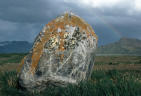 | Lichen, ,
|
What type of fungus does this one represent?,  | sac fungus, |
What type of fungus does this one represent?,  | club fungus, |
The small structure on the tip of this strand of hyphae holds spores. What type of fungus would is be classified as?, 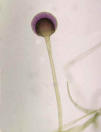 | sporangium fungus, ,
|
What is this organism called?, 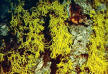 | Lichen, ,
|
What is this organism called?, 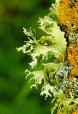 | Lichen, ,
|
| Besides fungi, what are two other types of organisms that digest food outside of their bodies? | bacteria (heterotrophic ones) and fungus-like protists,
|
| How does food enter the cells of a fungus? | diffusion |
| What are the cell walls of fungi made of? | Chitin |
| What type of molecule is the cell wall of plants made of? | cellulose,
|
| Which organelle do plants use for photosynthesis?,
| chloroplasts,
|
| What two substances are needed for photosynthesis?,
| Water and carbon dioxide |
| What two substances are produced during photosynthesis? | glucose (food) and oxygen |
| Vascular plants have ______-like cells for transporting water, nutrients and food to different places in the plant. | tube-like |
| Which type of plants have tube-like cells for transport? | Vascular plants |
| Which type of plants rely completely on osmosis and diffusion to get water and nutrients to all parts of the plant? | Non-vascular plants |
| Which type of plants can't grow tall and must grow in moist places? | Non-vascular plants |
| Give two examples of non-vascular plants. | Mosses and liverworts |
| Which type of plant has both a vascular and non-vascular stage? | Ferns |
| Which stage of the fern lifecycle has a large plant that produces spores? | vascular stage |
| Which stage of the fern lifecycle has a small heart shaped plant that produces eggs and sperm? | non-vascular stage |
| Where are the spores on a fern located? | Underneath the leaves of the vascular stage. They look like little brown spots |
| Why do ferns have to live in a moist environment? | Ferns still have a non-vascular stage in their lifecycle. |
| What did the fern forests form starting 300 million years ago when they fell into the swamps? | Coal deposits |
| What do we call plants whose seeds develop inside cones? | Conifers |
| Conifers that don't shed their needles in the winter are called _____. | Evergreens |
| What does the waxy coating on the outside of conifer leaves (needles) protect them from? | drying out and cold |
| What do male cones produce? | Pollen |
| What do female cones produce? | Eggs (seeds after the eggs are fertilized by the pollen) |
| How does pollen from conifers get to the eggs of the female cones? | The pollen is carried by the wind |
| Which type of cones are bigger? The male or the female? | Female cones are much bigger than the male cones. |
| The male part of a flower produces ___. | pollen |
| The female part of a flower produces _____. | eggs |
| Once the egg of a flowering plant has been fertilized, it grows into a _____ surrounded by a ______. | seed surrounded by a fruit |
| Organisms that carry pollen from one flower to another are called ____. | pollinators |
| What type of symbiotic relationship do pollinators have with flowering plants?,
| mutualism,
|
What are the brown things on the underside of this fern leaf?, 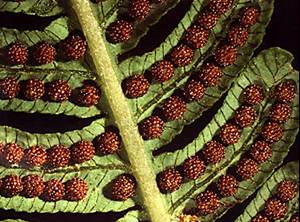 | spores, |
What is the #1 pointing to?, 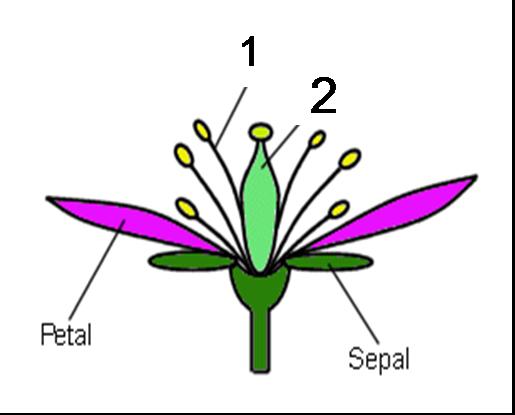 | Male reproductive part of the flower, |
| What is the #2 pointing to?, | Female reproductive part of the flower, |
Which set of cones are male cones and which set are female? Which is the biggest?, 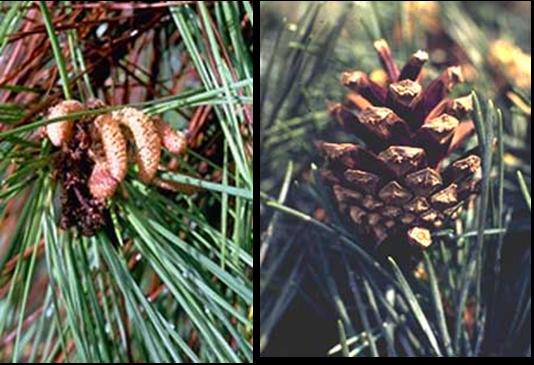 | The ones on the right are the female cones and are much bigger than the male cones on the left., |


